Pyongyang has officially scrubbed the dream of a unified peninsula from its legal DNA. By amending its constitution to define South Korea as a "hostile state," North Korea has not just updated its paperwork; it has signaled a fundamental shift in how it views the prospect of war. This move formally codifies Kim Jong Un’s January declaration that the South is no longer a partner for reconciliation but a primary foe to be subjugated or destroyed. The constitutional rewrite effectively ends a decades-long charade of "peaceful reunification" that served as the thin veneer for inter-Korean relations since the 1970s.
The Death of the Sunshine Policy
For fifty years, both Seoul and Pyongyang operated under the legal fiction that they were two parts of a single whole, momentarily separated by a line in the sand. This shared mythology allowed for occasional diplomatic thaws, family reunions, and economic projects like the Kaesong Industrial Complex. Kim Jong Un has now detonated that mythology. You might also find this similar story insightful: The Brutal Reality of New York City Hate Crimes Against the Sikh Community.
By removing terms like "peaceful reunification" and "great national unity," the regime is clearing the path for a new era of unencumbered hostility. This isn't a mere tantrum. It is a calculated strategic pivot designed to justify the use of nuclear weapons against a neighbor that is no longer considered "family."
The legal shift mirrors the physical destruction we saw last week when the North blew up sections of the Gyeongui and Donghae roads. These were the literal arteries of connection. Seeing the concrete crumble was a spectacle, but the constitutional amendment is the true demolition. It provides the legal framework for the North Korean military to treat the South exactly as it treats the United States—a foreign entity that must be deterred or defeated. As reported in recent coverage by Reuters, the effects are notable.
A New Map of Aggression
The revised constitution reportedly clarifies the North's territorial boundaries, a point of contention that has led to deadly skirmishes in the past, particularly along the Northern Limit Line (NLL). In the past, disputes in the Yellow Sea were messy because neither side officially recognized the other as a separate state. Now, Kim is drawing a hard line.
This creates a dangerous "tripwire" effect. If Pyongyang defines its waters and land with absolute legal rigidity, any perceived incursion by South Korean vessels becomes an act of international aggression rather than a border dispute between brothers. It gives the Korean People's Army a mandate to respond with "legitimate" state force.
Why Kim Is Making This Move Now
The timing is far from accidental. Pyongyang is watching a shifting global order and has decided that its best bet lies in a hard-line alliance with Moscow rather than chasing a carrot from Washington or Seoul. The treaty signed between Kim Jong Un and Vladimir Putin earlier this year provided the security guarantees Kim needed to finally discard the South.
- Internal Control: By branding the South as a permanent enemy, Kim can better justify the continued deprivation of his people. If the South is "them" rather than "us," the influence of South Korean media and culture becomes an existential threat from a foreign invader rather than a long-lost cousin.
- Nuclear Doctrine: It is much easier to threaten a "hostile foreign state" with a nuclear strike than it is to threaten people you claim are your own citizens.
- The Trump Factor: With the U.S. election looming, Kim is raising the stakes. He wants to enter any future negotiations as the head of a nuclear-armed state that has already settled its regional status, not as a desperate beggar seeking a path to reunification.
The Failure of Engagement
We have to be honest about how we got here. Decades of "strategic patience" and intermittent engagement have failed to stop the North's nuclear progression. Each time the West offered economic relief in exchange for a freeze, the regime took the money and kept the centrifuges spinning.
South Korean President Yoon Suk Yeol has taken a notably harder line than his predecessors, focusing on "peace through strength." This shift in Seoul has stripped Kim of the leverage he used to enjoy during the Moon Jae-in era. When the North realized it couldn't play the "reunification" card to extract concessions from a conservative South Korean government, it simply flipped the table.
The Tactical Reality of a Hostile State
What does this look like on the ground? Expect more than just rhetorical fire. We are likely to see an increase in "gray zone" provocations—GPS jamming, drone incursions, and cyberattacks—that stop just short of triggering a full-scale war but keep the South in a state of constant anxiety.
The North is also signaling that it will no longer be bound by the 1991 Basic Treaty, which defined inter-Korean relations as a "special relationship" rather than state-to-state ties. This allows Pyongyang to treat any South Korean involvement in international drills or intelligence sharing as a direct provocation by a foreign enemy.
The Nuclear Threshold
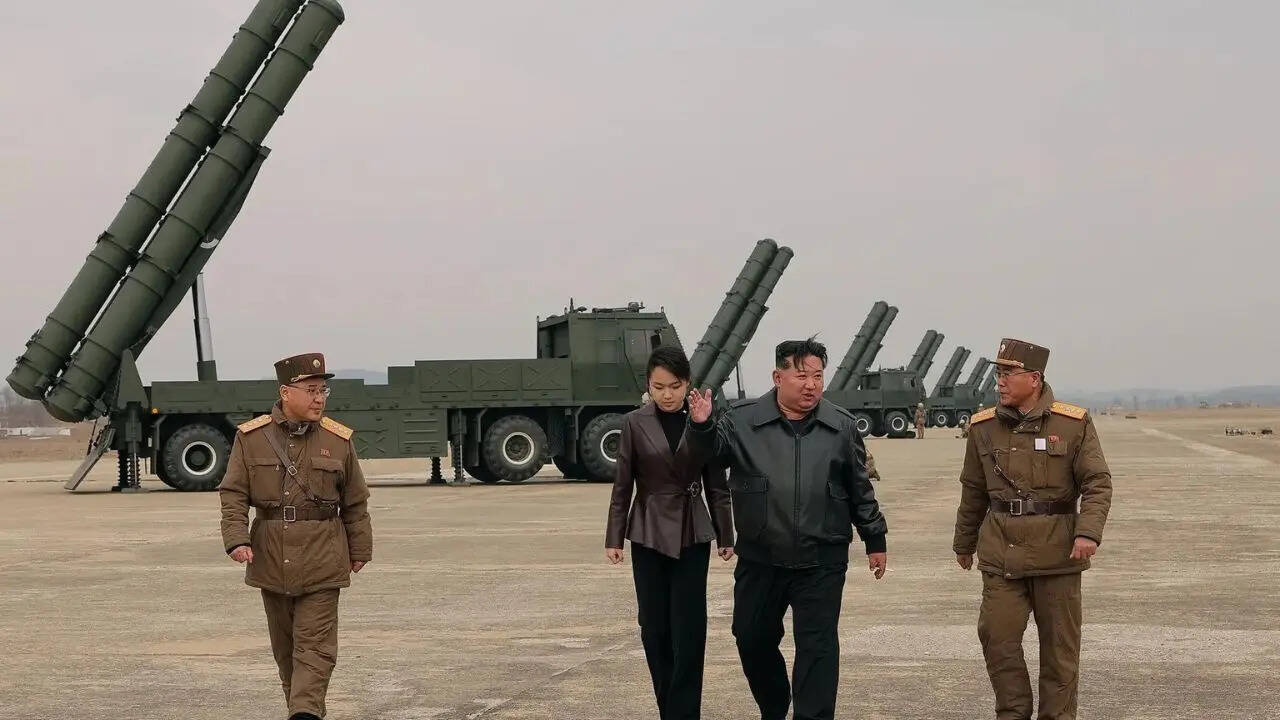
The most chilling aspect of this constitutional change is how it lowers the bar for nuclear use. If the South is a hostile foreign power, the North's doctrine of "pre-emptive strikes for survival" applies in full. Kim has spent the last year testing short-range ballistic missiles specifically designed to carry tactical nuclear warheads. These are not weapons for the U.S. mainland; they are weapons for Seoul, Incheon, and Busan.
The international community is largely distracted by conflicts in Ukraine and the Middle East. Kim knows this. He is using this window of global instability to finalize the transformation of North Korea into a permanent nuclear state that has zero interest in the diplomatic norms of the last century.
The End of the Road
The roads are gone. The bridges are blown. The laws are rewritten. For years, analysts debated whether the North was truly willing to give up its nuclear program for the right price. That debate is over. Pyongyang has made its choice. It has chosen a future of permanent confrontation, backed by a Russian alliance and a nuclear arsenal that it now views as the only guarantor of its survival.
South Korea now faces a grim reality. The "North Korea problem" is no longer a family dispute that can be solved with a summit or a handshake. It is a standard, high-stakes geopolitical standoff with a nuclear-armed neighbor that has officially declared itself an enemy for all time.
The era of the "Two Koreas" has officially begun, and it is a far more dangerous landscape than the one that came before. Seoul must now prepare for a neighbor that no longer sees them as brothers, but as a target. There is no going back to the way things were.