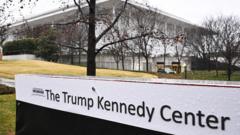
The prestigious John F. Kennedy Center for the Performing Arts is finally facing a changing of the guard, and frankly, it’s about time. Deborah Rutter, the center’s president since 2014, has announced she’s stepping down. While her tenure saw some massive structural changes and the opening of the $250 million REACH expansion, the last year has been a mess. It’s been a period defined by labor disputes, programming controversies, and a feeling that the institution was drifting away from its core mission.
You can’t talk about the Kennedy Center without talking about the money and the politics. It’s a unique beast. It's a National Cultural Center and a living memorial to JFK, which means it gets federal funding but also relies heavily on private donors. When things go sideways at the Kennedy Center, it’s not just a local D.C. problem. It’s a national headline. Rutter’s departure comes at a moment when the arts world is struggling to find its footing post-pandemic, and the Kennedy Center has felt particularly stuck.
The Reach versus the Reality
The REACH was supposed to be the crown jewel of Rutter’s legacy. It’s a beautiful space. All clean lines and open concepts meant to "demystify" (to use the corporate speak I usually hate) the artistic process. But while the architecture was winning awards, the vibe inside the building was getting tense. There’s a massive gap between having a fancy new rehearsal space and actually supporting the artists who use it.
During the height of the pandemic, the Kennedy Center became a flashpoint for labor relations. Despite receiving $25 million in federal stimulus money through the CARES Act, the administration moved to furlough the National Symphony Orchestra (NSO) musicians almost immediately. It was a PR nightmare. You don't take millions in taxpayer "save the arts" money and then immediately cut off the paychecks of your most visible artists. It felt cold. It felt corporate. It didn't feel like a memorial to a president who valued the arts as the "soul of the nation."
The musicians eventually reached a deal, but the trust was broken. That’s the thing about institutional leadership. You can build all the glass pavilions you want, but if your staff feels like they’re being treated as line items on a spreadsheet, the culture rots from the inside. We’ve seen this pattern across major non-profits lately. The "edifice complex"—the obsession with physical expansion—often comes at the expense of the human capital that makes the building worth visiting in the first place.
Programming that Lost the Thread
Another major sticking point during this "tumultuous year" has been the identity crisis in programming. Who is the Kennedy Center for? Under Rutter, there was a clear push to make the center "more accessible." That’s a noble goal on paper. In practice, it often felt like the center was trying too hard to be everything to everyone and ended up being nothing to anyone.
The Hip Hop Culture program was a genuine step forward and arguably one of the best things to happen during Rutter’s run. It brought in new audiences and gave a platform to a genre that had been ignored by "high art" institutions for too long. But elsewhere, the programming felt safe. Maybe too safe. When you’re the national stage, you should be taking risks. You should be the place where the most challenging, exciting work in the world happens. Instead, we got a lot of touring Broadway shows and "Greatest Hits" classical programming.
A lot of people in the D.C. arts scene felt the center was becoming a glorified rental hall. If you have the money, you can buy the space. That’s fine for a convention center, but it’s a death knell for a curated cultural institution. The next president needs to figure out how to balance the "memorial" aspect of the center with the "living" aspect. Right now, the living part is on life support.
The Search for New Blood
So, where does the board go from here? They’ve set a timeline for the transition, but the search for a successor will be grueling. They need someone who understands the weird intersection of D.C. politics, high-stakes fundraising, and actual artistic merit.
The biggest mistake the board could make is hiring another "builder." We don't need more wings or more fountains. We need someone who can fix the internal culture. The next leader has to be a bridge-builder with the unions. They need to prove to the NSO and the Washington National Opera that the administration actually cares about their survival.
They also need to look at the demographics. The audience for the Kennedy Center is aging out. To stay relevant in 2026 and beyond, the center has to move past the "outreach" model and into a "community" model. That means more than just a free concert on the Millennium Stage every night. It means making the center a place where people actually want to hang out, not just a place they visit once a year for a gala or a school trip.
What This Means for the Arts Nationally
The Kennedy Center is a bellwether. When it struggles, it signals a broader crisis in how we fund and manage the arts in America. We’ve relied on this model of "Great Leaders" and "Big Donors" for a century. Rutter’s departure is an opportunity to question if that model still works.
I’ve talked to several arts administrators who think the Kennedy Center should move toward a more collaborative leadership model. Maybe the days of the "All-Powerful President" are over. Maybe we need a structure that gives more power to the artistic directors of the various components—the NSO, the Opera, the Jazz and Hip Hop programs—rather than funneling everything through a single bureaucratic bottleneck.
The reality is that the Kennedy Center is too big to fail. It’s too important to our national identity. But being "too big to fail" is a dangerous place to be. It breeds complacency. It makes you think you can weather any storm without changing course. This past year proved that isn't true. The storm arrived, and the ship took on a lot of water.
Moving Forward Without the Drama
If you’re a fan of the arts, you should be watching this search closely. The Kennedy Center isn't just a building in Foggy Bottom. It’s the highest profile platform we have for the performing arts. If they get this next hire wrong, we’re looking at another decade of stagnation and labor strife.
The board needs to prioritize transparency. The "tumultuous" nature of the last year was exacerbated by a lack of clear communication from the top. When the NSO was being furloughed, the messaging was vague and defensive. When programming was canceled, the reasons given were often bureaucratic nonsense. A little honesty goes a long way in the arts world.
Stop looking for a corporate savior. Look for a cultural leader. Look for someone who isn't afraid to say "we messed up" and "here is how we're going to fix it." The Kennedy Center deserves a leader who is as inspired as the performers on its stages.
If you want to keep tabs on how this transition affects the upcoming season, start by looking at the subscription renewals and the donor reports. Those numbers don't lie. They’ll tell you exactly how the public feels about the direction of the center. You can also attend the public board meetings or join one of the various "Friends of the Kennedy Center" groups to get a peek behind the curtain. Don't just be a spectator. If you care about the future of this institution, make your voice heard. Use the feedback forms on their site. Write to the board. They’re listening now because they have to.