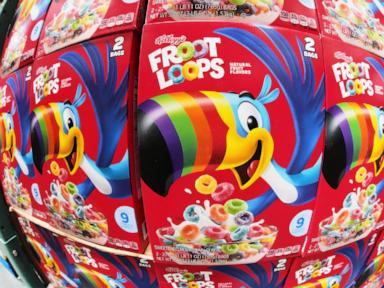
Cereal is dying, and a plastic Woody figurine isn't the defibrillator Kellogg thinks it is.
The headlines are buzzing with nostalgia. "The toys are back!" "A win for collectors!" The industry press is treating this Toy Story 5 tie-in like a triumphant return to the golden age of processed grain. It isn’t. It is a tactical retreat masked as a marketing milestone. You might also find this related story useful: The Iron Grip of the Permian Basin and Why Wall Street Won't Let the Spigots Open.
For decades, the "prize inside" was the primary engine of brand loyalty for anyone under the age of twelve. Then, the industry scrubbed them out to save on margins and dodge the "marketing to children" firing squad. Now, Kellogg is sprinting back to the 1990s because they have run out of ways to make sugar-coated corn flakes relevant to a generation that views cereal as a high-carb inconvenience.
If you think this is about "bringing back the magic," you’re the mark. As discussed in recent reports by The Economist, the results are worth noting.
The Margin Trap and the Illusion of Value
Cereal companies have spent the last decade in a race to the bottom. They’ve shrunk the boxes—"shrinkflation" is the polite term—while jacking up the prices. But there is a ceiling to what a consumer will pay for a bag of air and toasted oats.
The return of the toy is a distraction technique. By adding a physical "premium," Kellogg attempts to reset the price-value perception. They want you to stop calculating the cost per ounce and start calculating the "collectability" of the plastic.
I have watched brands burn through nine-figure marketing budgets trying to buy back the attention they lost to high-protein yogurts and breakfast burritos. The problem isn't the lack of a toy. The problem is the product. Cereal is a legacy format in a high-performance world. Putting a plastic cowboy in the box doesn’t change the fact that the contents are nutritionally bankrupt.
Nostalgia is the Last Refuge of a Dying Brand
The Toy Story franchise is now thirty years old. The people most excited about this news aren't six-year-olds; they are thirty-six-year-olds with "collector" shelves and a deep-seated desire to feel like it’s 1995 again.
Kellogg isn't marketing to kids. They are weaponizing the nostalgia of Millennials who are now parents. It’s a "double-dip" strategy:
- Trigger the parent’s childhood memories.
- Use the parent to force the brand onto the child.
This is a short-term spike strategy. It creates a "blip" in the quarterly earnings report that satisfies shareholders but does nothing to address the structural decline of the category. When the movie cycle ends and the toys disappear again, the sales will crater back to their baseline. You cannot build a sustainable business model on the back of a Pixar release schedule.
The Logistics of a PR Stunt
Let’s talk about the "toy" itself. In the 1980s, cereal toys were substantial. Today, between safety regulations and razor-thin margins, you are likely getting a "premium" that costs less than five cents to manufacture.
The logistics of inserting physical objects into food packaging are a nightmare. It requires specialized machinery, rigorous scanning to ensure no metal or plastic shards end up in the actual food, and a massive uptick in quality control costs. For a company to take on that headache, they have to be terrified of their current sales trajectory.
This isn't a gift to the consumer. It’s an admission of failure. It is Kellogg saying, "Our food isn't enough to make you buy this. Here is a piece of plastic."
The Sustainability Hypocrisy
We live in an era where every corporate "Impact Report" is filled with promises about reducing plastic waste and achieving carbon neutrality.
Then, the moment sales dip, those same corporations dump millions of pieces of single-use plastic into the ecosystem. Most of these toys will end up in a landfill before the milk in the bowl even goes sour. The "lazy consensus" says this is a fun throwback. The reality is that it’s an environmental regression that flies in the face of every ESG goal these companies claim to care about.
You can’t claim to be a "purpose-driven brand" while simultaneously mass-producing landfill filler to move boxes of Frosted Flakes.
What Cereal Should Have Done Instead
If Kellogg wanted to disrupt the market, they wouldn't look backward. They would look at why they are losing.
People didn't stop eating cereal because the toys went away. They stopped eating cereal because:
- The Sugar Burden: Modern consumers are increasingly literate about glycemic loads.
- The Inconvenience: Sitting down with a bowl and milk is a "slow" breakfast in a "fast" world.
- The Lack of Satiety: Cereal is a hunger trigger, not a hunger solution.
Instead of paying Disney for licensing rights, that capital should have been poured into radical product reinvention. Where is the shelf-stable, high-protein, zero-sugar cereal that actually tastes like food? It exists, but it’s being made by startups like Magic Spoon, not the legacy giants.
Kellogg is defending a fortress made of cardboard while the barbarians are already in the courtyard. They are playing a 20th-century game in a 21st-century economy.
The Collector’s Fallacy
Every time a "limited edition" toy is announced, a subset of the internet loses its mind. They talk about "investment" and "mint condition."
Let’s be clear: mass-produced plastic tucked into a cereal box is not an investment. It is clutter. The secondary market for these items is a bubble driven by the very nostalgia Kellogg is exploiting. By the time Toy Story 6 is announced, these 2026 premiums will be sitting in the bottom of thrift store bins.
The real "prize" in the box is the realization that you’re paying a premium for a brand that no longer knows how to innovate.
The Wrong Question
People are asking, "Will this bring toys back to all cereal?"
That is the wrong question. The right question is: "Why are we still eating like it’s 1955?"
The "toy in the box" was a brilliant 20th-century hack to win the grocery store war. But the war has moved. It’s no longer about the grocery aisle; it’s about the subscription, the direct-to-consumer health brand, and the functional breakfast.
Kellogg is trying to win a drone war with a cavalry charge. It looks grand, it feels heroic to those who remember the old ways, but it is ultimately a massacre.
Stop buying the plastic. Start demanding a product that doesn't need a gimmick to justify its existence on your shelf. If the food is good enough, you don't need a cowboy to sell it.