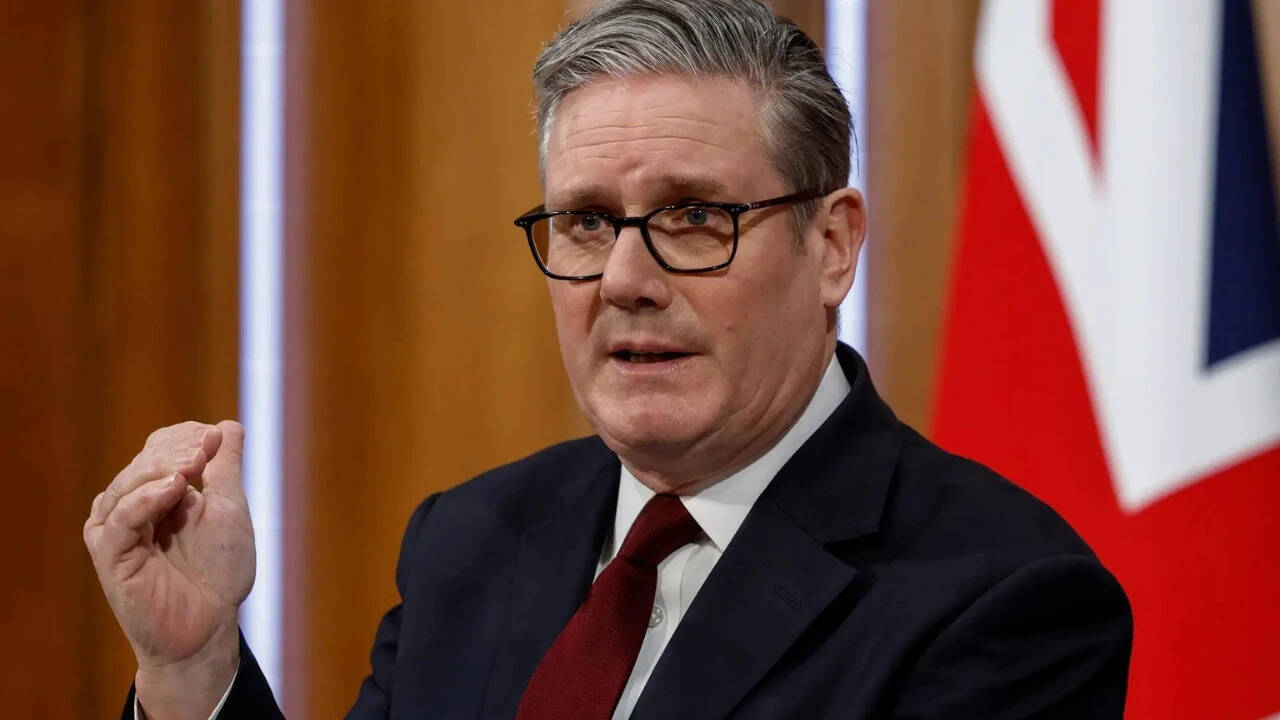
Keir Starmer is walking a tightrope that would make a circus performer sweat. On one side, he has Donald Trump shouting from the White House for the UK to send warships into the fire. On the other, he has a British public that still hasn't forgotten the scars of the Iraq War. Today, the Prime Minister made his position clear. Britain isn't going to be "drawn into a wider war" in the Middle East, even as the conflict with Iran enters its third week and threatens to wreck the global economy.
It’s a bold stance. Starmer is effectively telling the United States—the UK's closest ally—that "no" means "no" when it comes to joining an all-out offensive. Instead, he's pivoting. He’s focusing on a "viable collective plan" to reopen the Strait of Hormuz and protect British wallets from the skyrocketing cost of heating oil. It isn't just about foreign policy; it’s about the "knot in the stomach" people feel when they open their energy bills.
The Trump pressure and the Strait of Hormuz
The situation in the Gulf is a mess. After the US and Israel launched strikes on Iran at the end of February, Tehran hit back by choking off the Strait of Hormuz. This narrow strip of water is the world's most important energy chokepoint. About a fifth of global oil and gas flows through it. With it closed, oil has surged past $100 a barrel.
Donald Trump wants a show of force. He’s pressured allies like Britain, France, and Japan to send warships to break the blockade. He even warned that NATO faces a "very bad" future if members don’t step up. Starmer isn't biting. He spoke to Trump on Sunday and kept it polite, calling the relationship "strong," but he’s refusing to send the Royal Navy’s big guns into an offensive role.
Instead, the UK is looking at "defensive" options. This likely means mine-hunting drones and smaller assets rather than a full carrier strike group. Starmer’s logic is simple: the UK will help keep the lanes safe, but it won’t join a mission to topple the Iranian regime. He's making it clear this won't be a NATO mission. It’ll be a "coalition of the willing" or it won't happen at all.
Learning from the ghosts of 2003
You can’t understand Starmer’s caution without looking at his history. He was a vocal critic of the Iraq War in 2003, and those principles are clearly driving his current strategy. He’s repeatedly said that any military action must have a "legal basis" and a "properly thought-through plan."
Many critics, particularly on the right, have slammed him for "following, not leading." They argue that by refusing to join the initial strikes, he weakened the Western response. Starmer’s retort is punchy: rushing headlong into war without an exit strategy isn't leadership. He’s betting that the British people prefer a "calm, level-headed assessment" over military adventurism.
What the UK is actually doing
Don't think the UK is sitting on its hands. While it isn't joining the offensive, the military footprint in the region is growing.
- Typhoon Jets: Four more jets are heading to Qatar to join existing squadrons.
- Defensive Shield: UK F-35s have already been active over Jordan, taking down Iranian drones.
- Intelligence: British experts are working with Ukraine to help Gulf partners intercept Iranian-made tech.
The goal here isn't to win a war, but to maintain a "shield" over British personnel and allies. There are still roughly 200,000 British citizens in the region. Getting them out is an evacuation effort Starmer says is "many times bigger than Afghanistan."
The war for your wallet
Politics usually stops at the water's edge, but not this time. Starmer knows that if the Strait of Hormuz stays closed, his domestic agenda is toast. He’s already announced a £53 million support package for households that rely on heating oil—the people hit hardest and fastest by the spike.
He’s also warning energy companies. If suppliers start "price gouging" during this crisis, they’ll face legal action. It’s a populist move designed to show he's on the side of "working people" while the world burns.
The strategy is to link "ending the war" directly to "reducing the cost of living." By framing de-escalation as an economic necessity, he’s giving himself a mandate to resist the more hawkish demands coming from Washington.
Moving toward a negotiated settlement
So, what's the end goal? Starmer isn't looking for a total military victory. He wants a negotiated agreement where Iran gives up its nuclear ambitions and stops arming proxies like Hezbollah.
It’s an uphill battle. The Iranian regime is "abhorrent," to use Starmer's own words, and they've shown no sign of backing down after the death of the Supreme Leader. But the UK is sticking to the diplomatic track, working with European and Gulf partners to find a way to reopen the shipping lanes without triggering World War III.
If you’re worried about how this affects you, start by checking your energy contract. While the government is capping some bills through June, the volatility in the Gulf means prices won't stabilize until the Strait of Hormuz is fully operational again. You should also:
- Register with the Foreign Office if you have family in the region.
- Keep an eye on the fuel duty cap, which is currently extended until September.
- Support local energy independence—Starmer is using this crisis to push "homegrown British energy" even harder.
The PM has made his choice. He’s chosen the "national interest" over the "special relationship." Whether that gamble pays off depends on how long Iran can keep the world's oil supply in a chokehold.