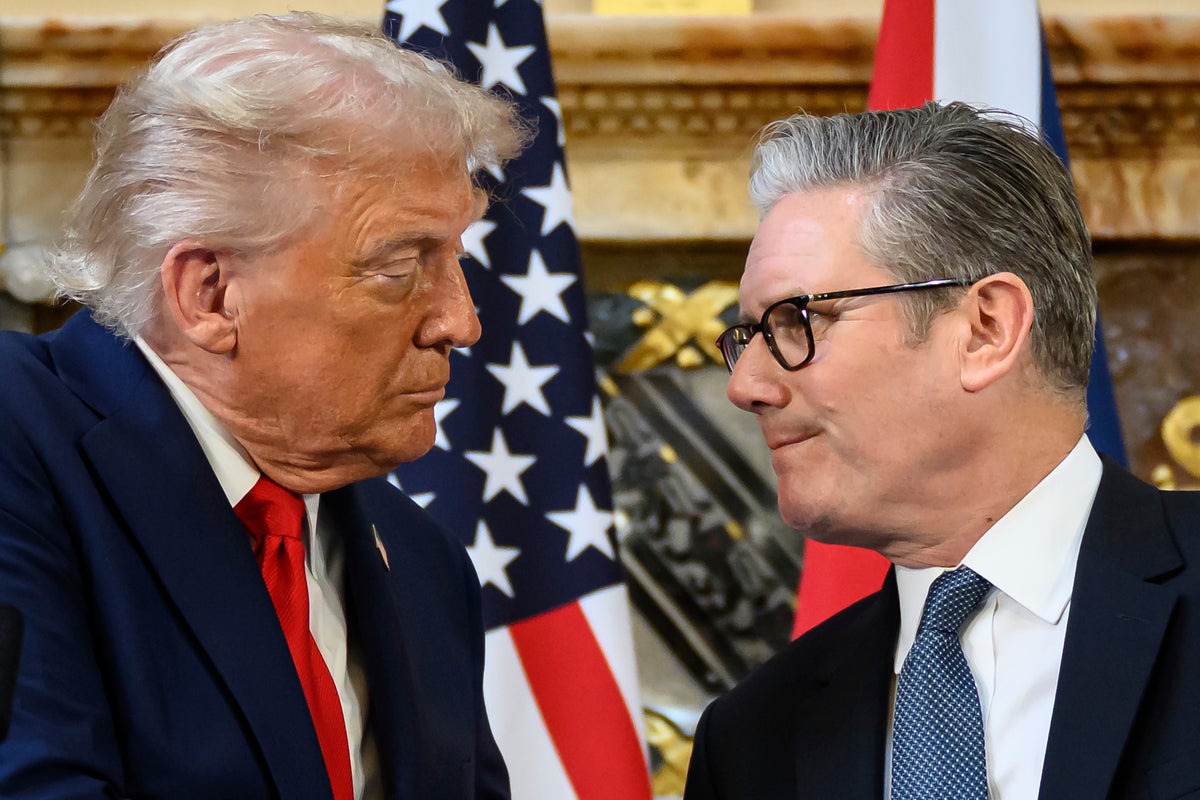
Keir Starmer is playing a high-stakes game of geopolitical chicken. By refusing to follow Donald Trump’s lead in easing energy sanctions on Russia, the UK Prime Minister isn't just taking a moral stand. He’s drawing a line in the sand that could define the Special Relationship for the next four years. It’s a move that feels both principled and incredibly risky given the volatile nature of the man currently sitting in the Oval Office.
The friction is simple. Trump wants a deal to end the war in Ukraine, and he sees the lifting of oil sanctions as a massive bargaining chip. Starmer, meanwhile, is tethered to a European security framework that views any concession to Vladimir Putin as a slow-motion disaster. You can't have it both ways. You're either with the "Peace Through Deals" crowd in Washington or the "Security Through Strength" bloc in London and Brussels.
The Sanctions Gap is Growing
The reality on the ground is messy. For months, the UK has been tightening the screws on the "shadow fleet"—those aging tankers Russia uses to bypass Western price caps. While the US under Trump signals a willingness to let the oil flow to stabilize global markets and bring Putin to the table, Downing Street is doing the exact opposite.
British officials have recently sanctioned more insurance providers and shipping companies linked to Russian energy. This isn't just a minor policy difference. It's a fundamental split in how to handle a nuclear-armed aggressor. If Trump decides to unilaterally drop US restrictions, the UK could find itself as the primary enforcer of a regime that its most important ally has abandoned. That’s a lonely place to be.
Why Trump Cares About UK Oil Policy
You might think a small island’s energy policy wouldn't bother a US President focused on "America First." You'd be wrong. The UK’s influence in the maritime insurance and legal sectors is massive. Most of the world’s ship insurance is handled through London-based P&I Clubs. When the UK says no to Russian oil, it makes it physically and financially harder for those ships to sail, regardless of what the US Treasury says.
Trump hates being boxed in. If he promises Putin a return to the global energy market and the City of London blocks the path, it’s going to get personal. We've seen how he reacts to European leaders who don't fall in line. It usually involves tariffs or threats to NATO commitments. Starmer knows this. He isn't stupid. But he's betting that the long-term cost of a Russian victory in Ukraine is higher than the short-term cost of a Twitter tirade from Mar-a-Lago.
The Economic Reality of the Split
Starmer’s stance isn't just about Ukraine; it’s about the UK’s own green energy transition. By staying tough on Russian fossils, the Labour government is trying to force a faster shift toward domestic renewables and nuclear. It’s a "burn the boats" strategy. If you make it impossible to go back to cheap Russian gas and oil, you have no choice but to build those wind farms faster.
But there's a catch. If the US drops sanctions, global oil prices likely fall. If the UK maintains them, British businesses and consumers could end up paying a "morality premium" for energy that the rest of the world is getting cheaper. That’s a tough sell to a public already weary of the cost-of-living crisis. Political capital is a finite resource. Starmer is spending a lot of it here.
The Shadow Fleet Problem
Russia’s workaround has been effective. They use "ghost" ships—uninsured, poorly maintained tankers that hide their location. The UK has been the global leader in hunting these vessels down. Recent data shows that UK-led sanctions have successfully sidelined dozens of these ships, forcing Russia to use even more expensive and dangerous routes.
- Over 40 tankers were added to the UK's hit list in the last quarter alone.
- Insurance premiums for Russian-linked cargo have tripled where London firms are involved.
- Legal loopholes in the Marshall Islands and Liberia are being closed through UK diplomatic pressure.
This technical, grinding work is exactly what the Trump administration might view as "deep state" interference in a presidential peace plan.
Navigating the Diplomatic Minefield
European leaders are watching Starmer closely. For them, the UK is a bridge. If the UK buckles and follows Trump, the EU’s unified front on Russia collapses. If the UK stays firm, it gives the likes of France and Germany the cover they need to keep their own sanctions in place.
Starmer is effectively acting as the vanguard for European security. It’s a role that wins him friends in Paris and Berlin but puts a target on his back in D.C. He’s betting that the US Congress—which still has many Russia hawks in both parties—will provide enough of a buffer to keep Trump from completely dismantling the sanctions framework. It’s a gamble on the endurance of American institutions against the will of a single leader.
The Price of Principle
We often talk about foreign policy in the abstract, but this split has concrete consequences. We are looking at a potential "dual market" for energy. One where the US and its closer partners trade freely, and another where the UK and Europe attempt to maintain a blockade. It’s inefficient. It’s expensive. And it’s exactly the kind of friction that markets hate.
Starmer's team believes that Putin only understands the language of financial exhaustion. They argue that the Russian economy is far more fragile than the Kremlin admits. By hitting the oil revenue—which accounts for roughly a third of Russia's budget—they think they can end the war on terms that don't involve Ukraine surrendering its sovereignty.
What This Means for UK Businesses
If you're running a company with any exposure to international shipping or energy, you need to be prepared for a regulatory mess. We're moving toward a world where US and UK compliance departments might give you two different answers.
- Review your supply chains for any Russian-origin energy, even if it's been refined in a third country like India.
- Audit your shipping partners to ensure they aren't using vessels on the UK’s expanding restricted list.
- Hedge against price volatility as the geopolitical tug-of-war between London and Washington creates artificial supply shocks.
Don't wait for a formal announcement. The divergence is already happening. The UK's Office of Financial Sanctions Implementation (OFSI) has been hiring more staff and getting more aggressive with fines. They aren't backing down just because the White House changed hands.
The strategy in London is clear: hold the line and hope the US eventually sees the danger of a resurgent Russia. It’s a lonely, expensive, and brave position. It might also be the most dangerous move Keir Starmer ever makes. If he’s right, he saves European security. If he’s wrong, he leaves the UK economically isolated and at the mercy of a very vengeful American president. Either way, the era of "automatic alignment" between London and Washington is officially over.

.jpg?width=1200&auto=webp&trim=0%2C0%2C0%2C0)