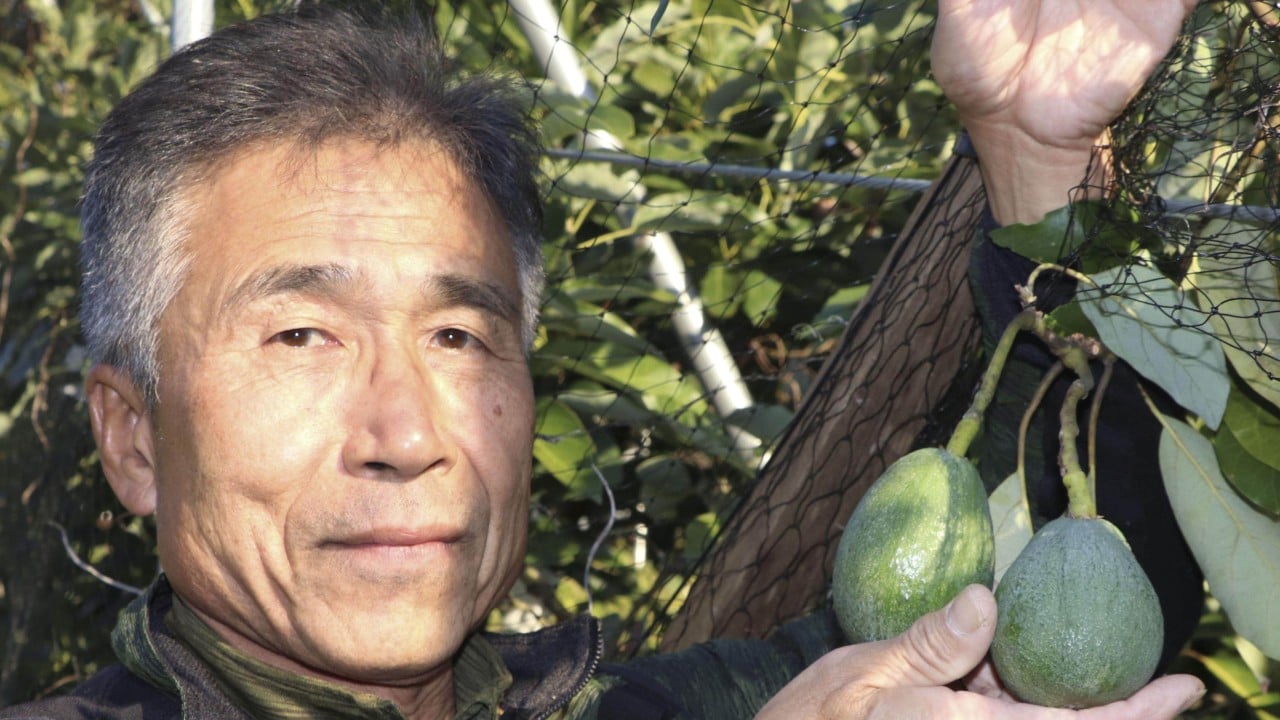
The Soil Temperature Myth
The current narrative surrounding Japanese citrus farmers is dangerously simplistic. You’ve seen the headlines: "Climate change warms soil, farmers plant avocados." It’s presented as a slick, adaptive pivot—a masterclass in agricultural evolution. It isn’t. It’s a desperate hail mary based on a fundamental misunderstanding of what it takes to build a sustainable crop industry.
Most reports focus on a few degrees of soil warming as the green light for tropical fruit. This ignores the brutal reality of thermal inertia and atmospheric volatility. Soil temperature is a trailing indicator, not a green light for investment. I have watched growers in various regions pour capital into "the next big thing" based on five-year heat maps, only to have a single anomalous frost event wipe out a decade of progress. Avocados are not citrus. They are finicky, water-hungry divas that don't care about your "warming soil" when a polar vortex dips south. You might also find this similar story insightful: Structural Integrity of Corporate Governance and the Cost of Verification Failure.
The Efficiency Trap of Tropical Highs
The "lazy consensus" suggests that since the climate is warming, we should just shift the latitude of production. This logic assumes that a farm is just a patch of dirt and some sun. It forgets the infrastructure.
Japanese citrus farming, particularly in prefectures like Ehime and Wakayama, is built on specific terraced topography. These systems were engineered over centuries for mikan (satsuma mandarins). Mandarin trees are resilient; they can handle a certain level of neglect and still produce. Avocados demand precision. They require specific drainage profiles and nutrient loads that Japanese hillside soil—often acidic and thin—is ill-equipped to provide without massive, expensive intervention. As reported in latest articles by Bloomberg, the implications are widespread.
Farmers aren't just switching crops; they are attempting to rewrite the chemical composition of their land while battling a logistical nightmare. The capital expenditure required to transition a citrus grove to a functional avocado orchard is astronomical. When you factor in the cost of new saplings, specialized irrigation, and the five-to-seven-year wait for a commercial harvest, the ROI looks less like a pivot and more like a sunk-cost fallacy.
The Water Debt Nobody Mentions
Let’s talk about the math. A single avocado requires significantly more water than a comparable weight of citrus. Japan is not a desert, but its water management systems in rural mountainous areas are designed for gravity-fed irrigation and seasonal rainfall patterns that favor the citrus cycle.
$W_a > 3W_c$
In this simple inequality, $W_a$ represents the water requirement of avocados and $W_c$ represents that of citrus. By tripling the water demand on a fixed infrastructure, farmers are creating a localized ecological deficit. If the "warming" everyone is banking on also brings the projected increase in drought frequency, these new avocado "entrepreneurs" will find themselves holding a crop of shriveled, expensive leather while their neighbors' hardier citrus trees survive on rations.
The Market Fallacy: Japan vs. Mexico
The most egregious error in the current hype is the belief that Japanese-grown avocados can compete with the global supply chain. Proponents argue that "domestic" branding will carry the day. They point to the success of high-end Japanese melons or grapes.
This is a category error.
Avocados are a commodity in the global mind, even if they are priced as a luxury in Tokyo. Mexico, Peru, and Chile have perfected the high-volume, low-margin export model. Japan’s labor costs are among the highest in the world, and its farming population is aging rapidly. Trying to compete in the avocado market is like trying to build a boutique smartphone to take on the iPhone. You might make a "premium" version, but your addressable market is a sliver of a sliver.
I’ve seen this play out in the tech sector: a company tries to enter a saturated market by claiming "local quality" but fails because the consumer's price elasticity for a staple item is much lower than expected. Most people want an avocado for their toast; they don't want a $15 artisanal fruit that was pampered on a hillside in Ehime.
Logistics of the "New" Harvest
Avocados are notoriously difficult to ship and store compared to the rugged mikan. Citrus has a protective, oily skin that acts as a natural preservative. Avocados have a biological clock that ticks faster than a time bomb.
To make this work, Japan needs an entirely new cold-chain infrastructure that doesn't currently exist in the rural citrus belts. You cannot simply throw avocados into the back of a truck designed for mandarins and expect them to arrive at a Tokyo distribution center in peak condition. The "bruise rate" alone during the learning curve of the first few harvests will likely eat the entire profit margin of these small-scale operations.
The False Promise of Genetic Adaptation
We hear talk of "developing varieties" that suit Japanese soil. This is a decades-long process. You cannot "disrupt" biology with a press release. While researchers are working on cold-hardy rootstocks, the pace of climate volatility is moving faster than the pace of selective breeding.
Imagine a scenario where a farmer spends ten years cultivating a "cold-resistant" avocado, only for the region to experience a 50-year record heatwave that sterilizes the pollen during the flowering stage. The "middle ground" of climate change isn't a steady, predictable warmth; it is a series of violent swings. Citrus is a shock absorber. Avocados are a high-strung violin string.
Redefining the Question
The question shouldn't be "What can we grow instead of citrus?"
The question must be "How do we make citrus resilient enough to survive the volatility?"
Abandoning a crop that is culturally, logistically, and biologically suited to the region in favor of a trendy tropical fruit is a sign of intellectual laziness. It is the agricultural equivalent of "pivoting to crypto" in 2021. It looks smart on paper to people who don't understand the underlying technology—or in this case, the underlying biology.
True innovation isn't running away from your core competency because the weather got weird. It’s doubling down on the genetics of the crops you already know. It’s about precision grafting, advanced canopy management, and soil health strategies that buffer against temperature swings.
The Brutal Reality of the "Pivot"
The farmers being heralded as pioneers today will likely be the cautionary tales of tomorrow. When the first major crop failure hits—whether due to a late-season frost, an invasive pest the local ecosystem isn't prepared for, or a market crash driven by cheaper imports—the narrative will shift. Suddenly, the "bold move to avocados" will be framed as "the collapse of the traditional Japanese farm."
We are witnessing the financialization of agriculture, where trends dictate planting cycles instead of long-term ecological viability. If you are a Japanese farmer looking at your groves and thinking about ripping out your mandarins for Hass, my advice is simple: Don't.
Improve your irrigation. Invest in shade cloths. Study the microbiome of your soil. But do not think that a fruit from the tropics is going to save your balance sheet from a changing climate. You are trading a sturdy, reliable vehicle for a high-maintenance sports car on a road that is still being built.
Stop chasing the heat and start respecting the volatility.