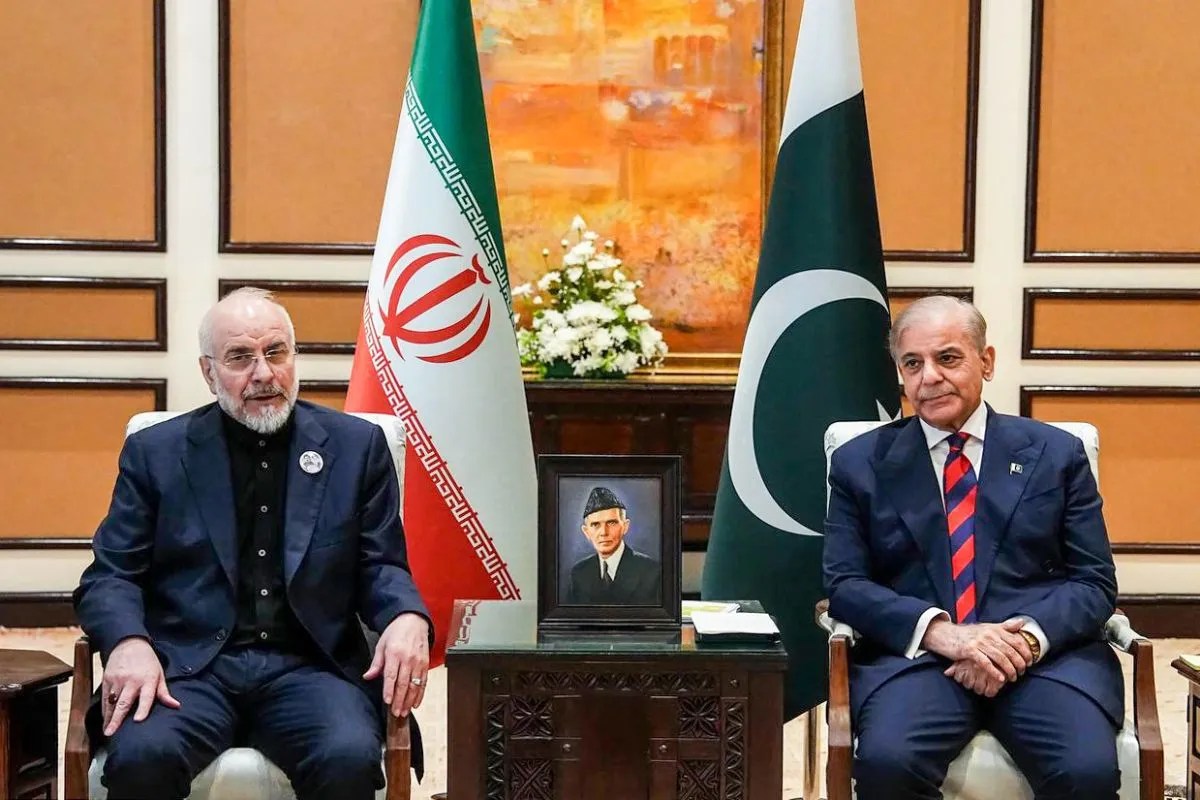
The air in Islamabad during a diplomatic stalemate doesn't smell like progress. It smells of heavy rain on hot asphalt and the metallic tang of anxiety. When the motorcades finally pulled away from the recent high-stakes talks between intermediaries acting for Washington and Tehran, they left behind a silence that felt less like a pause and more like a fuse burning down.
For the average person, "diplomatic failure" is a dry headline. For a merchant in the Grand Bazaar of Tehran or a logistics manager in a shipping firm in the Persian Gulf, it is a tightening of the chest. It is the sound of the world’s most dangerous friction point grinding its gears once again. The Islamabad talks were supposed to be a pressure valve. Instead, the valve jammed.
Now, three massive questions hang over the global map, casting shadows that reach far beyond the borders of the Middle East.
The Mirage of the Red Line
We often speak of "red lines" as if they are physical barriers, like a concrete wall topped with concertina wire. In reality, they are psychological. They exist only as long as the other side believes you will defend them.
Consider a hypothetical mid-level diplomat. Let’s call him Elias. Elias has spent twenty years studying the nuances of Iranian nuclear enrichment. He knows that the difference between 60% and 90% purity is not just a technical milestone; it is a declaration. During the Islamabad sessions, the fundamental disagreement wasn't just about percentages or centrifuges. It was about trust—a currency that has been devalued to the point of bankruptcy.
The first question that emerged from the wreckage of the talks is simple: Does a "point of no return" even exist anymore?
Iran has mastered the art of the slow creep. They move the needle just enough to provoke a statement of concern, but not enough to trigger a missile strike. Washington, meanwhile, is caught in a cycle of reactive signaling. When the talks in Islamabad sputtered to a halt, it signaled to the world that the old boundaries have eroded. We are no longer playing a game with clear rules. We are wandering through a fog where every step might be onto a landmine.
The stakes are not abstract. If the diplomatic path is officially declared dead, the alternative is not a return to the status quo. It is an escalation that neither side can fully control.
The Secret Language of Proxy Wars
While the men in suits were debating in Pakistan, the real conversation was happening elsewhere. It was happening in the drone corridors of the Red Sea and the missile silos of the Levant.
This is the second great unknown: Can the patrons still control their proteges?
For decades, the relationship between Tehran and its regional allies was seen as a simple hierarchy. Orders went out; actions followed. But the current chaos suggests something far more complex and terrifying. We are seeing a decentralization of conflict. When talks fail, the "franchise" fighters—groups that have their own local grievances and survival instincts—gain more autonomy.
Imagine a commander on the ground. He doesn't care about the nuances of a draft agreement in Islamabad. He cares about the shipment of supplies that didn't arrive or the drone strike that took out his predecessor. When diplomacy fails, these actors stop waiting for the green light. They start looking for the orange one.
The Islamabad failure suggests that the "Grand Bargain" is a ghost. If the US and Iran cannot agree on the basic framework of a ceasefire or a nuclear freeze, they lose their ability to tell their allies to stand down. The world isn't just watching two giants fight; it's watching two giants lose their grip on the leashes of a dozen smaller, hungrier wolves.
The Question That Keeps the World Awake
There is one specific query that has shifted from the fringes of intelligence briefings to the center of global concern. It is the question that made the Islamabad failure feel like a gut punch to the international community.
If the diplomatic door is locked, what is the cost of the key?
For years, the "cost" was measured in sanctions. We calculated the price of oil, the value of the Rial, and the impact of frozen assets. But we are moving into a different era. The new cost is measured in the risk of a "blind" nuclear breakout.
When monitors are restricted and cameras are turned off, the world goes dark. We are entering a period of strategic blindness. This isn't just about a bomb. It is about the uncertainty of a bomb. Uncertainty is the most volatile element in geopolitics. It leads to preemptive strikes. It leads to "accidental" wars.
History shows us that most great conflicts don't start because someone wants a world war. They start because someone miscalculates the other person's breaking point. In Islamabad, the two sides failed to find where those breaking points lie. They left the table without a map.
The Human Cost of a Stalled Pen
Behind every failed communiqué, there is a human reality that is often ignored.
Think of a family in Isfahan. They aren't thinking about enrichment levels. They are thinking about the price of medicine, which fluctuates every time a diplomat frowns in front of a camera. Think of a sailor on a commercial tanker in the Strait of Hormuz, looking at the radar and wondering if today is the day a political statement turns into a kinetic event.
These are the people who live in the gaps between the bullet points.
The failure in Islamabad wasn't just a failure of policy. It was a failure of imagination. Both sides have become so entrenched in their own narratives of victimhood and righteousness that they can no longer see the exit ramps. They are driving toward a cliff, arguing about who owns the road.
The world’s "tension," as the headlines call it, is actually a collective holding of breath. We are waiting to see if someone—anyone—has the courage to be the first to blink. But in the current climate, blinking is seen as a weakness, and in the high-stakes theater of the Middle East, weakness is often a death sentence.
The motorcades are gone now. The hotels in Islamabad have moved on to the next conference. But the questions remains, vibrating in the air like the hum of a power line. They are no longer just questions for diplomats. They are the variables that will determine the price of the bread on your table and the safety of the skies above your head.
We are living in the silence that follows a "no." It is a heavy, crowded silence. It is the kind of silence that usually precedes a very loud noise.