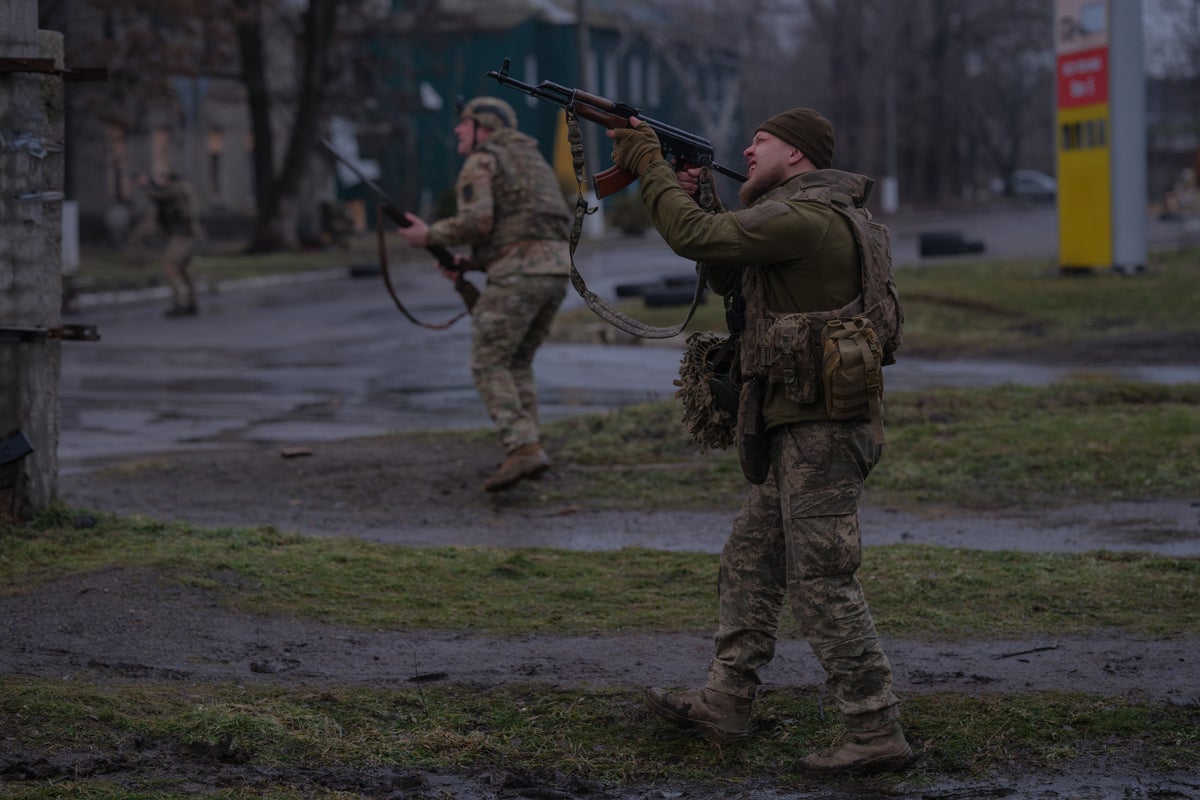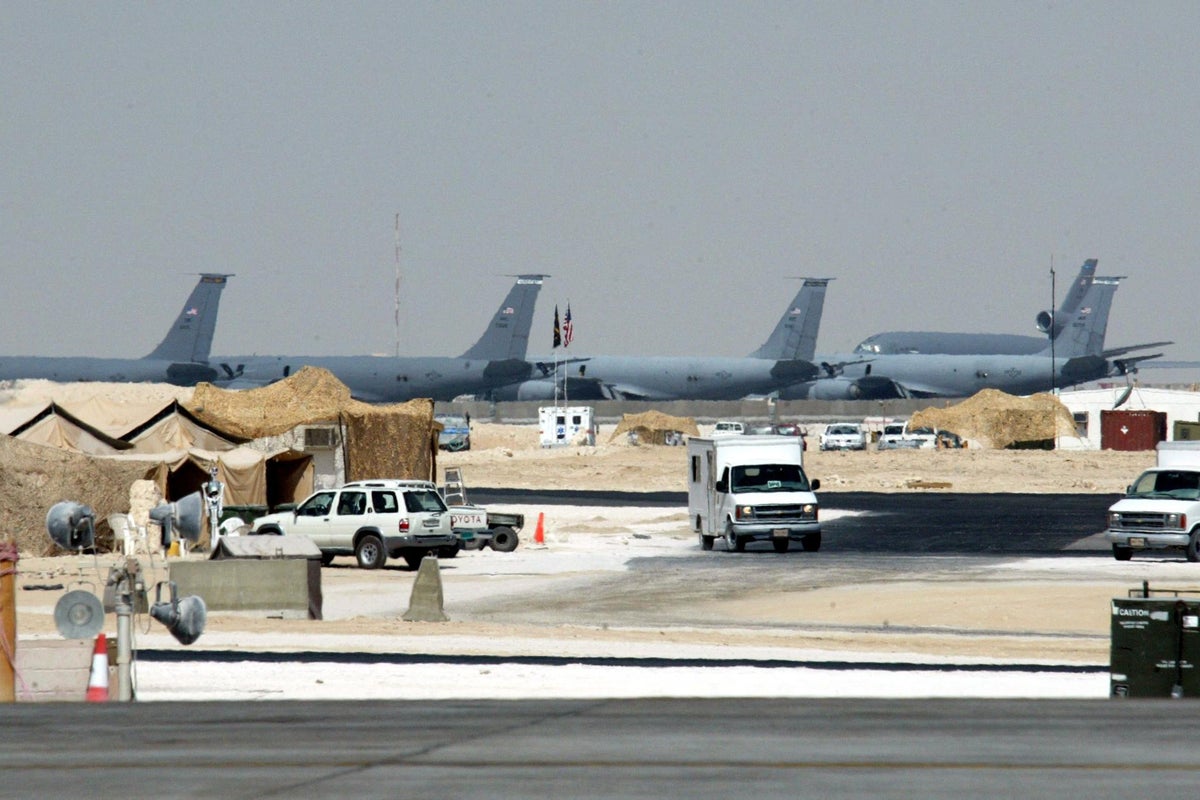
The hum is the first thing you notice. It isn't the sound of a city or the rhythmic pulse of nature. It is the mechanical respiration of a thousand cooling fans, the low-frequency thrum of generators, and the occasional, violent tear of a jet engine ripping through the high, dry air of the Levant. For the men and women stationed at Al-Asad in Iraq or Al-Udeid in Qatar, this sound is the soundtrack of a life lived in the crosshairs of a geopolitical chess match that never ends.
When news breaks of missiles arching across the night sky, we see red lines on a digital map. We see dots representing "assets" and "strategic nodes." But the map is alive. It is made of sand, sweat, and the constant, gnawing tension of people waiting for a radar screen to beep.
The Desert's Digital Eye
Thirteen hundred miles separate the southern reaches of the Arabian Peninsula from the rugged borders of Turkey. Scattered across this vast, arid expanse is a network of outposts that function less like traditional forts and more like a nervous system.
Take the Tower 22 base in Jordan. To a passerby, it looks like a collection of beige boxes lost in the grit. In reality, it is a vital sensory organ. Because it sits at the confluence of Jordan, Iraq, and Syria, it watches the "land bridge"—the routes used to move hardware and personnel across the heart of the Middle East. When drones or rockets are launched toward Israel or US interests, the data often passes through these quiet, dusty hubs first.
The sheer scale of this presence is staggering, yet often invisible until a crisis erupts. In Qatar, the Al-Udeid Air Base functions as the brain. It hosts the Combined Air Operations Center. Think of it as a massive, windowless room where every flight, every transponder, and every potential threat is tracked in real-time. It is the largest US military installation in the region, housing over 10,000 personnel. It isn't just a runway; it’s a small, fortified city with its own internal logic and its own crushing weight of responsibility.
The Geometry of Deterrence
Distance in the Middle East is measured in flight times and intercept windows.
In the north, Incirlik Air Base in Turkey provides a heavy footprint near the European door. To the south, the Fifth Fleet in Bahrain keeps a watchful eye on the Strait of Hormuz. This is the world’s most sensitive choke point. A single tanker wedged in the wrong place or a volley of sea-skimming missiles could send global oil prices into a vertical climb.
The UK’s role is more concentrated but no less vital. From HMS Juffair in Bahrain to the sprawling RAF Akrotiri on the island of Cyprus, the British presence provides the "reach." Akrotiri acts as a permanent aircraft carrier made of rock. When the RAF scrambles Typhoons to intercept drones over the Red Sea or Syria, they aren't flying from London; they are launching from a Mediterranean sun-drenched runway that has seen more history than most modern nations.
A Night of Kinetic Math
Consider a hypothetical sergeant—let's call him Elias—sitting in a darkened trailer in the Kuwaiti desert at 2:00 AM.
Elias isn't thinking about grand strategy or the history of the Safavid Empire. He is looking at a green streak on a monitor. He is doing kinetic math. If a projectile is launched from western Iran, it has to traverse hundreds of miles of monitored airspace.
- Step One: Detection. Infrared satellites sense the heat bloom of a launch.
- Step Two: Tracking. Radars in Iraq and Jordan lock onto the trajectory.
- Step Three: Interception. Aegis-equipped destroyers in the eastern Mediterranean or Patriot batteries in Saudi Arabia calculate the intercept point.
This is the "integrated air defense" we hear about in press briefings. To Elias, it is a race against a clock that measures success in seconds. If the math is off by a fraction, the "asset" becomes a casualty.
The Invisible Stakes of Presence
There is a common misconception that these bases exist solely for war. In truth, they exist to prevent it through the sheer, exhausting effort of being there.
In the United Arab Emirates, Al Dhafra Air Base hosts advanced surveillance aircraft and refueling tankers. These tankers are the unsung heroes of the sky. Without them, the fighter jets defending the region would be grounded within hours. It is a logistical ballet performed at 30,000 feet.
The Sultanate of Oman provides access to the Port of Duqm. It’s deep enough to house aircraft carriers. By keeping these gates open, the US and UK ensure that no single power can shut down the flow of the world’s energy. It is a silent, expensive, and grueling insurance policy.
The Human Cost of the Watch
We often talk about these locations as if they are static pieces on a board. They aren't. They are places where people miss births, funerals, and Tuesday nights on the couch.
In the smaller outposts in eastern Syria, like the Al-Tanf garrison, the isolation is absolute. There is no local city to visit, no "off-base" life. There is only the perimeter, the mission, and the horizon. The psychological toll of "waiting for the beep" is a weight that doesn't show up in the Department of Defense budget.
When Iran launched its recent barrages, the response wasn't just a matter of pressing a button. It was the culmination of decades of infrastructure building and the split-second decisions of young people far from home. The UK’s involvement, though smaller in headcount, provides the diplomatic and technical glue that makes the coalition work. It’s about interoperability—the ability for a British pilot and an American radar operator to speak the same digital language while the world holds its breath.
The Shifting Sands of the Base Map
The map is changing. In Iraq, the presence is increasingly focused on "advise and assist" rather than combat, but the infrastructure remains because the vacuum left behind is too dangerous to ignore. In Saudi Arabia, the relationship is transactional and tense, yet the Prince Sultan Air Base remains a cornerstone of the regional shield.
Every base is a political statement. To the host nation, it is a security guarantee and a lightning rod for domestic criticism. To the adversary, it is a target and a deterrent. To the world, it is the reason the lights stay on and the global markets don't collapse on a Monday morning.
We live in an era where war is often fought in the electromagnetic spectrum and through automated systems. But the hardware still sits on the ground. It sits in the heat of the Muwaffaq Salti Air Base in Jordan. It sits in the hangars of Al-Udeid.
The red dots on the news map aren't just points of interest. They are the frontline of a century that hasn't yet decided if it wants to be at peace.
Down on the flight line, the hum continues. A technician wipes grease from a wrench. A pilot climbs into a cockpit. Somewhere in the distance, a radar dish rotates, searching the empty sky for the one thing it hopes it never finds.
The sand eventually covers everything, but for now, the iron map holds.