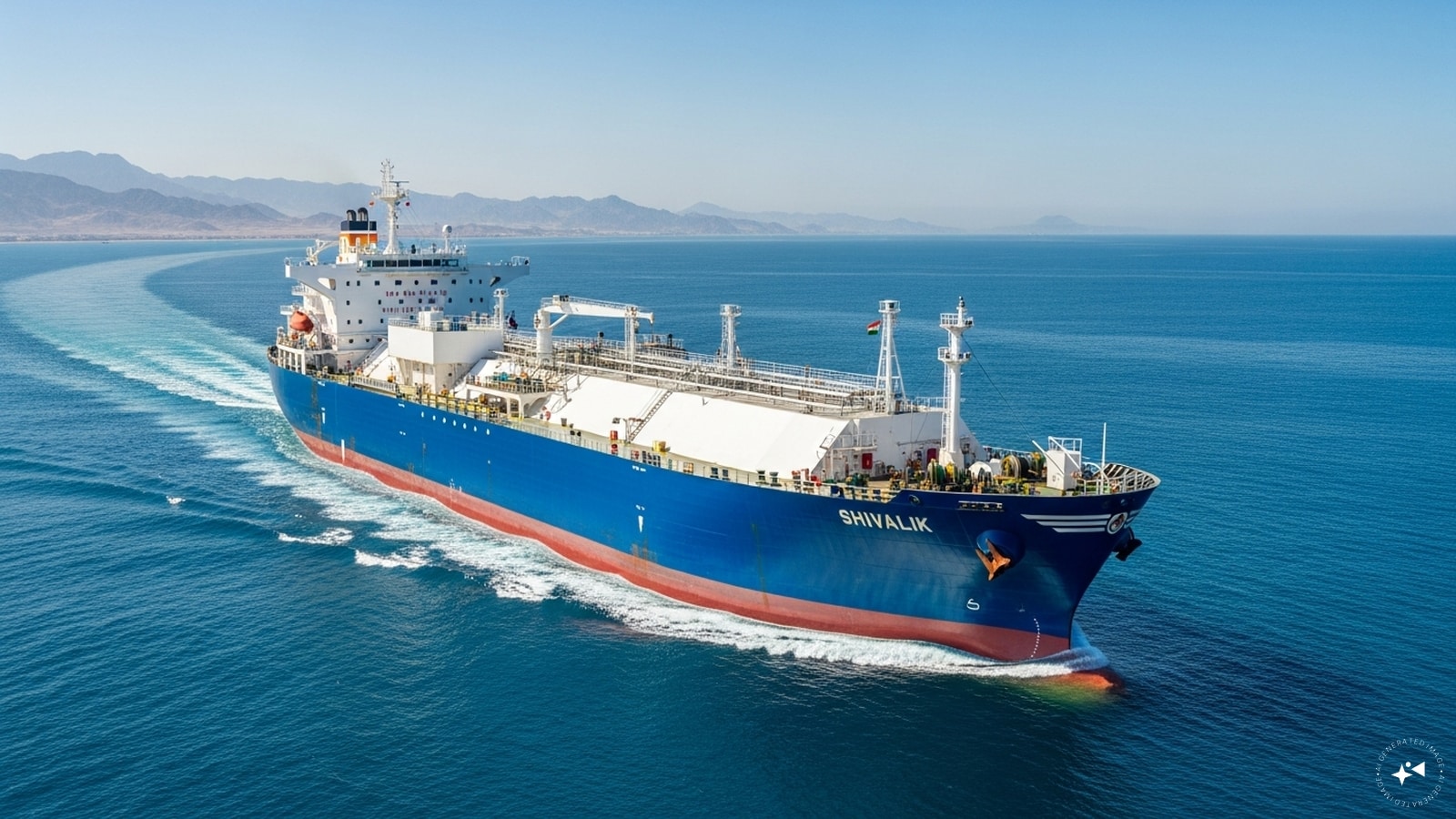
The headlines are predictable. They read like a Mad Libs template for regional instability: "US-owned tanker," "unmanned boats," "early findings." Reuters and the rest of the legacy press are obsessed with the who and the where. They want to talk about proxy groups and geopolitical posturing. They are staring at the finger while it points to the moon.
The real story isn't that a tanker got hit. The story is that a multi-billion-dollar maritime security apparatus just got bypassed by the nautical equivalent of a lawnmower engine and some fiberglass.
We are witnessing the democratization of high-stakes commerce disruption. If you think this is a localized Middle Eastern problem, you aren't paying attention to the math. This isn't about Iraq. This is about the terminal obsolescence of the "Big Steel" naval doctrine in an era of cheap, disposable, autonomous friction.
The Myth of the Unstoppable Tanker
For decades, the global economy has relied on a comforting lie: that sheer physical scale equals safety. We built $150 million Suezmax vessels and assumed that because they were massive, they were untouchable by anything short of a sovereign navy.
The industry calls this "maritime domain awareness." I call it expensive daydreaming.
The attack near Iraq using Unmanned Surface Vessels (USVs) highlights a catastrophic failure in how we define a "threat." Conventional defense is built to counter conventional power. We have Aegis combat systems designed to track supersonic missiles, yet we are baffled by a remote-controlled skiff that costs less than the paint job on a US Navy destroyer.
When a USV hits a tanker, the damage isn't just to the hull. It’s to the insurance premiums, the freight rates, and the very concept of "innocent passage." The competitor articles focus on the "early findings" of the investigation. Here is a finding they missed: the attacker spent $20,000 to jeopardize a $100 million cargo. That is an ROI that should keep every logistics CEO awake at night.
Stop Asking Who Did It and Start Asking How Much It Cost
The "People Also Ask" sections of the internet are flooded with queries about which militia is responsible. It’s the wrong question. It doesn't matter if it’s a state actor or a group of motivated insurgents in a garage.
The barrier to entry for disrupting global trade has hit zero.
I’ve spent years looking at supply chain vulnerabilities, and the pattern is always the same. We over-engineer the center and leave the edges frayed. A tanker is a floating target with limited maneuverability and a crew that is trained for safety, not surface warfare.
The "lazy consensus" suggests we need more patrols. More gray hulls in the water. That is a losing game. You cannot defend every square mile of the Persian Gulf or the Red Sea against "mosquito" fleets. If the solution to a $10,000 drone boat is a $2 billion littoral combat ship, the defender loses the economic war before the first shot is fired.
The Asymmetric Math of Modern Piracy
Let’s look at the physics of the problem. A standard VLCC (Very Large Crude Carrier) can take miles to come to a full stop. It is a kinetic behemoth.
$$K = \frac{1}{2} mv^2$$
The kinetic energy of these vessels is massive, but their agility is non-existent. A USV, meanwhile, operates with a low radar cross-section and high maneuverability. By the time a bridge crew identifies a fast-moving object as a threat rather than a fishing boat or sea clutter, the engagement window has already closed.
Traditional defense relies on "deconfliction"—making sure you don't shoot a civilian by mistake. Attackers use this hesitation as a primary weapon. They hide in the noise of global commerce.
The Insurance Industry is Lying to You
Marine insurers love to talk about "war risk" premiums. They treat these attacks as "Black Swan" events—rare, unpredictable, and extreme.
They are lying. These aren't Black Swans. They are "Grey Rhinos"—highly probable, high-impact threats that we see coming and choose to ignore because the solution is uncomfortable.
The industry's response to the Iraq incident will be to hike rates and hope the US Navy does more "presence operations." This is a tax on the consumer that does nothing to harden the target. If you want to actually secure a tanker, you don't need more destroyers; you need an onboard, automated point-defense system that treats the surrounding 500 meters of water as a "no-go" zone for anything without an IFF (Identification Friend or Foe) transponder.
But the International Maritime Organization (IMO) moves at the speed of a glacier. Regulations on "armed guards" or "automated lethality" are bogged down in 20th-century legalities while 21st-century threats are literally exploding on our doorstep.
Your Supply Chain is a House of Cards
"How does this affect oil prices?" That’s the shallowest way to view this.
The real risk is the "chokepoint contagion." When an attack happens near Iraq, the ripples aren't just in the crude market. They are in the confidence of the entire maritime labor force.
I have spoken to captains who are tired of being the sacrificial lambs in a geopolitical chess match they didn't sign up for. When the crews start refusing to sail these routes, or when unions demand "combat pay" for transit, the "just-in-time" delivery model of the global economy collapses.
Imagine a scenario where 15% of the global tanker fleet is sidelined because the risk-to-reward ratio for the crew and the owner no longer pencils out. We aren't talking about a $5 increase in the price of a barrel of oil. We are talking about a systemic seizure of global trade.
The Counter-Intuitive Truth About "Protection"
The more we "protect" these ships with traditional naval escorts, the more we incentivize attackers to innovate. We are stuck in a Darwinian arms race where the predator (the drone) evolves weekly, and the prey (the tanker) stays exactly the same for 30 years.
We need to stop thinking about ships as assets to be guarded and start thinking about them as nodes in a hostile network.
- Decentralize the Cargo: The age of the "Mega-Tanker" might be a liability we can no longer afford. Smaller, faster, more numerous vessels are harder to target and less catastrophic when lost.
- Autonomous Transits: If the ship doesn't have a human crew, the "hostage" or "casualty" leverage disappears.
- Hardened Hulls: We spend billions on software. We should be spending it on literal physical barriers—non-lethal acoustic deterrents and modular armor that can be fitted to existing hulls.
The Failure of "Early Findings"
The Reuters report is obsessed with the fact that these were "unmanned boats." As if the unmanned part is the novelty.
The novelty is the precision.
Old-school piracy was about boarding and ransoming. It was a business transaction. This new wave is about "denial of service." The goal isn't to take the ship; it’s to make the route unusable.
By framing this as a "hit-and-run" by a militia, we allow the industry to ignore the structural rot. We treat it like a thunderstorm—something you just have to wait out. But this isn't weather. This is the new baseline.
The "status quo" is a world where a teenager with a Starlink terminal and a modified jet ski can dictate the energy policy of a superpower. If that sounds like hyperbole, look at the satellite photos of the tanker's hull. That hole wasn't made by a superpower. It was made by an amateur who understood the vulnerability of the giants.
The Hard Reality
We are currently paying for a security model that cannot stop the very thing it is meant to prevent. We have prioritized the appearance of safety over the reality of resilience.
Every time a tanker is hit and we respond with a press release about "investigating the perpetrators," we signal to the world that we have no idea how to handle asymmetric maritime warfare.
The solution isn't more diplomacy or more carrier strike groups. The solution is a radical redesign of how we move physical goods across a planet that is increasingly hostile to the very idea of "globalism."
The "Big Steel" era is over. The "Small, Cheap, and Many" era has arrived. You can either adapt your fleet and your expectations to this reality, or you can keep waiting for "early findings" while your bottom line sinks in the Persian Gulf.
Stop looking for who pulled the trigger. Start looking at the fact that we left the door wide open and then acted surprised when someone walked in.
Secure the ship, not the sea. The sea is lost.