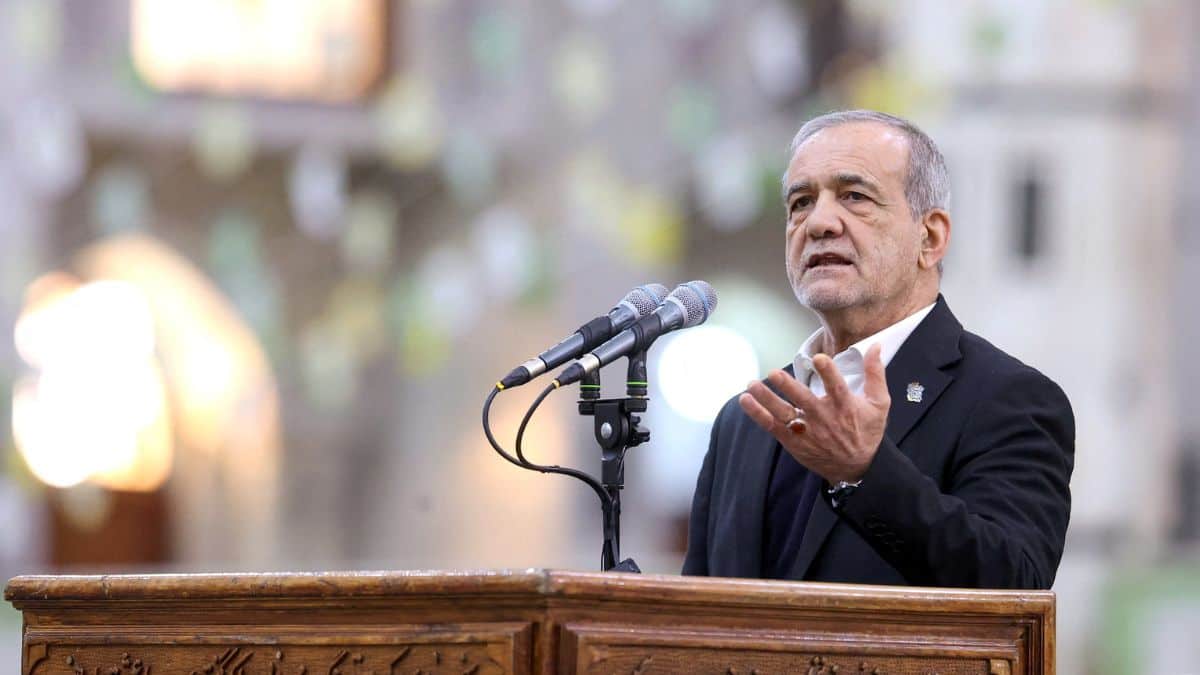
Iranian President Masoud Pezeshkian just did something you don't see every day in West Asian geopolitics. He looked at his neighbors—the same ones his military has been peppering with drones and missiles—and said, "I'm sorry."
It’s a wild pivot. On Saturday, March 7, 2026, Pezeshkian went on state television to announce that Iran’s temporary leadership council has officially ordered a halt to strikes against neighboring countries. The condition? They won't hit back unless an attack on Iran actually originates from those specific territories.
If you've been following the chaos of the last week, you know why this matters. Since the February 28 airstrike that killed Supreme Leader Ayatollah Ali Khamenei and sparked this current war, the region has been a shooting gallery. Iran hasn't just been targeting Israel or US assets; it's been hitting airports in Dubai, desalination plants, and even residential areas in Bahrain and Qatar. Now, the man at the top is calling it a "miscommunication."
The fire at will problem
Pezeshkian’s apology isn't just about being polite. It’s a desperate attempt to rein in a military that seems to be acting on its own. He admitted that the armed forces had been operating under a "fire at will" authority. Basically, the chain of command broke after the top leadership was wiped out.
Imagine being a leader trying to prevent total state collapse while your own generals are launching ballistic missiles at the very neighbors you need for economic survival. Pezeshkian is signaling to the world that he’s trying to get the leash back on the Islamic Revolutionary Guard Corps (IRGC).
But here’s the reality. While the President was talking about peace and "brothers" in the Gulf, reports were still coming in of drones targeting Al Dhafra Air Base in the UAE. It’s a mess. Either Pezeshkian doesn’t have the control he claims, or the IRGC is intentionally undermining him to keep the war hot.
Why the Gulf states aren't buying it
You can’t blame countries like Kuwait or Saudi Arabia for being skeptical. For years, they’ve played a delicate game of "don't mind us" while hosting US bases. They’ve spent billions on air defenses like the Patriot and THAAD systems to stop exactly what Iran just did to them.
- The Trust Gap: Iran says it won't strike unless attacked from those countries. But Tehran’s definition of "cooperation" with the US is famously broad. If a US jet uses a neighbor's radar data, does that count as an attack?
- Economic Damage: The strikes on the UAE and Qatar have already rattled global markets. Brent crude is sitting north of $80, and war risk insurance for the Persian Gulf was basically cancelled this week. An apology doesn't fix a cratered warehouse or a terrified tourism industry.
- Internal Backlash: Hardliners in Tehran are already calling Pezeshkian’s apology "humiliating." Lawmakers in Qom are asking why he’s being humble when they think the neighbors are "tools of imperialism."
The Trump factor and the surrender demand
This isn't happening in a vacuum. President Donald Trump has been loud on Truth Social, demanding nothing less than "UNCONDITIONAL SURRENDER." He’s even started using the acronym MIGA—Make Iran Great Again—to describe his vision for a post-regime Iran.
Pezeshkian’s response to that was blunt. He told his audience that those dreaming of Iran’s surrender will "take that wish to the grave."
So, we have a stalemate. Iran is trying to de-escalate with its neighbors to prevent a total regional coalition from forming against it, but it’s simultaneously doubling down on its fight with the US and Israel. It’s a high-stakes balancing act that could easily fall apart if one more "miscommunicated" missile hits a civilian target in Riyadh or Abu Dhabi.
What this means for the next 48 hours
The big question is whether the IRGC actually listens. If the missiles stop falling on the GCC states, Pezeshkian might just have enough domestic capital to push for a mediated ceasefire. Qatar and Oman are already trying to bridge the gap.
However, if the "fire at will" mentality continues, the apology will be remembered as the last gasp of a presidency that couldn't control its own guns.
If you're tracking this for energy prices or regional stability, watch the flight paths. If civilian airports in the Gulf stay open and the sirens in Doha stay silent for the next 48 hours, Pezeshkian’s gamble might be working. If not, expect the US and Israel to ramp up the bombing campaign even further.
Keep an eye on the official statements from the IRGC. If they start contradicting the President's "no first strike" policy in writing, the internal power struggle in Tehran is officially out of control.