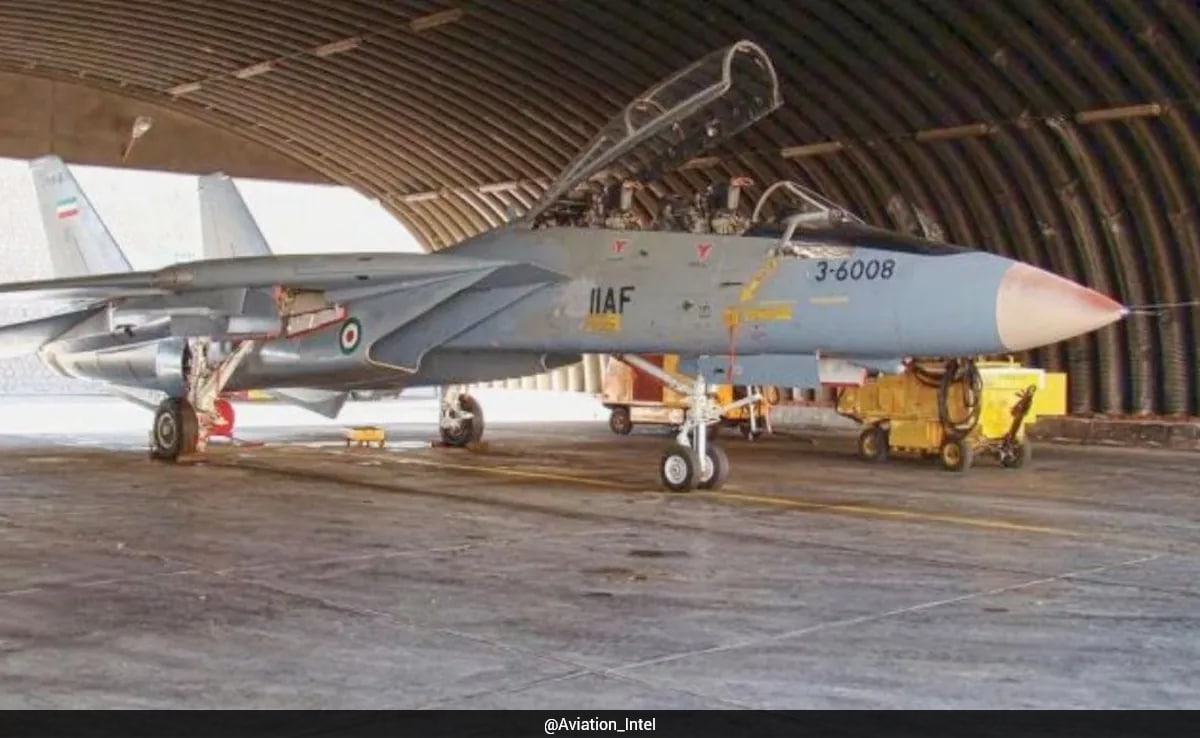
The recent Israeli strikes on Iranian military infrastructure didn't just target missile production sites or radar arrays. They poked a massive hole in the myth of Iranian air superiority. For decades, the Islamic Republic of Iran Air Force (IRIAF) has relied on a ghost from the Cold War—the Grumman F-14 Tomcat. This swing-wing legend, once the pride of the US Navy, is now a flying museum piece. When Israeli jets entered Iranian airspace, they weren't just fighting a military; they were fighting a timeline that ended in 1979.
You've probably seen Top Gun. You know the F-14 as the ultimate dogfighter. But in the reality of 2026, a 50-year-old airframe held together by smuggled parts and reverse-engineered bolts isn't a deterrent. It's a target. Reports indicating that Israel successfully hit facilities housing these "prized" jets suggest that the era of the Iranian Tomcat is effectively over. If you can't protect the hangars where your best planes sit, you don't really have an air force. You have a collection of very expensive stationary targets.
The Strategic Failure of Relying on 1970s Technology
Iran is the only country left on Earth flying the F-14. Think about that. The US Navy retired the platform in 2006 because it was too expensive and too hard to maintain. Iran has kept them in the air through sheer desperation and a black market supply chain that would make a spy novelist blush. But "keeping them in the air" isn't the same as "keeping them lethal."
The F-14 was designed to kill Soviet bombers at long range using the AIM-54 Phoenix missile. It's a heavy, lumbering beast compared to a modern F-35 or a customized Israeli F-15I Ra'am. In a modern electronic warfare environment, the Tomcat’s AWG-9 radar glows like a bonfire in a dark forest. It tells everyone exactly where it is. Israeli electronic warfare suites can likely blind these old systems before the Iranian pilots even know they're being tracked.
During the strikes, Israel reportedly bypassed multiple layers of Iranian defense. This included the S-300 systems bought from Russia. If the high-end Russian surface-to-air missiles couldn't stop the IAF, a handful of F-14s stood zero chance. We're talking about a mismatch so profound it's barely a fight. It’s a slaughter.
Why the Tomcat Still Matters to Tehran
To understand why losing these jets is such a gut punch, you have to look at Iranian national pride. The F-14 is a symbol. It’s a remnant of the Shah’s era that the current regime repurposed to fight Iraq in the 1980s. Iranian pilots actually have an incredible combat record with the F-14, claiming dozens of kills against Iraqi MiGs. That history creates a psychological shield that is now shattering.
- The Propaganda Factor: Tehran uses these jets in every parade. They’re proof that Iran can "defy" Western sanctions.
- The Missile Bus: Iran modified the F-14 to carry domestic missiles like the Fakour-90. They’re trying to turn a vintage fighter into a long-range sniper.
- The Lack of Options: Russia hasn't delivered the Su-35s Iran desperately needs. Without the Tomcats, the Iranian sky is wide open.
Basically, Iran is stuck. They’re trying to win a 21-century chess match with pieces from a 1974 checkers set. When Israel hits the bases at Isfahan or Shiraz, they aren't just breaking metal. They’re exposing the fact that Iran’s air defense strategy is a house of cards.
What Happens When the Radar Goes Dark
The real story isn't just about the planes. It’s about the "eyes" of the Iranian military. Reports suggest Israel targeted the "Ghadir" long-range radar systems and other early-warning nodes. If you take out the radar, the F-14s are flying blind. An F-14 without ground control support is just a very fast way to die.
I’ve seen plenty of analysts claim that Iran’s "asymmetric" warfare—drones and proxies—makes their air force irrelevant. That's a mistake. You need an air force to intercept cruise missiles and protect your own airspace. Drones can’t do that. If the Tomcats are grounded or destroyed on the tarmac, Israel can fly sorties over Tehran with total impunity.
Modern air combat is about stealth and data. The F-14 has neither. It has a massive radar cross-section. It’s about as stealthy as a flying skyscraper. Against Israeli pilots who have thousands of hours in F-35s, the Iranian pilots are essentially sacrificial.
The Logistics of a Dying Fleet
Maintenance on these jets is a nightmare. Every time an F-14 flies, it requires roughly 40 to 60 hours of maintenance. Iran has to 3D-print parts or buy them from shady middlemen. This leads to "cannibalization"—taking parts from one jet to keep another one flying.
- Airframe Fatigue: Metals weaken over fifty years. These jets are literally vibrating themselves apart.
- Engine Reliability: The TF30 engines were always temperamental. In the desert heat of Iran, they're prone to compressor stalls.
- Obsolete Avionics: You can't just plug a modern GPS into a 1970s cockpit and expect it to work with the old wiring.
When Israel strikes a base, they don't need to destroy every jet. If they destroy the specialized tools, the hangars, or the few remaining expert mechanics, the fleet is dead anyway. It’s a systemic collapse.
The Reality of Air Superiority in 2026
We have to be honest about the power dynamic here. Israel has a qualitative edge that is decades ahead of anything Iran can muster. The IAF isn't just better trained; they're better equipped to a degree that makes traditional dogfighting a memory. The strikes proved that Iran’s "ring of fire" and its "prized" jets can’t stop a determined, technologically superior force.
If Iran wants to keep its Tomcats as museum pieces, that's fine. But trying to use them as a front-line defense against the most sophisticated air force in the Middle East is a recipe for disaster. The recent strikes were a loud, fiery message. The message was simple: Your legends won't save you.
Watch the regional shifts in the coming months. If Iran can't secure Su-35s from Russia soon, they will have to rely entirely on ground-based missiles. That makes them predictable. A predictable enemy is an easy enemy to dismantle.
Keep an eye on satellite imagery coming out of Isfahan. The number of active F-14s visible on the tarmac is the only metric that matters now. If those numbers drop, Iran’s ability to project power in its own skies is officially gone. Start looking at how Iran shifts its budget toward more drones—it’s the only move they have left when their wings are clipped.