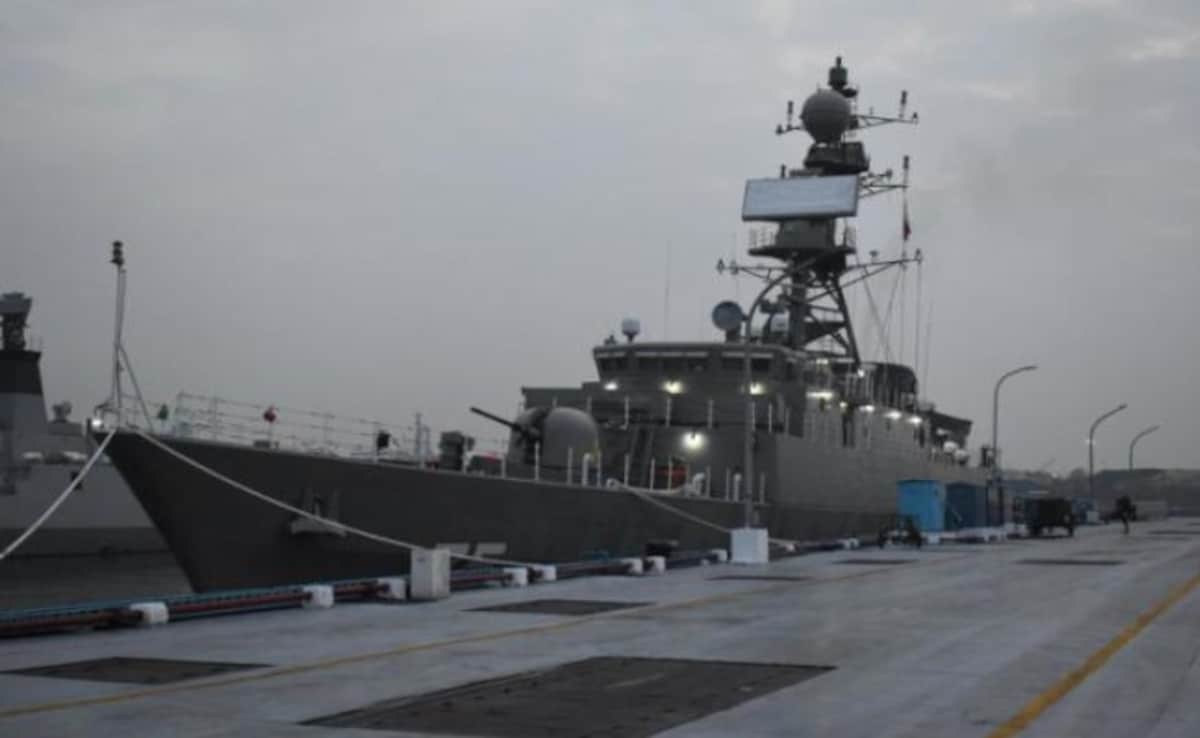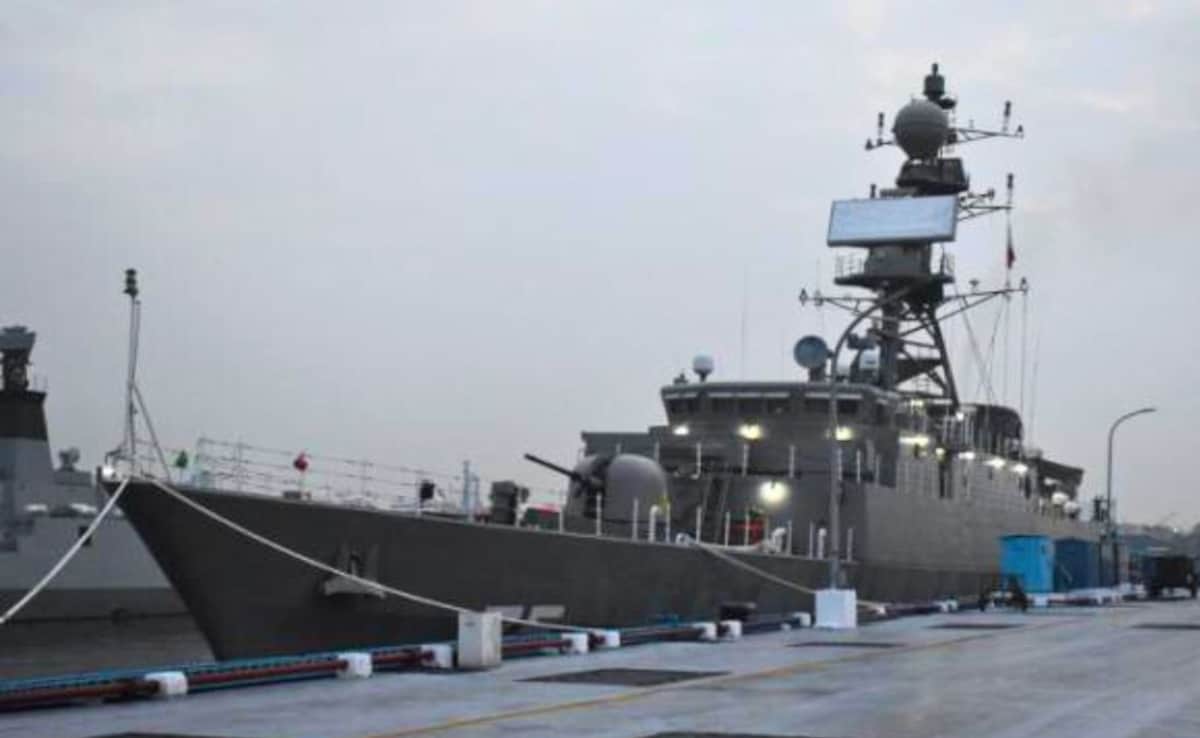
The headlines are dripping with predictable western smugness. An Iranian frigate—the Sahand—capsized in the port of Bandar Abbas, and the consensus is already written: "Incompetence." "Rusting hulls." "A Navy in shambles." The media is obsessed with the fact that this same ship participated in a 2024 naval exercise in India, as if its presence there makes its current state a more delicious irony.
They are missing the point entirely. Discover more on a related issue: this related article.
If you think a ship sinking at the pier is just a maintenance failure, you aren’t paying attention to how regional powers project influence through perceived vulnerability. In the world of naval warfare, a hull is just steel. The signal it sends by failing is often more potent than the signal it sends by floating.
The Cult of the Shiny Hull
Western naval doctrine is obsessed with "readiness" metrics. We track mission-capable rates and hull integrity like they are the only indicators of power. But for a nation like Iran, operating under decades of sanctions, a ship like the Sahand isn't a power projector in the traditional sense. It’s a laboratory. Additional journalism by NPR explores related perspectives on this issue.
When the Sahand rolled over, the immediate reaction from military analysts was to point to technical failures in the ballast tanks or poor repairs. They’re likely right. But treating this as a sign of Iranian weakness is a tactical error.
I have watched defense contractors burn billions trying to build "unsinkable" platforms that end up being too expensive to actually use in a real conflict. Iran doesn't have that luxury, and more importantly, they don't have that incentive. Their naval strategy—specifically the "Mosquito Fleet" doctrine—relies on the fact that their primary assets are disposable, cheap, and numerous. The Sahand was an attempt to play the "Blue Water" game, and its failure actually reinforces their more dangerous strength: asymmetric chaos.
Stop Asking If They Are Competent
The most common question on search engines and in briefing rooms is: "Is the Iranian Navy a real threat?"
It’s the wrong question.
The right question is: "How does a nation that cannot keep its own frigates upright still control the most vital energy chokepoint on the planet?"
The answer lies in the Symmetry Gap. By focusing on the Sahand’s failure, we ignore the thousands of fast-attack craft, drone swarms, and shore-based missile batteries that don't need a dry dock to be lethal. While Western media mocks a sinking frigate, Iran is refining the art of the "Cheap Kill."
Consider the math. A single US destroyer costs roughly $2 billion. A swarm of 50 Iranian explosive motorboats costs less than the paint job on that destroyer. If Iran loses a frigate to a bungled repair, it’s a PR bruise. If the US loses a destroyer to a $20,000 drone, it’s a national crisis.
The India Exercise Fallacy
The competitor's focus on the 2024 India exercise is a classic "correlation equals significance" trap. They suggest that because the Sahand was in India for MILAN 2024, its subsequent sinking is a sign of a rapid decline.
Wrong.
The Sahand being in India was a diplomatic maneuver, not a military one. It was about showing the flag and signaling to the BRICS nations that Iran is a player. The ship's mechanical state was irrelevant to that goal. It served its purpose the moment it dropped anchor in Indian waters. Its current status at the bottom of a harbor in Bandar Abbas doesn't retroactively erase the diplomatic points Iran scored by showing up.
In fact, there is a distinct advantage to having a navy that the enemy perceives as "bumbling." It creates a dangerous sense of complacency in opposition commanders. History is littered with "superior" forces that were gutted by "inferior" opponents they didn't take seriously.
The Technical Reality of Shallow Water Failure
Let's talk about the mechanics of the "Sunk at Pier" phenomenon. For a ship to capsize during repairs, you usually need a perfect storm of:
- Improper weight distribution during refit.
- Failure of the sea chests (intake valves).
- A crew that isn't trained for "Cold Iron" emergencies.
People see this and think "unprofessional." I see it as the inevitable byproduct of a navy that is forced to innovate in a vacuum. Iran is building their own ships from scratch because they have to. When you build your own hardware without a century of established maritime industrial complex backing you, things will break.
But here is the kicker: They are still building them.
Every time an Iranian ship sinks due to a technical error, their domestic engineers get a data set that no simulation can provide. They are learning the hard way, and while that's expensive in terms of hulls, it builds a localized expertise that sanctions cannot touch.
The Illusion of "Blue Water" Ambitions
The West wants Iran to have a traditional navy. Why? Because we know how to fight a traditional navy. We have the carrier strike groups and the subsurface capability to erase a conventional fleet in forty-eight hours.
The Sahand, and the Moudge-class it belongs to, are distractions. They are the "suit and tie" Iran wears to international meetings. Their real teeth are the ones we can't see on a satellite feed of a pier.
When you see a headline about a sinking Iranian ship, don't laugh. It means they are pushing their limited resources to the absolute breaking point to see where that point lies. It’s a stress test.
The Actionable Truth for Intelligence Consumers
If you are tracking maritime security, stop looking at hull counts. It’s a legacy metric that means nothing in 2026.
- Watch the "Low-Tech" Intersections: Track how many commercial vessels are being harassed by small craft, not how many frigates are in port.
- Ignore the "Competence" Narrative: Assume your adversary is dangerous precisely because they have nothing to lose by failing.
- Value the Attrition: In a conflict in the Strait of Hormuz, Iran expects to lose 90% of its assets. A ship sinking in port is just an early start to that tally.
The Sahand is a submerged hunk of metal. But the mindset that put it there—the willingness to operate on the edge of catastrophe—is exactly what makes a regional power impossible to ignore. They aren't trying to match the US Navy; they are trying to make the cost of US involvement too high to pay.
And every time we laugh at their "failure," they win the psychological war of being underestimated.
Stop measuring their navy by how well it floats. Start measuring it by how much it disrupts the global status quo without ever firing a shot.
Find a different metric. The one you’re using is dead.