The humming of a server rack in a nondescript data center in Northern Virginia doesn't usually sound like a war cry. It’s a steady, hypnotic drone—the sound of the modern world breathing. But lately, that breath has been catching. There is a new, jagged tension in the air. It stems from a realization that the distance between a missile battery in the Iranian desert and the digital infrastructure of the American Midwest has shrunk to the width of a fiber-optic cable.
We are no longer living in an era where conflict is contained by borders or buffered by oceans. Today, the front line might be your morning commute, your banking app, or the power grid keeping your milk cold. When Tehran looks at the map of potential targets, they aren't just seeing military bases. They are seeing the logos of the companies that make your life function.
The Anatomy of a Threat
Tehran’s recent declarations aren't merely rhetorical flourishes designed for domestic consumption. They represent a fundamental shift in the geometry of modern deterrence. The message is blunt: if you strike our energy, we will strike your economy. It is a doctrine of mirrored vulnerability.
Consider the "hypothetical" case of Elias. Elias manages a regional logistics hub for a major American shipping firm. He doesn't wear a uniform. He doesn't have a security clearance. He spends his days worrying about fuel costs and delivery windows. But in the eyes of a nation-state looking to project power without launching a transcontinental ballistic missile, Elias’s terminal is a strategic asset. If a cyber-offensive shuts down his routing software, the ripple effect doesn't just delay a few packages. It clogs the artery. It creates a vacuum of confidence.
This is the "invisible stake" that traditional reporting often misses. We talk about "infrastructure" as if it’s a collection of concrete and steel. It isn't. Infrastructure is the trust that when you turn a key, the engine starts. It is the invisible permission we give society to function.
The Crude Reality of Energy
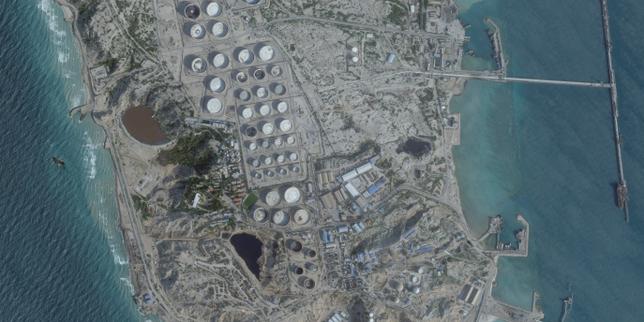
The Iranian leadership knows that their greatest strength is also their most glaring bullseye. Their oil refineries and gas terminals are the lifeblood of their economy, but they are stationary, flammable, and easily tracked by satellite. If those facilities are neutralized, the Iranian state faces an existential winter.
To prevent this, they have pivoted to a strategy of asymmetric terror. They have signaled that any American company operating in the Middle East—or providing the technical backbone for regional energy production—is now a legitimate target. This isn't just about oil. It’s about the cloud. It’s about the specialized software that regulates pressure in pipelines. It’s about the financial systems that process a billion dollars in transactions before you’ve even finished your first cup of coffee.
The math is chillingly simple. A missile strike on an Iranian refinery costs millions and carries massive political weight. A coordinated cyber-attack on a Fortune 500 company’s logistical chain costs a fraction of that and offers the perpetrator a degree of "plausible" deniability that traditional warfare lacks.
Why the Private Sector is the New Front Line
For decades, the American private sector operated under a comfortable umbrella of state protection. War was something the government did on your behalf, or something it shielded you from. That umbrella has holes in it.
The modern corporate world is built on efficiency, not resilience. We have spent thirty years "optimizing" everything—removing redundancies, slimming down inventories, and connecting every single device to the internet to gather data. This connectivity is a miracle of the 21st century. It is also a massive, blinking neon sign for anyone looking to cause chaos.
Think about a standard American power utility. It relies on a labyrinth of sensors and industrial control systems. Many of these systems were designed before the internet was a household utility. They were built for reliability, not security. When Iran talks about targeting American "interests," they are betting on the fact that these legacy systems are the soft underbelly of a superpower.
The Psychology of the Shadow Strike
There is a specific kind of dread that comes with this type of conflict. It’s different from the fear of a kinetic explosion. It’s the fear of the glitch.
Imagine waking up to find your bank account balance at zero. Not because the money is gone, but because the interface that shows it to you has been scrambled. Imagine the traffic lights in a major city turning green in all directions simultaneously. This is the "grey zone" of warfare—the space between peace and all-out destruction where the goal isn't to kill people, but to break the will of a population.
Iran is banking on the idea that the American public has a low threshold for inconvenience. They believe that if they can make the "business of being American" difficult enough, the political pressure to de-escalate will become overwhelming. It’s a gamble on our collective impatience.
The Broken Mirror of Deterrence
We often hear the term "deterrence" used by talking heads on the news. They speak of it as a static thing, like a wall. It’s not a wall. It’s a conversation. It’s a constant, silent dialogue between two parties who are trying to convince each other that the cost of acting is higher than the reward.
By threatening American companies, Iran is trying to change the terms of that conversation. They are moving the goalposts from the battlefield to the boardroom. This creates a nightmare scenario for CEOs who now have to weigh their quarterly earnings against the geopolitical maneuvers of a foreign power. Do you pull out of a lucrative market to protect your servers? Do you invest billions in cyber-defense at the expense of innovation?
There are no easy answers. The complexity of the global supply chain means that even if a company has no physical presence in the Middle East, they are likely three or four degrees of separation away from someone who does. The contagion of risk is absolute.
The Human Cost of the Digital Siege
Beyond the billions of dollars and the geopolitical chess moves, there is a human element that gets lost in the headlines. It’s the engineers who stay up for 72 hours straight trying to patch a vulnerability. It’s the small business owner who loses their entire inventory because a shipping delay caused by a "technical glitch" turned into a week-long blackout.
These are the casualties of a war that hasn't been officially declared. They are the collateral damage of a world where everything is connected and nothing is truly safe. We are all living in the blast radius of a conflict that is fought in code and shadow.
The tension we feel today isn't just about the news coming out of the Middle East. It’s the realization that the wall between "over there" and "right here" has dissolved. We are participants in this narrative, whether we want to be or not. Every time we log in, every time we swipe a card, we are interacting with a system that is currently under observation by those who wish to see it fail.
The light switch on your wall is connected to a grid. That grid is connected to a network. That network is connected to a global economy. And that economy is now a target.
The silence of a data center isn't peaceful anymore. It’s the sound of a held breath, waiting to see who blinks first in a room where everyone is holding a match. The air is thick with the scent of ozone and the cold, metallic tang of an impending storm that no umbrella can stop.