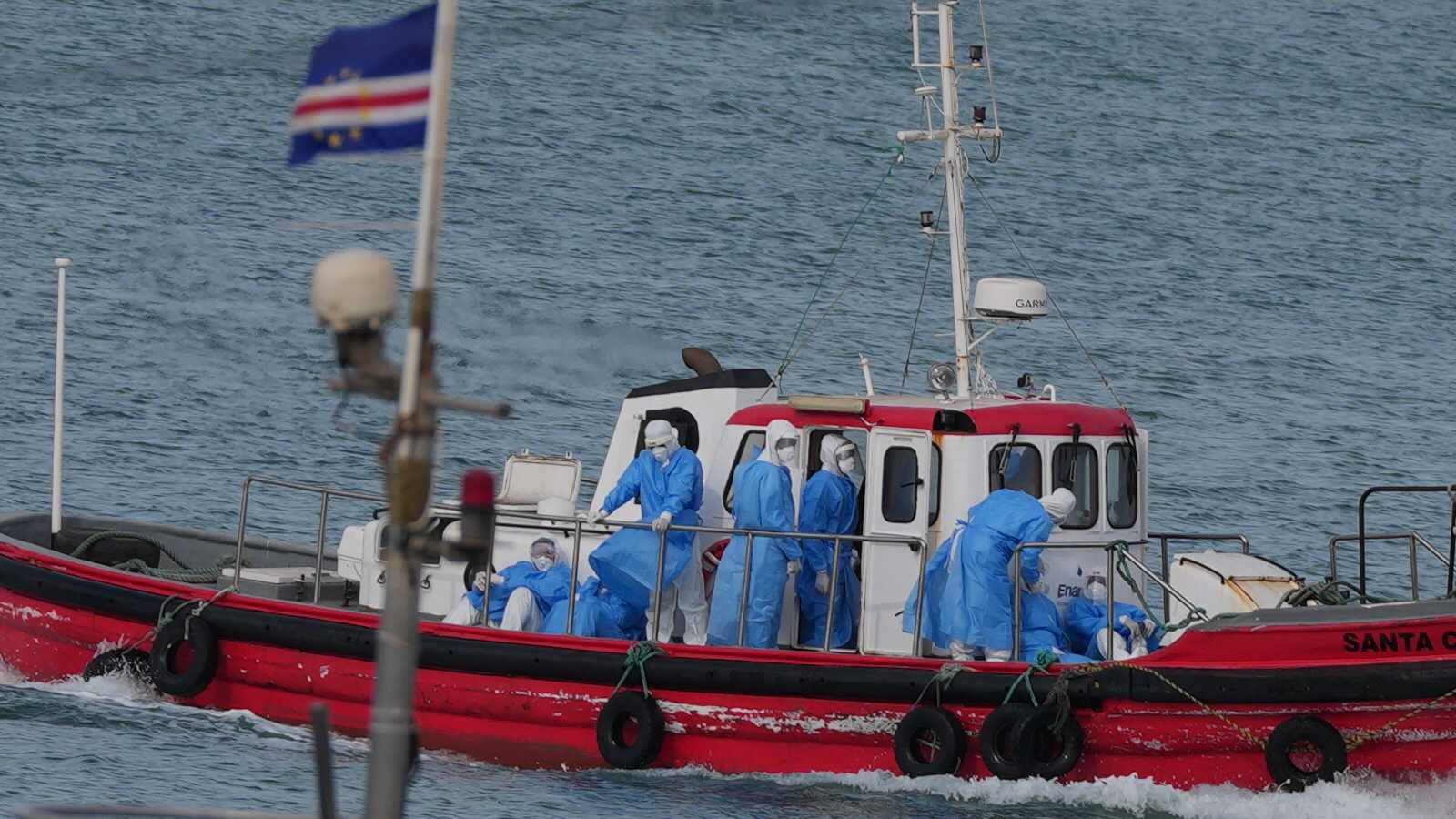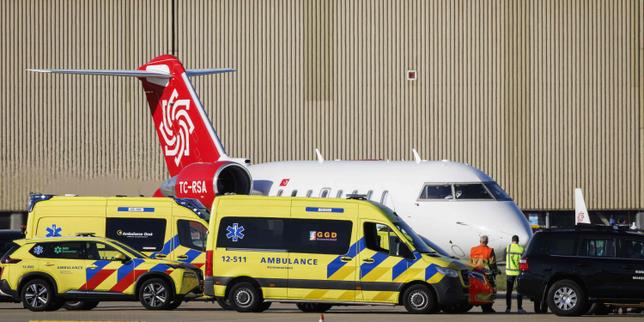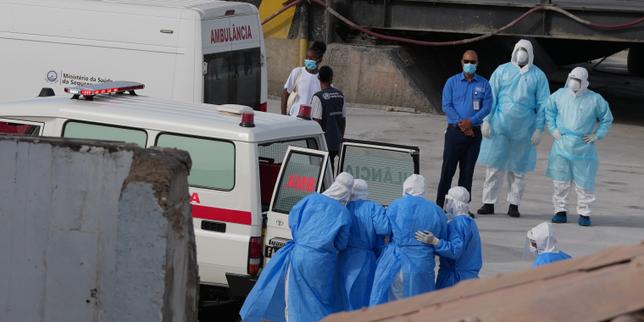
The wind in Ushuaia carries a specific, biting chill, even in the thaw of the southern spring. It is the kind of cold that makes travelers huddle into their high-tech parkas, eyes bright with the anticipation of the Great White Continent. At the pier, the MV Hondius sat like a sturdy promise of adventure. It is an ice-strengthened vessel, built to withstand the crushing will of the polar seas. But as the first passengers crossed the gangway, they were unaware that the most dangerous force on board wasn't the shifting ice or the Drake Passage’s infamous swells.
It was something microscopic. Something that had already claimed two lives before the engines even turned over.
The tragedy didn't begin on the water. It began in the dust.
The Long Shadow of the Andes
To understand how a luxury expedition turned into a forensic puzzle for Argentine health authorities, you have to look away from the coast and toward the rugged interior of the Chubut province. Imagine a traveler—let’s call him Elias—spending his final days on land trekking through the wild beauty of Patagonia. He is breathing in the scent of dry earth and Nothofagus trees. Perhaps he spent a night in a rustic cabin or moved a pile of wood to start a fire.
In those quiet, rural moments, a virus known as Hantavirus waits.
It lives in the secretions of long-tailed pygmy rice rats. When the urine or droppings of an infected rodent dry into the soil, the virus becomes an aerosol. One deep breath of disturbed dust is all it takes. There is no cough, no immediate fever, no warning. The virus simply hitches a ride, settling into the lungs of its new host.
Elias feels fine. He boards a bus. He checks into a hotel in Ushuaia. He meets a fellow traveler, a woman from a different corner of the globe, and they share a meal, talking about the penguins they hope to see. They have no idea that their bodies have become biological ticking clocks.
The Panic in the Port
The Argentine Ministry of Health recently found itself in a race against a ghost. Two passengers, part of the cohort destined for the MV Hondius, died with terrifying speed. Hantavirus Pulmonary Syndrome (HPS) is a brutal thief. It mimics the flu at first—aching muscles, fatigue, a nagging headache. Then, the lungs begin to fill with fluid.
The victims didn't die at sea. They died before the ship could leave the harbor, sparking an immediate, frantic investigation into their movements. Where did they sleep? Which cafes did they frequent? Most importantly, who did they sit next to?
Public health officials aren't just looking for facts; they are looking for a trail of breath. While the most common form of Hantavirus in North America doesn't spread between humans, the "Andes" strain found in South America is different. It is the only one known to jump from person to person.
This creates a unique kind of terror for a cruise ship. A vessel like the Hondius is a closed ecosystem. It is a world of shared dining tables, narrow corridors, and recirculated air. If the virus was already moving through the lungs of the passengers as they waited to embark, the ship wouldn't be an escape; it would be a floating incubator.
The Weight of the Unknown
There is a specific kind of silence that descends on a travel hub when word of an outbreak spreads. It’s the sound of people suddenly becoming aware of their own breathing.
Health authorities in Tierra del Fuego had to make a choice. Do you lock down a multi-million dollar tourism industry? Or do you trust the incubation period? The "Andes" strain can remain dormant for up to 45 days. This means the tragedy in Ushuaia isn't just about the two souls lost at the pier; it’s about the hundreds of others who walked those same halls, now scattered back to their home countries or deeper into the Antarctic wilderness.
We often view modern travel as a series of sterile transitions—airport to hotel, hotel to ship. We forget that we are biological entities moving through ancient landscapes. The pygmy rice rat doesn't care about luxury itineraries or the cost of a cabin. It exists in an evolutionary struggle that predates the concept of a tourist.
The investigation into the MV Hondius passengers has become a map of human contact. Investigators are retracing steps through the Epuyén region, a place already scarred by a massive Hantavirus outbreak in 2018. They are looking at the timeline of the "pre-boarding" phase, that liminal space where a vacation is still a dream.
The Fragility of the Frontier
The stakes are invisible but absolute. If the Argentine authorities fail to trace every contact, the virus continues its silent journey.
Think about the logistical nightmare of a person-to-person transmission in a remote setting. The MV Hondius is designed to take people to the edge of the world, where hospitals are non-existent and help is days away by sea. If a passenger begins to gasp for air while surrounded by the silence of the icebergs, there is very little a ship’s doctor can do. HPS has a mortality rate that can hover around 40 percent.
It is a reminder that our desire to explore the "untouched" parts of the world comes with a price. We are entering habitats where we are not the apex predator; the microbes are.
The two passengers who died were the first warning shots. Their deaths forced a halt, a moment of reckoning for the cruise line and the local government. They had to ask: how do we protect the dream of the frontier without bringing the nightmare back with us?
As the sun sets over the Beagle Channel, the water turns a deep, bruised purple. The MV Hondius eventually cleared its hurdles, but the shadow remains. The story isn't about a ship or a virus. It’s about the thinness of the veil between a life-changing journey and a life-ending one.
We walk through the world thinking we are the protagonists, but sometimes, we are just the vessel for a story much smaller, much older, and much more patient than we can imagine.
Somewhere in a dusty barn in the mountains, a mouse scurries across a wooden beam. A light breeze shifts the air. The cycle begins again.