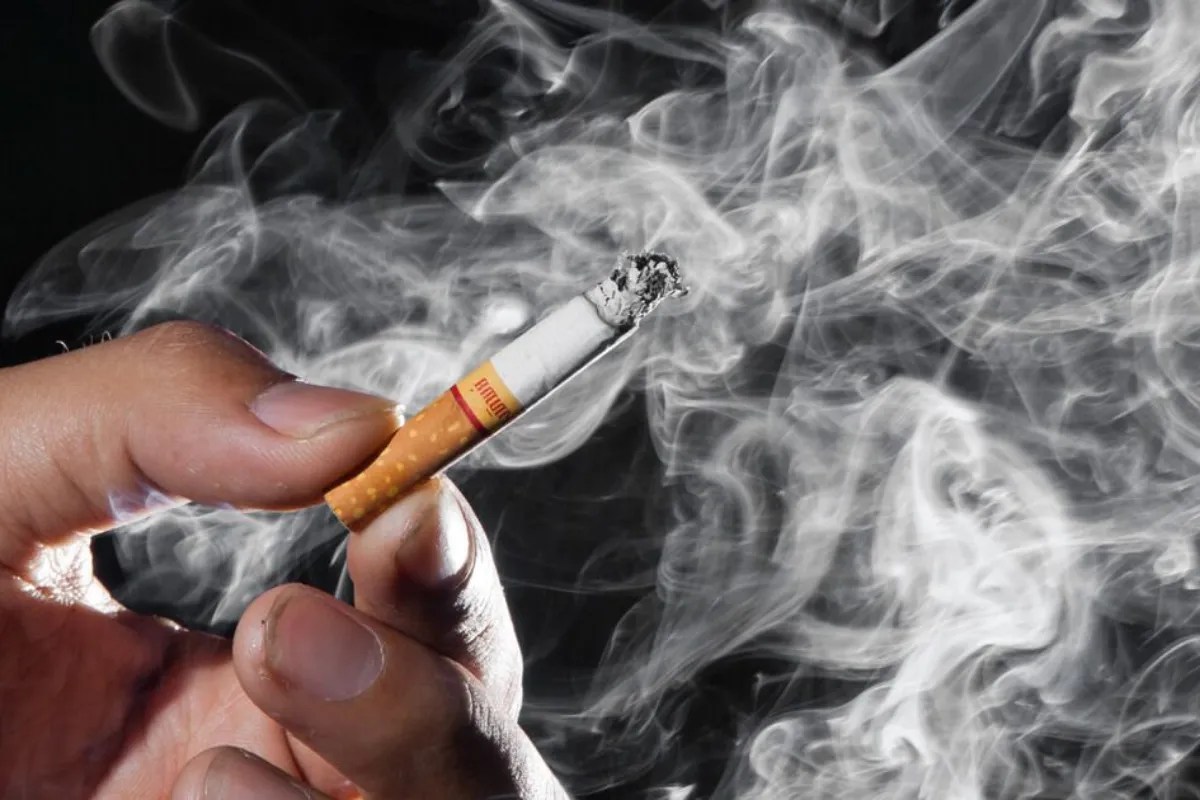
Rahul sits on the balcony every evening, watching the orange tip of his cigarette glow and fade like a rhythmic heartbeat. It is his "me time." The quiet ritual helps him shed the skin of a grueling workday before he walks through the door to greet his seven-year-old son, Aryan. He thinks he is being careful. He smokes outside. He washes his hands. He believes the boundary between his habit and his child’s future is as solid as the brick wall of their apartment.
He is wrong.
The ghost of that smoke is already inside Aryan, navigating his bloodstream and whispering to his cells. This isn’t about secondhand smoke or the smell lingering on a father’s shirt. This is about a biological telegram sent years before Aryan was even a thought, a message encoded in the very architecture of a father’s DNA.
Recent scientific inquiries have pulled back the curtain on a terrifying reality: a father’s smoking habit may be setting the stage for his children to develop Type 2 diabetes. This isn't a mere suggestion. It is a biological consequence that bypasses the lungs and targets the pancreas.
The Message in the Ghost
We used to believe that a father’s role in conception was simple—a delivery of genetic blueprints that remained fixed and unchanging. We thought the lifestyle choices of a man only affected his own heart, his own lungs, his own lifespan. But biology is far more vengeful and far more interconnected than we dared to imagine.
Think of DNA as a massive library of instruction manuals. Smoking doesn't necessarily rip the pages out, but it scribbles notes in the margins. It smudges the ink. These "smudges" are what scientists call epigenetic changes. When a man smokes, the toxic cocktail of chemicals triggers chemical tags—methyl groups—that latch onto his sperm's DNA. These tags act like a dimmer switch for certain genes.
When that sperm meets an egg, it doesn't just bring the blueprints for eye color or height. It brings those dimmer switches. Specifically, it brings switches that control how the body processes sugar and how the pancreas secretes insulin.
A Legacy of Resistance
Imagine the body’s relationship with sugar as a lock and key. Insulin is the key that opens the door to our cells, letting energy in. In a child born to a father who smokes, the locks are often rusty from day one.
The research suggests that the offspring of smoking fathers show a marked decrease in insulin sensitivity. Even if the child eats well, even if they run until their lungs ache, their internal chemistry is fighting a battle that was rigged before they were born. Their bodies "remember" the nicotine exposure of their fathers. This isn't a metaphor. It is a molecular memory.
The stakes are invisible until they aren't.
One day, a child reaches their twenties or thirties. They find themselves perpetually tired. Their wounds heal slowly. They are thirsty in a way water cannot quench. When the doctor says "Diabetes," the family looks for culprits in the kitchen or the gym. They count calories. They blame sugar. They never think to look back at the balcony where a father sat twenty years ago, unknowingly exhaling his son’s health into the night air.
The Weight of the Unseen
It is easy to dismiss this if we only look at the numbers. But the numbers are people. In studies conducted across diverse populations, the correlation remains stubborn: nicotine exposure in the male parent is linked to glucose intolerance in the next generation.
The mechanism is chillingly efficient. Nicotine and its metabolites cross the blood-testis barrier. They don't just damage the sperm; they reprogram it. This reprogramming leads to a state of chronic, low-grade inflammation in the offspring. This inflammation is the silent engine of metabolic syndrome.
Consider the hypothetical case of Samir, a man who quit smoking the moment his wife announced her pregnancy. He felt proud. He felt he had protected his family. But Samir had smoked for fifteen years prior. The chemical "tags" on his DNA didn't just vanish because he threw away the pack. The legacy of those thousands of cigarettes was already etched into the cells that would become his daughter.
While quitting is always the right choice, the biological debt of smoking is often passed down before the "Paid in Full" stamp can be applied. It challenges our traditional understanding of responsibility. We are used to mothers being warned about every morsel they eat and every breath they take during pregnancy. The spotlight on maternal health is blinding. Meanwhile, fathers have stayed in the shadows, believing their bodies were temporary vessels for their habits, leaving no trace on the future.
That shadow is disappearing.
Breaking the Chain
The realization that a father’s vice can become a child’s chronic illness is heavy. It feels unfair. It is a burden of guilt that many men aren't prepared to carry. But within this dark reality lies a spark of profound agency.
If a father’s choices can break the system, they can also protect it.
The human body is resilient, and while epigenetic marks are durable, they are not always a life sentence. Understanding the risk is the first step toward neutralizing it. If a father knows his history has put his child at a metabolic disadvantage, the family can move from a posture of ignorance to one of militant prevention.
It means the conversation about diabetes shifts. It’s no longer just about "don't eat too much candy." It becomes a deeper narrative about ancestral health. It means monitoring blood sugar earlier. It means fostering an environment where physical activity is not a chore, but a necessary medicine to counteract a pre-programmed resistance.
The Ghost in the Room
We often talk about what we leave our children. We think of bank accounts, property, or perhaps a grandfather’s watch. We rarely think about the chemical signatures we leave in their blood.
The smoke from a cigarette doesn't just dissipate. It changes form. It travels. It waits.
Rahul finishes his cigarette on the balcony and walks inside. He ruffles Aryan’s hair, his hands smelling faintly of peppermint soap and hidden tobacco. He thinks he has kept his secret. He thinks he is the only one paying the price for his addiction.
But under Aryan’s skin, the cells are already beginning to struggle with the sugar from his dinner. The "dimmer switches" are turned down low. The locks are starting to rust. The father’s exhale has become the son’s struggle, a silent inheritance that no one asked for, written in a language that only the pancreas truly understands.
The orange glow on the balcony isn't just a light; it’s a warning flare for a generation yet to come.