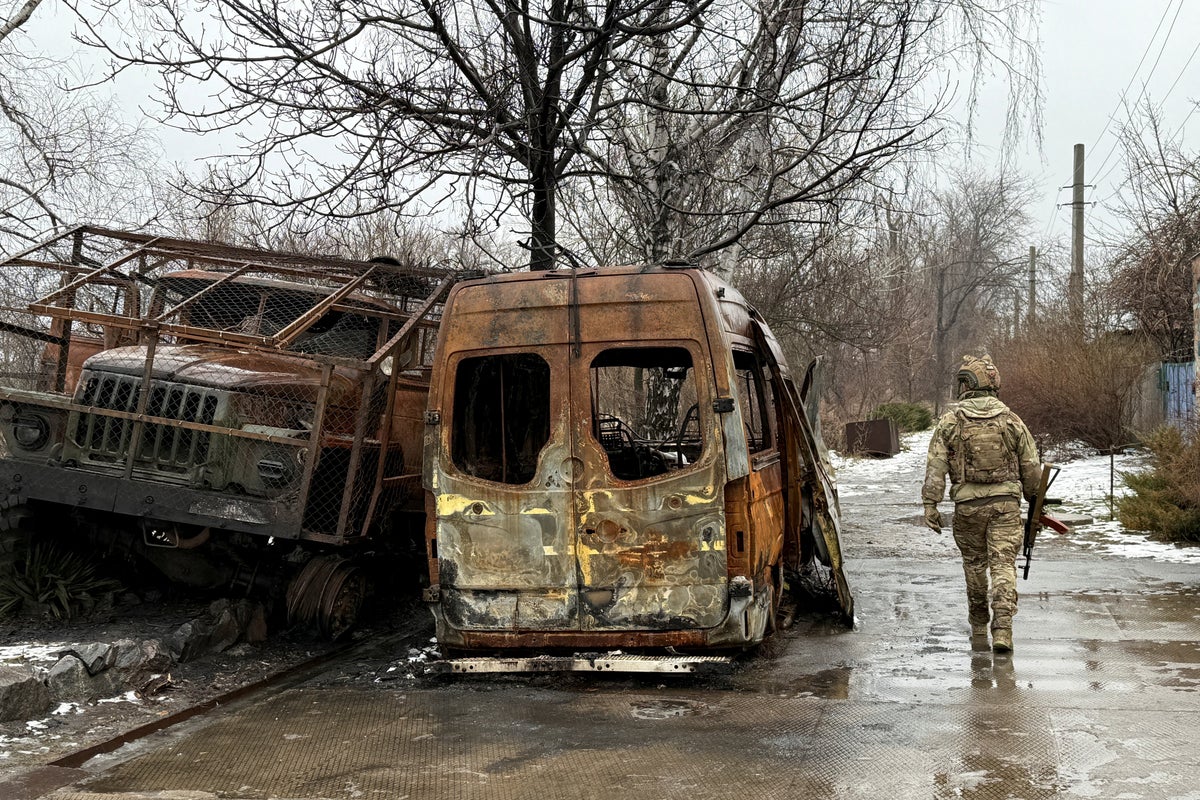
The push into Kostiantynivka is not just another skirmish in a long war; it is a surgical attempt to puncture the final line of defense in the Donbas. Russian forces have reached the southern outskirts of this critical rail hub, moving within one kilometer of the city limits as they attempt to dissolve the "fortress belt" that has held for years. While headlines focus on the movement of troop lines, the real story lies in a shift toward infiltration tactics designed to bypass traditional fortifications rather than blast through them.
If Kostiantynivka falls, the geographical integrity of eastern Ukraine effectively collapses. The city serves as the primary logistics artery for the entire region. Without it, the "fortress belt"—comprising Sloviansk, Kramatorsk, and Druzhkivka—becomes a series of isolated islands rather than a unified defensive front.
The Infiltration Gambit
The Kremlin has abandoned the massed armor charges that defined the early stages of the invasion. Those tactics proved too costly against Western-supplied anti-tank weaponry and high-resolution drone surveillance. Instead, the Russian military is now deploying small, specialized infantry groups. These units move in squads of five to eight men, often under the cover of night or through existing infrastructure like abandoned gas pipelines and drainage systems.
Their goal is not to seize the city in one grand gesture. They seek to establish "grey zones"—pockets of territory where control is ambiguous. By creating these footholds, they force Ukrainian defenders into grueling urban "counter-sabotage" operations, a meat-grinder style of combat that drains personnel and ammunition more quickly than open-field warfare.
The Logistics of a Stronghold
Kostiantynivka is the logistical heartbeat of the Donbas. Its rail lines and road junctions are the only efficient way to move heavy equipment and supplies to the northern sectors of the front.
- Supply Lines: The T0504 highway connects the city directly to the remaining strongholds.
- Infrastructure: The local rail yard is one of the last functional hubs for armored vehicle transport.
- Tactical Depth: Losing this city removes the "buffer" that protects Kramatorsk from direct heavy artillery fire.
For Ukraine, the defense of this city is about more than pride. It is a mathematical necessity. If the logistics hub is lost, the cost of supplying the remaining frontline units triples in both time and fuel, creating a cascading failure across the eastern theater.
A War of Attrition by Other Names
While Russia is inching forward, the cost of these gains has reached a point of diminishing returns. Reports from the ground indicate that Russian units, specifically the 76th Air Assault Division, are sustaining heavy losses to achieve even minor tactical footholds. The use of "motorcycle assaults"—highly mobile but extremely vulnerable infantry on bikes—highlights a growing desperation to overcome the "drone-saturated" environment where traditional tanks are spotted and destroyed within minutes of appearing.
The Ukrainian defense has adapted by focusing on "airspace control" over the city. This does not mean fighter jets. It refers to a dense web of electronic warfare and first-person view (FPV) drones that hunt Russian infiltration groups before they can consolidate their positions.
The Broken Shield
The "fortress belt" was designed to be a shield. However, shields eventually crack under persistent, localized pressure. The current Russian strategy is to find those microscopic cracks. By seizing the village of Novodmytrivka to the north and pushing from the south, Moscow is attempting a pincer movement that has been months in the making.
The "grey zones" appearing on tactical maps around the city are the most dangerous development of 2026. These are areas where the front line has become blurred, making it impossible for heavy artillery to fire without risking friendly casualties. This ambiguity is exactly what the Russian High Command wants. It negates the advantage of Ukrainian precision strikes.
The Reality of the Grey Zone
In the southeast of Kostiantynivka, the war has moved into the basements. This is a messy, confusing environment where a single building can change hands three times in twenty-four hours. Soldiers from the Ukrainian 24th King Danylo Separate Mechanized Brigade report that Russian infiltration groups are increasingly using civilian clothing or captured Ukrainian uniforms to confuse defenders—a violation of international law that has become a standard operating procedure in the fight for the outskirts.
The tactical situation remains fluid, but the trend is clear. Russia is willing to trade an extraordinary amount of manpower for a single kilometer of ground if that kilometer leads to the heart of the fortress belt. Ukraine is betting that they can make the price so high that the Russian offensive collapses under its own weight before it reaches the city center.
It is a race against time, and the clock is ticking in the ruins of the Donbas.