Traditional news outlets follow a predictable, lazy script every time an industrial facility goes up in flames. They focus on the heroism of the first responders, catalog the devastating property damage, and treat the event as an unpredictable, tragic act of God.
They are wrong.
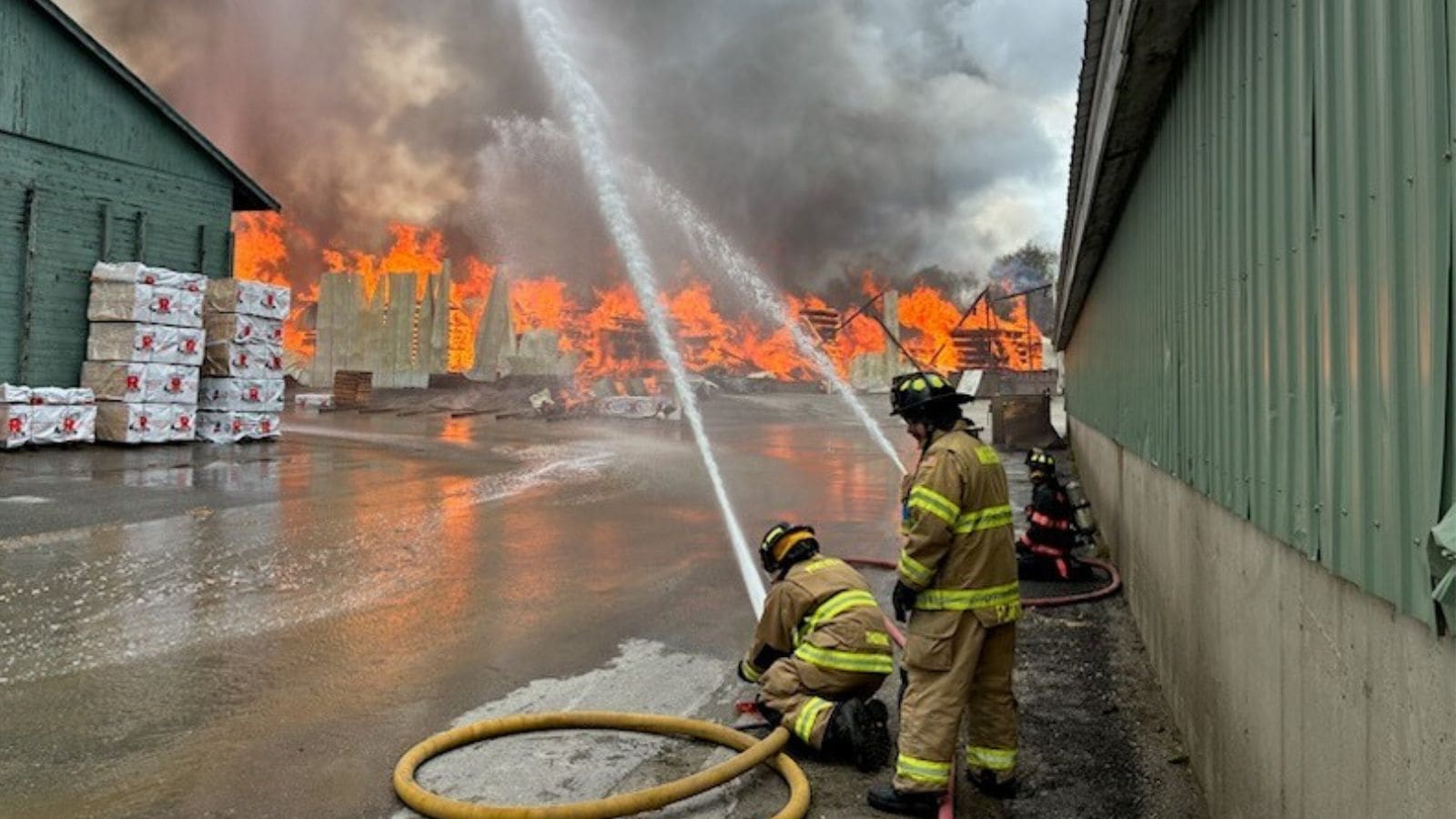
The media coverage surrounding the fatal lumber mill explosion in Maine is a prime example of this intellectual laziness. A firefighter lost his life, eleven others were injured, and a community was left reeling. The standard narrative immediately shifts to demanding better emergency response, more local fire department funding, and stricter post-incident inspections.
This approach is fundamentally flawed. By the time a fire department deploys its first hose line at a lumber mill, the system has already failed catastrophically. The real culprit isn’t a lack of firefighting resources or an unpredictable spark; it is a systemic misunderstanding of deflagration mechanics and a corporate culture that treats combustible dust management as a housekeeping chore rather than a critical engineering challenge.
We need to stop talking about how to fight mill fires. We need to start talking about why we keep designing facilities that allow them to explode in the first place.
The Fatal Flaw of the First Responder Narrative
When a disaster like the Maine mill explosion occurs, public sentiment rallies around the brave individuals rushing into the smoke. This is understandable, but it creates a dangerous blind spot.
I have spent over two decades auditing industrial manufacturing facilities, analyzing structural failures, and looking at the charred remains of facilities that executives swore were up to code. I have seen companies spend millions on state-of-the-art sprinkler systems and advanced fire suppression infrastructure, only to watch those same systems get obliterated in fractions of a second by a secondary dust explosion.
Here is the brutal truth that safety consultants rarely whisper to C-suite executives: Firefighters are fundamentally unequipped to handle a mature combustible dust event.
When a standard structural fire occurs, throwing water on it is a viable strategy. When a combustible dust hazard exists, introducing high-pressure water streams can actually trigger the very catastrophe you are trying to avoid. If a pile of accumulated wood flour or fine sawdust is disturbed by a hose stream, it becomes suspended in the air. Add an ignition source, and you have just engineered a fuel-air bomb.
The media framing suggests that more training or quicker response times could have altered the outcome in Maine. It is a comforting lie. Once a primary explosion occurs inside a piece of processing equipment—like a silo, dust collector, or hammermill—the shockwave dislodges the dust sitting idly on overhead rafters, light fixtures, and structural steel. This creates a secondary cloud that ignites instantly.
This secondary explosion is what kills people and levels buildings. No amount of fire department intervention can outrun a flame front traveling at hundreds of meters per second.
Dismantling the Compliance Myth
Whenever a tragedy like this strikes, industry spokespeople rush to the microphones to declare that the facility was "in compliance with all local and federal safety regulations."
This is supposed to absolve them. In reality, it exposes the absolute bankruptcy of our current regulatory framework.
In the United States, the Occupational Safety and Health Administration (OSHA) relies heavily on consensus standards developed by the National Fire Protection Association, specifically NFPA 652 (Standard on the Fundamentals of Combustible Dust) and NFPA 664 (Standard for the Prevention of Fires and Explosions in Wood Processing and Woodworking Facilities).
The problem is not that these standards are poorly written. The problem is that compliance is treated as a checklist rather than a dynamic engineering reality.
The Illusion of Cleanliness
Walk into almost any lumber mill or pellet plant in North America, and you will see workers with brooms and compressed air hoses "cleaning up" the space. Management points to this visual cleanliness as proof of safety.
It is an illusion.
NFPA standards explicitly warn that an accumulation of dust as thin as a single paperclip—roughly 1/32nd of an inch—covering just 5% of a room's surface area is enough to cause a catastrophic explosion if it becomes airborne. Look up at the overhead joists of any "compliant" mill. Look at the tops of the electrical conduits. Look at the light fixtures twenty feet above the shop floor. The dust is always there.
+------------------------------------+---------------------------------------+
| The Compliant Myth                 | The Engineering Reality               |
+------------------------------------+---------------------------------------+
| Visual cleanliness means safety.   | 1/32" of dust on rafters is fatal.    |
| Sprinklers mitigate the risk.      | Sprinklers are useless against dust   |
|                                    | deflagrations.                        |
| Sweeping floors reduces hazard.    | Sweeping puts fine particulates into  |
|                                    | suspension.                           |
+------------------------------------+---------------------------------------+
Furthermore, the practice of using compressed air to blow dust off machinery—frequently done at the end of shifts—is an incredibly hazardous activity disguised as maintenance. It creates the exact dust-to-air concentration required to reach the Lower Flammable Limit (LFL). All it takes is a static discharge from an ungrounded belt drive, a friction spark from a failing bearing, or a hot surface on an electric motor to trigger an event.
The Physics of Deflagration vs. Fire
To understand why the current approach to mill safety is broken, you must understand the fundamental difference between a fire and an explosion.
A fire is a relatively slow combustion process. It requires fuel, oxygen, and heat (the traditional fire triangle). It moves predictably and can be suppressed by removing one of those elements.
An explosion—specifically a deflagration—requires two additional elements: dispersion and confinement (forming the combustible dust explosion pentagon).
When fine organic material like wood dust is confined within a building or a piece of machinery and becomes dispersed in the air, its surface-area-to-volume ratio is astronomical. The chemical reaction occurs almost instantaneously. The rapidly expanding gases create a pressure wave that shears concrete anchors, buckles heavy steel beams, and turns industrial machinery into lethal shrapnel.
Imagine a scenario where an unvented bucket elevator suffers a bearing failure. The friction heats the housing to over 400°C. The localized wood dust inside ignites, creating a small, localized pop. This primary event isn't what destroys the mill. The pressure wave from this small pop travels down the conveyor lines and vents into the main building hull. It shakes the entire structure, dropping tons of historic dust from the high ceilings into the air. A split second later, the fireball catches up to this newly formed cloud.
The resulting secondary explosion is what causes mass casualties. Expecting a local volunteer or municipal fire department to mitigate this hazard after it has begun is equivalent to asking someone to catch a bullet with a baseball glove.
Stop Funding Firetrucks; Start Designing Inherently Safer Plants
The public policy response to industrial disasters is always backward. Politicians demand more money for local emergency services. While funding first responders is admirable, it does absolutely nothing to prevent the next lumber mill from exploding.
If we want to stop killing workers and firefighters in rural manufacturing towns, we must shift our capital allocation entirely from post-incident mitigation to inherently safer design (ISD).
Deflagration Isolation and Venting
Most mills operate with interconnected process equipment. A hammer mill feeds a cyclone, which feeds a silo, which feeds a pellet press or packing line. If these pieces of equipment are not physically isolated via rotary valves, chemical suppression barriers, or fast-acting mechanical isolation valves, an ignition in one machine will propagate throughout the entire facility.
Many facility owners refuse to install these systems because they are expensive. A single high-speed isolation valve can cost tens of thousands of dollars. But what is the cost of a completely destroyed facility, lost production for two years, and the inevitable wrongful death lawsuits? The math is simple, yet short-term quarterly earnings goals consistently cloud long-term risk assessment.
Explosion Venting to Safe Locations
Equipment located indoors must be vented directly to the outside atmosphere through short, straight ducts. If an explosion occurs, the vent panel ruptures at a low pressure, directing the fireball and pressure wave safely outside the building envelope.
Too often, during facility expansions, these vents are obstructed, redirected, or ignored entirely because the new floor layout makes proper venting inconvenient. When you block an explosion vent, you turn an industrial machine into a pipe bomb.
The Hard Truth About Economic Pressure
We cannot discuss the safety failures of the wood products industry without addressing the intense economic pressures these facilities face. Lumber production, pellet manufacturing, and pulp processing are low-margin, high-volume businesses.
When a mill slows down its throughput to perform deep cleaning or to shut down a line because a dust collection system is operating at reduced static pressure, it loses money by the minute. Plant managers are under relentless pressure from corporate headquarters to hit production targets.
This environment breeds a culture of normalization of deviance. This is a term coined by sociologist Diane Vaughan to describe the process where clearly dangerous practices become accepted as normal because they haven't caused a disaster yet.
- "The dust collector has been running hot for three weeks, but we haven't caught fire yet."
- "The rafters are covered in two inches of pine dust, but it’s been that way since 1994."
- "We don't have time to shut down for a full washdown this weekend; we have orders to fill."
This mindset works perfectly until the exact moment it fails catastrophically. The tragedy in Maine was not an accident. It was the statistical certainty of a normalized hazard finally meeting its inevitable ignition source.
Actionable Orders for the Manufacturing Executive
If you own or operate an industrial facility that processes combustible solids, stop reading the generic condolences posted by industry trade groups and implement these immediate, unconventional changes:
- Ban the Broom and Air Hose: Transition your facility entirely to specialized, explosion-proof industrial vacuum systems rated for Class II, Division 1 environments. Stop sweeping dust into the air where it can settle on high surfaces.
- Audit Your Rafters, Not Your Floors: Walk into your plant today, climb the highest structural ladders, and look at the horizontal surfaces near the roof. If you can write your name in the dust, shut down production immediately and conduct a professional remediation.
- Implement Predictive Maintenance on Bearings: Do not wait for a bearing to seize and spark. Implement continuous thermal monitoring and vibration analysis on every rotating component inside your dust streams.
- Install True Mechanical Isolation: Ensure that every dust collector and silo is physically isolated from the main production floor with certified deflagration isolation devices. Stop relying on check valves that get gummed up with pitch and resin.
The narrative that these events are tragic, unavoidable workplace accidents must die. The physics of dust explosions are well understood, predictable, and entirely preventable. Continuing to operate a facility with substandard dust control is not an entrepreneurial risk; it is corporate manslaughter. Stop relying on the bravery of firefighters to cover up bad engineering.