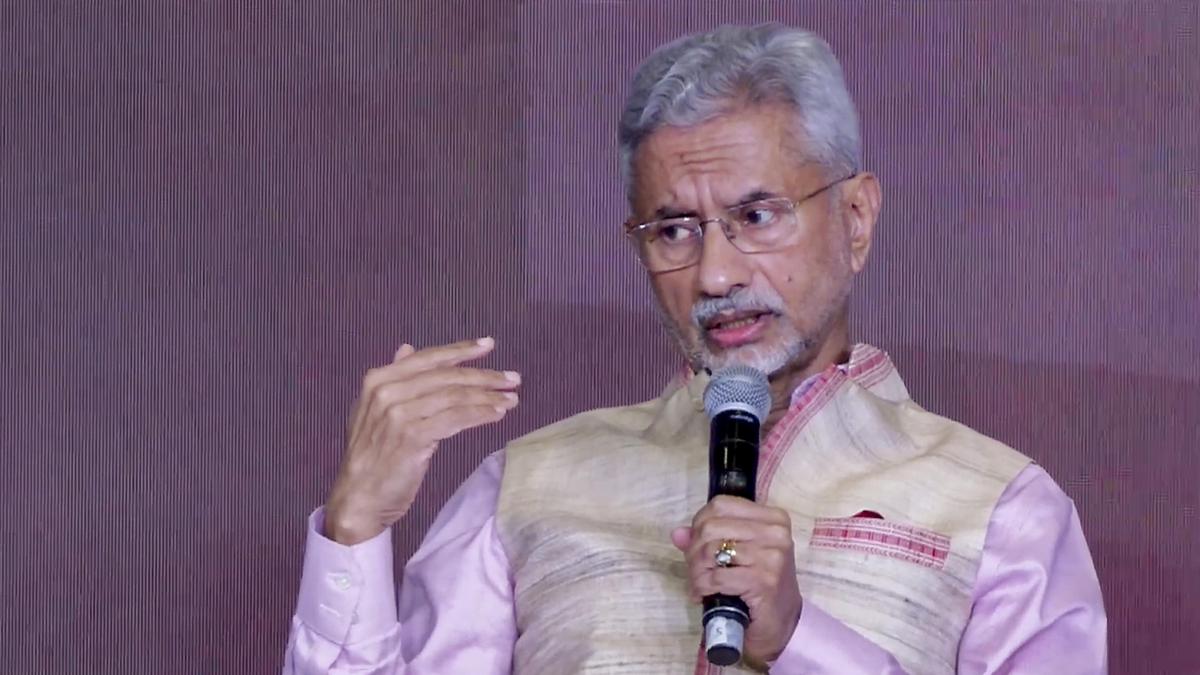
The official narrative is soft, safe, and entirely misleading. When External Affairs Minister S. Jaishankar describes the docking of an Iranian warship in Kochi as an act approached from a "point of humanity," he is feeding the public a diplomatic sedative. Governments do not move multi-billion dollar geopolitical chess pieces out of the goodness of their hearts. They do it because of cold, hard calculus.
Calling a naval port call "humanitarian" is the oldest trick in the diplomatic handbook. It provides a convenient shield against Western scrutiny while masking a much more aggressive strategy to secure India’s energy future and trade dominance. If you believe this was just about sailors needing a break or a "human touch" in international relations, you are missing the real war being fought over logistics and infrastructure.
The Myth of the Neutral Transit
The mainstream press wants you to believe India is "balancing" its relationship between the United States and Iran. This "balancing act" trope is lazy. India isn't balancing; it is building a hedge against a Western-centric financial system that no longer serves its growth trajectory.
When an Iranian vessel docks in Kochi, it isn't a social visit. It is a signal. It is a live-fire demonstration of the International North-South Transport Corridor (INSTC).
For decades, India has been strangled by the geography of its neighbors. To the west, Pakistan blocks land access to Central Asia. To the north, the Himalayas and a hostile China create a vertical wall. India’s only escape hatch is the sea, and that sea leads directly to the Iranian port of Chabahar.
Why the "Humanity" Argument Fails Logic
- Warships are Sovereign Territory: A warship is a floating piece of a nation's military power. You do not invite a warship into your backyard for "humanitarian" reasons unless there is a natural disaster or a medical emergency. There was neither.
- Timing is Policy: Docking military hardware during a period of heightened Red Sea tensions and sanctions is a deliberate choice. It tells the world that India’s maritime borders are open to its strategic partners, regardless of what Washington thinks.
- The Reciprocity Trap: If this were truly about "humanity," would India extend the same courtesy to a Chinese vessel under similar geopolitical pressure? Absolutely not. Diplomacy is selective. "Humanity" is the brand; interest is the product.
The Chabahar Factor: More Than Just a Port
The real story isn't in Kochi; it’s 1,500 kilometers away in the Sistan and Baluchestan Province of Iran. India has poured millions into the Chabahar port. This isn't just a business venture; it’s an end-run around the Suez Canal and the Malacca Strait.
I have watched analysts ignore the sheer scale of the INSTC for years because they are obsessed with the "Belt and Road Initiative" (BRI). While everyone was watching China build "ghost cities" in Africa, India and Iran were quietly linking Mumbai to Saint Petersburg.
The INSTC is projected to reduce transit time by 40% and costs by 30% compared to the traditional Suez Canal route. When you understand those numbers, the "humanitarian" docking in Kochi suddenly looks like a very expensive, very calculated loyalty reward for a partner that holds the keys to India’s Central Asian ambitions.
Stop Asking if India is "Defying" the West
The most common question in the "People Also Ask" sections of search engines is: "Is India's relationship with Iran hurting its ties with the US?"
This is the wrong question. It assumes a zero-sum game that doesn't exist in the 21st century. The US needs India as a bulwark against China far more than it needs India to follow every detail of the Iran sanctions regime. New Delhi knows this. They are using their "indispensable" status to carve out a sphere of influence that includes rogue states and Western allies alike.
The brutal honesty? India is practicing a form of "Strategic Autonomy" that is essentially a middle finger to the post-1945 world order. They aren't trying to be "the next China." They are trying to be the first India—a power that answers to no one and treats "humanity" as a useful PR cloak for maritime expansion.
The Danger of the "Soft Power" Delusion
There is a downside to this contrarian approach. By dressing up military cooperation as humanitarianism, India risks a credibility gap. If everything is "humanity," then nothing is.
Business leaders and investors need to see through the fluff. If you are looking at India’s maritime sector, do not focus on the press releases about "cultural ties" or "shared history." Look at the fuel bunkering agreements. Look at the logistics software integration between Kochi and Bandar Abbas. Look at the insurance waivers provided to sanctioned vessels.
That is where the money is. That is where the power is.
The Mechanics of the Docking Protocol
When a foreign warship enters an Indian port, the coordination involves:
- Naval Intelligence Coordination: Real-time data sharing on Indian Ocean traffic.
- Logistics Support: Refueling and victualing that bypasses standard commercial sanctions.
- Signal Intelligence: Testing the interoperability of communication systems.
Does that sound like a "humanitarian" gesture to you? It sounds like a dry run for a wartime alliance.
The Staccato Reality of Indian Diplomacy
Talk soft.
Build hard.
Ignore the sanctions.
Secure the corridor.
India’s energy security depends on Iran. Its access to Russia depends on Iran. Its ability to bypass Pakistan depends on Iran.
If you were the External Affairs Minister, would you prioritize a vague Western "consensus" on sanctions, or would you prioritize the physical trade route that feeds 1.4 billion people? The answer is obvious. The "humanity" explanation is just the sugar that helps the medicine go down for the US State Department.
The Architecture of the New Middle Corridor
The competitor's article failed to mention the Northern Sea Route or the Ashgabat Agreement. These aren't just names on a map; they are the structural supports for a world where the US Dollar and the US Navy are no longer the only game in town.
By allowing an Iranian warship to dock, India is validating a multi-polar maritime map. They are saying that the Indian Ocean is, as the name suggests, Indian.
Rethinking the Humanitarian Narrative
If you want to understand the future of global trade, stop reading the "human interest" stories. Start reading the shipping manifests. The Kochi docking was a transaction. India paid in "diplomatic cover" and Iran paid in "geographical access."
It was a brilliant, ruthless, and highly successful business deal.
Stop looking for the "heart" in Indian foreign policy. Look for the engine. Look for the port depth. Look for the rail gauge.
The next time a warship from a "pariah" state docks in an Indian port, don't ask about the sailors. Ask about the freight.
Secure the route. Everything else is just noise.