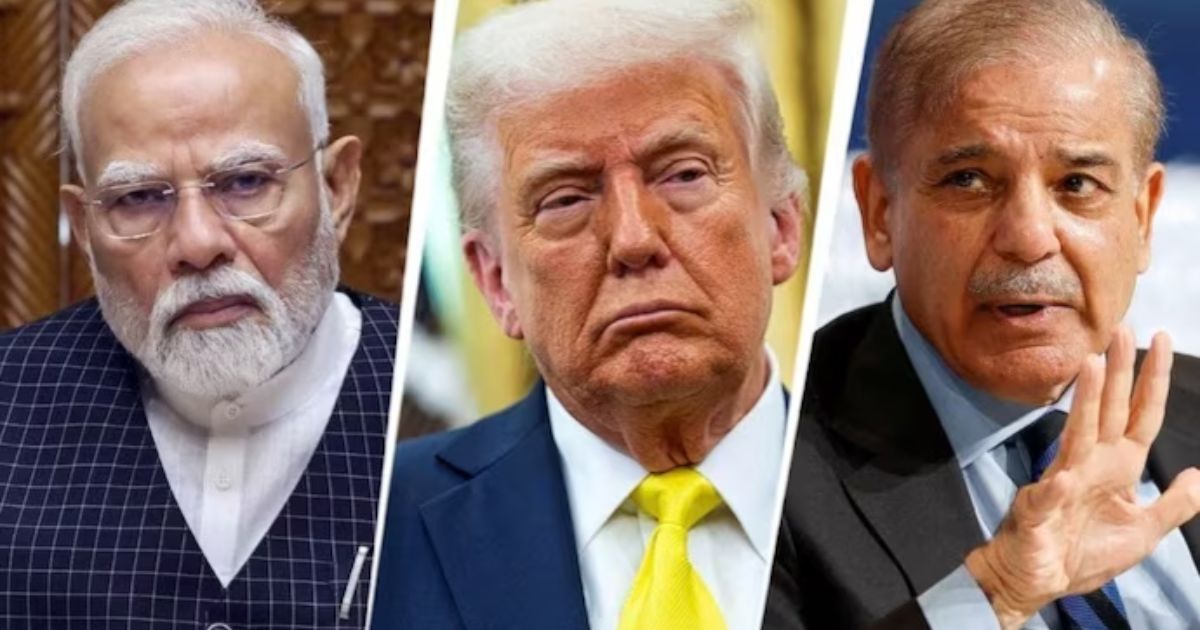
Geopolitics is not a morality play. When the news broke that Supreme Leader Ali Khamenei had been neutralized, the usual suspects in the commentary class rushed to their keyboards to decry or defend India’s "strategic silence." They called it a tightrope walk. They called it a balancing act. They used every tired metaphor in the diplomatic dictionary to suggest that New Delhi was paralyzed by the complexity of the moment.
They are wrong. If you liked this piece, you might want to check out: this related article.
India’s silence wasn't a sign of indecision or a "loss of influence." It was a cold, calculated exercise in strategic indifference. While Western analysts obsess over the "vacuum of power" in Tehran, New Delhi is looking at a spreadsheet. The reality is that the old romanticism of the "civilizational bond" between India and Iran is dead. It has been replaced by a ruthless, transactional pragmatism that many find uncomfortable to acknowledge.
The Chabahar Delusion
For a decade, foreign policy "experts" have touted the Chabahar Port as India's crown jewel in the region—a gateway to Central Asia that bypasses Pakistan. The competitor's narrative suggests India is silent because it fears losing this asset. For another angle on this story, refer to the recent coverage from Associated Press.
I have seen billions of rupees poured into projects that look great on a map but fail on a ledger. The truth? Chabahar is a logistical nightmare plagued by bureaucratic friction and the constant shadow of secondary sanctions. It is a hedge, not a lifeline.
India’s silence confirms a shift: New Delhi has realized that the International North-South Transport Corridor (INSTC) is a long-term play that doesn't require ideological fealty to the Iranian regime. Russia is the real driver of that corridor now, not Iran. By staying silent, India signaled to the world that its investments are decoupled from the survival of any specific regime in Tehran.
The Energy Independence Myth
The "lazy consensus" argues that India is beholden to Iran for energy security. This is outdated thinking that ignores the seismic shift in global oil markets over the last five years.
India’s energy basket has been completely rewired. The surge in Russian crude imports following the Ukraine conflict and the deepening ties with the UAE and Saudi Arabia have made Iranian oil a rounding error in India's strategic calculations. New Delhi doesn't need Tehran to keep the lights on anymore.
When the Supreme Leader fell, the oil markets didn't scream; they whispered. India’s silence was the sound of a customer who knows they have three other suppliers on speed dial. We are seeing the death of "energy dependency" as a driver of Indian foreign policy. It has been replaced by "market optionality."
The Diaspora Dividend
People often ask: "Doesn't India have to worry about the reaction of its own population?"
This question is fundamentally flawed because it treats the Indian electorate as a monolith. The assumption that India’s significant Shia population would force the government's hand into a pro-Tehran stance is a gross oversimplification.
Indian domestic politics is driven by development, aspiration, and internal security—not the fate of a foreign theocracy. The government knows that the "street" cares more about the price of onions than the identity of the next Velayat-e Faqih. By refusing to join the chorus of condemnation or mourning, New Delhi sent a clear message: Middle Eastern dynastic or religious shifts are not Indian domestic issues.
The Israel-Arab Alignment
The most significant factor the mainstream media misses is the "I2U2" and the IMEC (India-Middle East-Europe Economic Corridor). India is now structurally integrated with the interests of Israel, the UAE, and Saudi Arabia.
These nations viewed Khamenei not as a partner, but as a destabilizing force. For India to have mourned his passing or condemned the action would have been a direct strike against its most valuable emerging partnerships.
- The Saudi Pivot: Riyadh is looking for a multi-trillion dollar modernization. They want Indian tech and labor.
- The Israeli Tech Bridge: From defense to water tech, the India-Israel axis is the most productive bilateral relationship in Asia.
- The Emirati Capital: The UAE is a primary source of Foreign Direct Investment (FDI) for India’s infrastructure.
In this math, Iran is a variable, but the Abraham Accords bloc is a constant. Silence wasn't a middle ground; it was a quiet endorsement of the new regional order.
The Myth of Strategic Autonomy
Critics love to throw around the term "Strategic Autonomy" as if it means being a neutral arbiter. It doesn't. In the real world, strategic autonomy means the freedom to ignore things that don't serve your national interest.
India is currently the fifth-largest economy in the world, headed for third. It no longer needs to perform "diplomatic virtue signaling" to appease the Non-Aligned Movement (NAM) ghosts of the 1970s. The competitor article frames the silence as a "geopolitical factor." I frame it as a "geopolitical graduation."
India has graduated from being a country that reacts to every tremor in the Middle East to one that focuses exclusively on its own economic trajectory. If a regime falls and it doesn't disrupt the flow of data or the safety of the Indian workforce in the Gulf, New Delhi simply doesn't care.
Security over Sentiment
Let’s talk about the "battle scars." I’ve watched Indian diplomats navigate the fallout of the Arab Spring and the Syrian Civil War. The lesson learned every single time was: Don't pick a side in a sectarian bloodbath unless you have to.
The removal of Khamenei triggers a period of extreme volatility. There will be internal purges, proxy lash-outs, and potential civil unrest within Iran. If India had spoken, it would have been pinned to a specific outcome. By saying nothing, India remains the only major power that can talk to whoever emerges from the dust in Tehran while still holding hands with the West and the Gulf.
This isn't "sitting on the fence." It's letting the fence burn while you build a brick wall on your own property.
The Brutal Reality of "Soft Power"
We are told that India's silence hurts its "soft power" as a leader of the Global South. This is nonsense. Soft power is a luxury of the secure. Hard power is about trade routes, defense acquisitions, and semiconductor supply chains.
The Global South doesn't look to India for moral guidance on Iranian succession; they look to India for a blueprint on how to grow 8% a year while the rest of the world stagnates. The silence on Khamenei is a signal to every other developing nation: Put your economy first, and the "geopolitical factors" will take care of themselves.
The Wrong Question
The media keeps asking: "Why did India stay silent?"
The better question is: "Why would anyone expect India to speak?"
India is no longer a "emerging power" that needs to justify its existence by weighing in on every regional assassination. It is a pole in a multipolar world. Poles don't lean; they stand.
Stop looking for a hidden meaning in the silence. The silence is the meaning. It is the sound of a nation that has finally outgrown its need for approval from either the revolutionary vanguard or the Western liberal establishment.
The Middle East is restructuring itself through fire and steel. India is restructuring itself through capital and code. These two paths no longer need to cross in the way they once did. If Tehran burns, New Delhi will simply check the wind direction and keep building.
Move on. The era of India as a diplomatic "balancer" is over. The era of India as a self-interested titan has begun.


