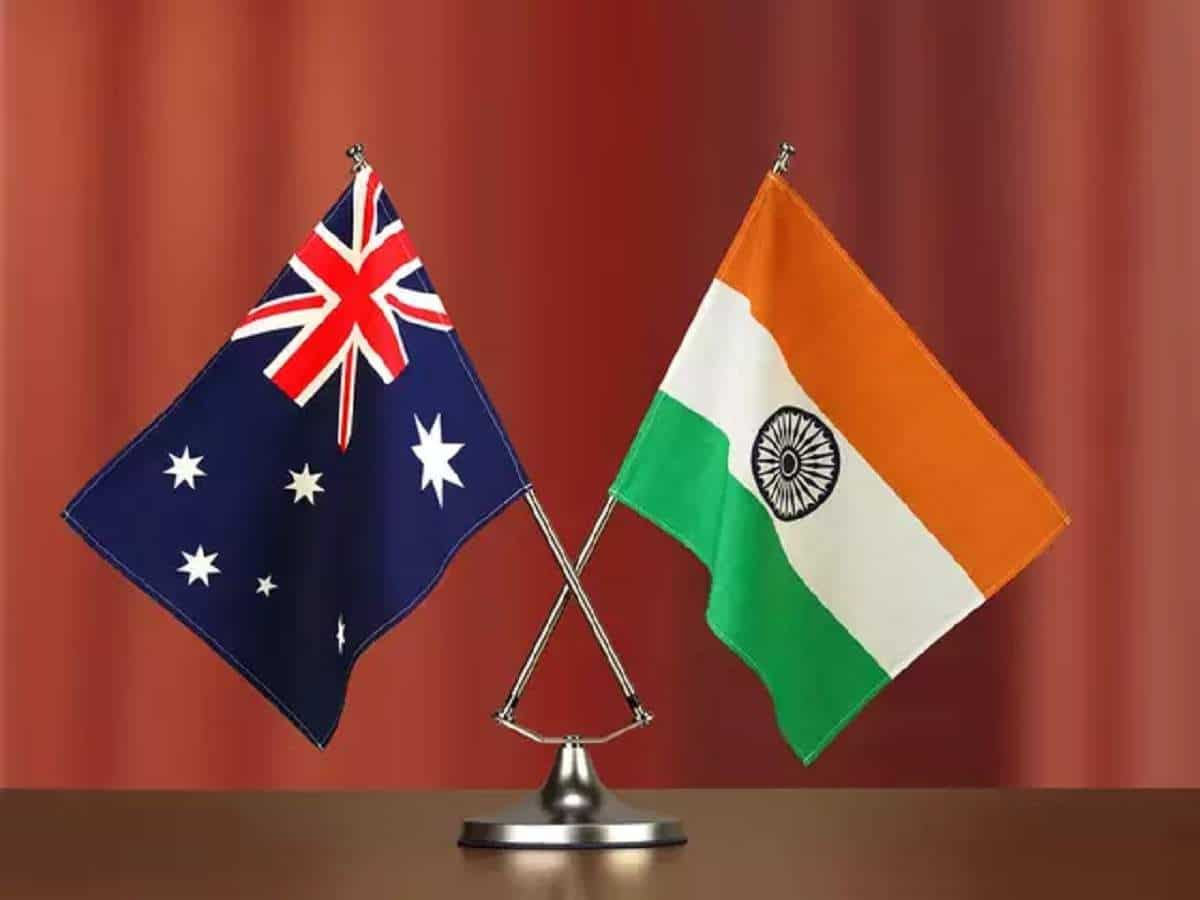
The days of India and Australia bonding only over a shared obsession with cricket and a colonial past are officially over. Right now, the relationship is moving faster than a Pat Cummins delivery on a bouncy WACA pitch. Philip Green, the Australian High Commissioner to India, recently admitted that we're standing at the "highest point" of bilateral ties. And he's not just blowing smoke.
If you've been tracking the headlines, you'll know this isn't just about diplomatic niceties. It's about a massive strategic shift where two "middle powers" realize they need each other to keep the Indo-Pacific from tilting off its axis. Whether it's the 100% duty-free access for Indian goods that kicked in this year or the fact that Australia now calls India a "top-tier" defense partner, the momentum is real.
The strategic marriage of the Indo-Pacific
For a long time, the relationship was a bit of a slow burn. That's changed because the neighborhood has changed. Both New Delhi and Canberra are looking at a world that's increasingly messy and "permanently disrupted," as Green put it during a recent address. They've decided that being reliable partners is better than being lone wolves.
Through the Quad—alongside the US and Japan—and a series of direct bilateral pacts, the two nations are syncing their watches on everything from maritime security to intelligence. Australia's latest National Defence Strategy, released in April 2026, doesn't mince words. It calls India the "most important" partner in the Northeast Indian Ocean. Why? Because that's where the trade routes live. If those lanes get blocked, Australia's economy takes a hit, and India's energy security goes out the window.
We’re seeing military exercises triple in frequency compared to a decade ago. It’s no longer just a once-a-year meetup; it’s a constant loop of training and information sharing.
Turning zero tariffs into real money
Let’s talk about the money, because that’s where the rubber meets the road. On January 1, 2026, we hit a massive milestone. Every single Indian product entering Australia now does so with a zero-tariff cost. No fine print, no asterisks.
The Economic Cooperation and Trade Agreement (ECTA) has been live for four years, and the numbers are starting to look impressive. Bilateral trade hit roughly $24.1 billion in the last fiscal year. But here’s what most people miss: we’re only at the "interim" stage. Negotiations are currently in overdrive to upgrade this into a Comprehensive Economic Cooperation Agreement (CECA).
Why does that matter to you?
- For Indian exporters: Textiles, pharma, and agricultural products are already flooding the Australian market.
- For Australian miners: India wants to be a green manufacturing hub. You can't build EVs or solar panels without lithium, cobalt, and copper. Australia has those in spades.
- For consumers: Cheaper goods and more diverse supply chains mean less reliance on any single, unpredictable neighbor.
The critical minerals connection
India’s "Make in India" dream has a big hurdle: raw materials. You can't build a massive fleet of electric buses if you don't have the minerals for the batteries. This is where Australia steps in as the "logical choice."
Australia holds the world's second-largest reserves of lithium and nickel. In 2025, India launched its National Critical Minerals Mission, and the timing couldn't be better. The two countries have already set up a Critical Minerals Investment Partnership. This isn't just a memo on a desk; it's a framework for Indian companies to invest directly in Australian mines to secure their own supply chains.
It’s a textbook win-win. Australia gets the investment to scale up its mining projects, and India gets the guaranteed flow of minerals it needs to power its industrial transition.
Why the human bridge actually works
Diplomats love the phrase "human bridge," but in this case, it’s a million people strong. Over a million people of Indian descent now call Australia home. That’s about 4% of the Australian population.
This isn't just a feel-good statistic. This diaspora is a massive economic engine. It drives tourism, education exports, and tech transfers. When Philip Green talks about this bridge, he's talking about the families, students, and professionals who make the geopolitical stuff feel personal. It's why you're seeing more Australian universities opening campuses in India and why visa processes are being streamlined for researchers and high-skill workers.
Dealing with the global ripples
Of course, it’s not all smooth sailing. The world is currently feeling the "shockwaves" from tensions in West Asia. High Commissioner Green recently pointed out that disruptions in the Strait of Hormuz hit both Canberra and New Delhi hard. When global oil and gas prices spike, both nations feel the pinch.
This shared vulnerability is actually pushing them closer. They aren't just reacting to crises; they're trying to build a region where "no country dominates, and no country is dominated." It’s about balance.
What happens next?
If you're a business owner or an investor, the direction is clear. The "highest point" isn't a peak; it’s a new plateau. Expect the CECA negotiations to wrap up soon, which will likely open up even more services and digital trade sectors.
For those looking to get involved in this corridor:
- Watch the Critical Minerals Mission: If you're in manufacturing or tech, this is where the long-term deals are happening.
- Monitor the CECA updates: The next phase of the trade deal will likely include better provisions for professional services and education.
- Leverage the duty-free status: If you're exporting from India to Australia, the 100% tariff-free window is wide open.
The relationship has moved past the "getting to know you" phase. Now, it's about building the infrastructure—both physical and diplomatic—to make sure this partnership lasts through the next decade of global uncertainty.