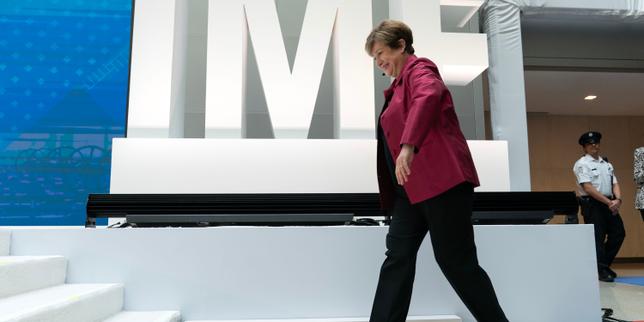
The International Monetary Fund has finally ended its five-year diplomatic deep-freeze with Caracas. This move marks the first formal acknowledgment of the Maduro administration’s legitimacy by the Washington-based lender since 2019, when the fund suspended Venezuela's access to Special Drawing Rights (SDRs) amid a disputed presidential election. The technical reconnection is not a bailout. It is a messy, necessary data-gathering mission. For years, Venezuela has been a statistical black hole, a nation of 28 million people operating outside the global financial surveillance system. By resuming contact, the IMF is prioritizing cold data over political optics, signaling that ignoring the Western Hemisphere's largest economic collapse is no longer a viable policy.
The End of Strategic Blindness
Wall Street and Washington have spent half a decade pretending the IMF could simply wait out the crisis in Caracas. That strategy failed. In 2019, the IMF cut off Venezuela because more than 50 member countries recognized Juan Guaidó as the legitimate leader. Since then, the "interim government" has dissolved, and Nicolas Maduro remains in Miraflores. The fund’s decision to re-engage reflects a pivot toward "functional recognition."
This shift is driven by a desperate need for transparency. Since 2014, Venezuela’s GDP has shrunk by roughly 80 percent, a contraction more severe than the Great Depression or the collapse of the Soviet Union. Yet, without IMF Article IV consultations—the routine health checks the fund performs on member nations—global markets have been flying blind. Investors holding billions in defaulted Venezuelan debt need verified numbers, not the sporadic, often sanitized data released by the Venezuelan Central Bank.
Why the Data Matters Now
The IMF cannot ignore the regional contagion of the Venezuelan crisis. Migration patterns, trade imbalances, and the rise of informal economies in neighboring Colombia and Brazil are all tethered to the fiscal mismanagement in Caracas. By sending technical teams to review the books, the IMF is attempting to map the damage.
We are looking at a country where hyperinflation peaked at an estimated 130,060 percent in 2018. While that has cooled to double digits recently, the underlying architecture of the economy is shattered. The IMF needs to know exactly how much oil revenue is being diverted through "shadow" channels to bypass sanctions and whether the recent, unofficial dollarization of the economy can be sustained or if it is a temporary pressure valve.
The Sovereign Debt Trap
The elephant in the room is Venezuela's massive debt burden. The country owes an estimated $150 billion to a fractured group of creditors, including China, Russia, and private bondholders. Re-establishing relations with the IMF is the mandatory first step for any future debt restructuring.
Under international financial norms, private creditors rarely agree to "haircuts"—accepting less than they are owed—unless an IMF-backed reform program is in place. The fund acts as the ultimate auditor. Without its seal of approval, Venezuela remains locked out of international capital markets, unable to secure the credit needed to repair its crumbling oil infrastructure.
The Creditor Stand-off
- China and Russia: These nations provided billions in "loans-for-oil" deals. They have been more patient than Western bondholders but are increasingly wary of further exposure.
- The Paris Club: Western sovereign lenders want to see a return to orthodox fiscal policy before discussing relief.
- Holdout Bondholders: Aggressive hedge funds have been buying Venezuelan debt for pennies on the dollar, betting that an IMF return will trigger a massive rally in bond prices.
The IMF is walking into a minefield. If it demands too much austerity, it risks fueling further social unrest. If it is too lenient, it loses credibility with the lenders who fund its own operations.
The Oil Paradox
Venezuela sits on the world's largest proven oil reserves, yet its production is a fraction of its potential. This is the heart of the "how" behind the IMF's return. To stabilize the economy, Venezuela must pump more oil. To pump more oil, it needs massive foreign investment. To get that investment, it needs a stable legal and financial framework validated by an international arbiter.
The United States has recently experimented with easing some sanctions on Chevron and other oil majors. This "creeping normalization" has created a window for the IMF. The fund’s technicians are likely more interested in the state-run PDVSA's balance sheets than in political rhetoric. They need to see if the recent uptick in production—roughly 800,000 barrels per day—is being used to settle old debts or to fund actual public services.
Infrastructure Decay
The costs of rehabilitation are staggering. Analysts suggest that just to return to 2 million barrels per day would require an infusion of $10 billion to $15 billion annually for a decade. The IMF knows that no amount of technical advice can fix a refinery that has been stripped for parts. This is why the mission is moving from high-level diplomacy to "boots on the ground" technical accounting. They are checking the plumbing before they even consider turning on the taps.
The Geopolitical Cost of Isolation
The IMF’s return is also a quiet admission that the "maximum pressure" campaign led by the United States did not achieve its primary objective of regime change. Instead, it pushed Venezuela deeper into the orbit of non-Western financial systems. By re-entering the conversation, the IMF is attempting to pull Caracas back toward international standards of transparency.
This is not a gesture of friendship. It is a cynical, pragmatic calculation. The fund understands that a failed state of this magnitude on the doorstep of the United States and the Caribbean is a permanent threat to regional stability. If the IMF doesn't set the terms for Venezuela's recovery, someone else will—likely under terms that do not favor the dollar-based global order.
The SDR Stalemate
A primary point of contention remains the $5 billion in Special Drawing Rights that Venezuela technically owns but cannot access. These are international reserve assets created by the IMF. Maduro wants the cash to fund social programs; the IMF board remains divided on who has the legal authority to sign for them. This stalemate will likely continue even as technical relations resume. The IMF is signaling that it will talk about the numbers, but it isn't ready to hand over the keys to the vault.
The Reality of Hyper-Dollarization
One of the most complex tasks for the IMF will be evaluating Venezuela’s move away from the bolivar. Today, the U.S. dollar is the de facto currency for everything from groceries to real estate. While this has slowed the rate of inflation, it has created a massive wealth gap between those with access to foreign currency and those—primarily public sector workers—stuck with a worthless local tender.
The IMF traditionally advocates for a strong central bank and a controlled exchange rate. In Venezuela, the central bank has lost almost all its traditional levers of power. Restoring a functional national currency would require a level of trust in the government that simply does not exist. The IMF teams will have to decide whether to support a formal dollarization, which limits the government's ability to print money, or attempt a "re-bolivarization" that would almost certainly fail without massive gold reserves.
The High Stakes of Technical Assistance
The term "technical assistance" sounds mundane. In the context of Venezuela, it is revolutionary. It means IMF staff reviewing tax codes, customs procedures, and the opaque accounts of the military-run mining companies in the Orinoco Mining Arc.
This level of scrutiny is often the first thing a populist government rejects. The fact that Caracas is allowing these conversations to happen suggests that the regime's back is against the wall. They are running out of ways to hide the true scale of the fiscal hole. For the IMF, the risk is being used as a prop in a political theater. For the Venezuelan people, the risk is that the IMF's prescriptions—usually involving the cutting of subsidies—will hit the poorest citizens the hardest.
The Shadow Economy Problem
- Gold Smuggling: Large portions of Venezuela's current revenue come from unregulated gold mining, often controlled by non-state actors.
- Remittance Flows: Millions of Venezuelans abroad send money home through unofficial channels, bypassing the banking system entirely.
- Sanction Evasion: The government has become an expert in using "ghost fleets" and shell companies to move oil.
The IMF's traditional models do not account for an economy that has spent five years mastering the art of the shadow market. Their analysts will have to invent new ways to measure economic activity in a place where the official record is often a work of fiction.
The Credibility Gap
The IMF's history in Latin America is fraught with tension. Memories of the "Caracazo" riots in 1989, sparked by IMF-mandated austerity, still haunt the national psyche. Maduro has spent years labeling the fund a tool of "imperialism." Reconciling that rhetoric with the reality of needing the fund's help to restructure debt will be a delicate dance.
If the IMF moves too quickly toward a formal program, it will be seen as rewarding a government with a documented history of human rights abuses and election irregularities. If it moves too slowly, the humanitarian crisis will continue to export instability across the continent. There is no clean exit from this.
The Path Forward is Not a Map
The resumption of relations is a cold-blooded recognition of reality. The IMF is re-entering Venezuela not because the country has fixed its problems, but because the problems have become too large to be managed from a distance. This is about establishing a baseline in a country where the floor fell out years ago.
The world should expect a long, grinding period of "data verification" rather than a sudden influx of cash. The IMF is essentially conducting a forensic audit of a crime scene while the suspects are still in the building. It is a high-stakes gamble that transparency can eventually lead to stability, but in the short term, it will likely only reveal just how deep the rot actually goes.
The fund’s return signals the end of the isolation era, but it does not mark the beginning of a recovery. It marks the beginning of an honest accounting of the wreckage. In the world of global finance, that is often the most painful part.