Taipei likes to call American weapons the cornerstone of regional peace, but the reality on the ground looks less like a fortress and more like a massive, unpaid invoice.
While political rhetoric in Washington and Taipei paints a picture of seamless defense cooperation, a devastating bottleneck is quietly undermining the entire strategy. The United States has approved billions of dollars in weapons sales to Taiwan, yet the actual hardware is trapped in a bureaucratic and industrial quagmire. Taiwan is spending record sums on paper promises while its actual military capabilities remain dangerously frozen, leaving the island vulnerable to the very aggression it is trying to deter.
The Paper Fortress
In May 2026, Taiwan’s Legislative Yuan finally broke a fierce partisan deadlock, passing a massive supplementary defense budget capped at 24.8 billion dollars. The funding is intended to cover everything from High Mobility Artillery Rocket Systems (HIMARS) and Javelin anti-armor missiles to sophisticated counter-drone systems and air-defense interceptors. On paper, this budget creates a formidable deterrent, an integrated network designed to turn the island into an unassailable defensive shield.
The trouble is that none of these weapons are on the island.
This new funding joins a monstrous backlog of undelivered U.S. Foreign Military Sales to Taiwan that has ballooned to approximately 32 billion dollars. Taiwan has signed the papers and cleared the checks, but the assembly lines in Pennsylvania, Arkansas, and Arizona are choked. The island is buying deterrence on a layaway plan, but the geopolitical clock is ticking much faster than American defense manufacturing can spin.
The Conflict of Global Priorities
The American defense industrial base is brittle, struggling under the simultaneous demands of multiple global flashpoints. The recent war in Iran saw U.S. forces burn through thousands of cruise missiles, ballistic missile interceptors, and precision munitions. Supply chains that were already struggling to replenish stockpiles sent to Eastern Europe are now completely overtaxed.
Consider the baseline mathematics of defense production. A single factory floor can only assemble a set number of rocket motors or guidance systems per month. When Washington draws down its own stockpiles to engage in active conflicts, domestic replenishment takes precedence over foreign orders. Taiwan has waited nearly seven years for upgraded F-16 fighter jets ordered in 2019, with deliveries delayed by pandemic disruptions, labor shortages, and competing international requirements.
This delay creates a dangerous security deficit. As older Taiwanese airframes age out and require intensive maintenance, the promised replacements are sitting in pieces across American factories. The deterrence value of a weapon system drops to zero if it cannot be fielded when the crisis hits.
The Great Geopolitical Hedge
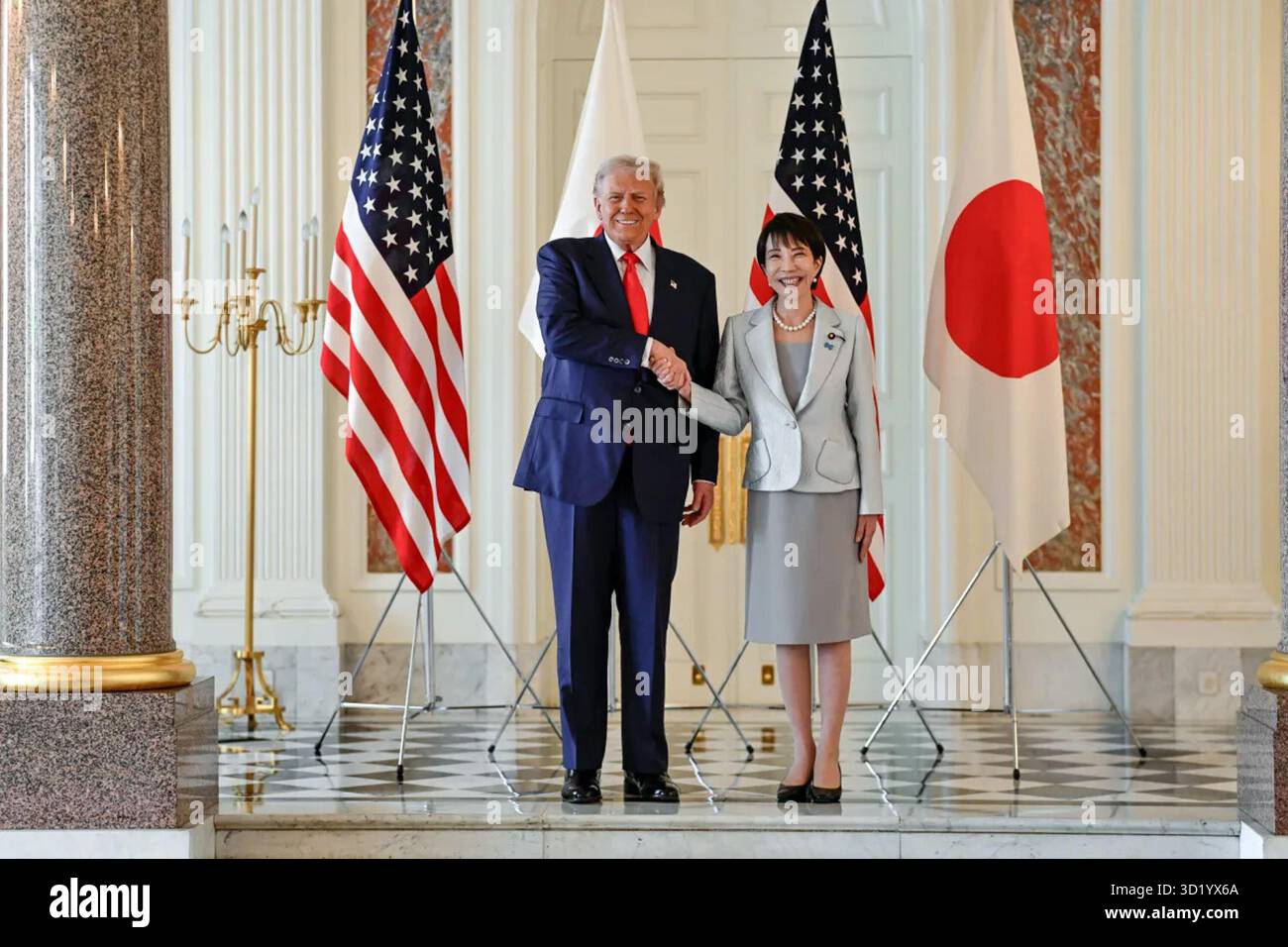
The vulnerability of this arms-sale relationship became glaringly obvious during President Donald Trump’s recent summit with Chinese President Xi Jinping. Beijing focused heavily on Taiwan, labeling U.S. arms sales as the primary flashpoint in the bilateral relationship. Xi directly pressured the American administration to halt a pre-approved 14 billion dollar weapons package that includes crucial PAC-3 MSE interceptors and National Advanced Surface-to-Air Missile Systems (NASAMS).
Returning from the summit, the American president openly admitted he had listened to China's concerns without committing to a timeline for the sale's formal notification to Congress. This hesitation has sent shockwaves through Taipei. For decades, the relationship was governed by the 1982 Six Assurances, which explicitly stated that Washington would not consult Beijing on arms sales to Taiwan. The mere fact that these sales are being weighed against broader trade deals and three-way nuclear pacts reveals that Taiwan’s security architecture is vulnerable to shifting political winds in Washington.
The Real Cost of Delayed Deterrence
This industrial and political lag has immediate consequences in the Taiwan Strait. Beijing watches these backlogs closely. Rather than being deterred by future delivery dates, the People’s Liberation Army has accelerated its gray-zone tactics, conducting extensive maritime surveys and aggressive military drills right up to the edge of Taiwan’s restricted waters.
When Washington approves an 11 billion dollar package, Beijing responds with massive, multi-branch military exercises, using the announcement as a pretext to test encirclement strategies. Taiwan suffers the political and military blowback of the announcement immediately, but it does not receive the actual defensive capability for years.
Relying on a foreign supplier with a 32 billion dollar backlog is no longer a viable baseline strategy for survival. To counter this reality, Taipei is quietly shifting resources toward domestic defense production, pouring money into homegrown long-range missiles, sea mines, and indigenous submarine programs like the Narwhal.
The definitive action step for Taipei cannot be another multi-billion dollar budget allocation for American weapons that may not arrive this decade. The island must pivot aggressively toward asymmetric, domestically produced attrition warfare assets. Relying on a backlog will not stop a blockade.