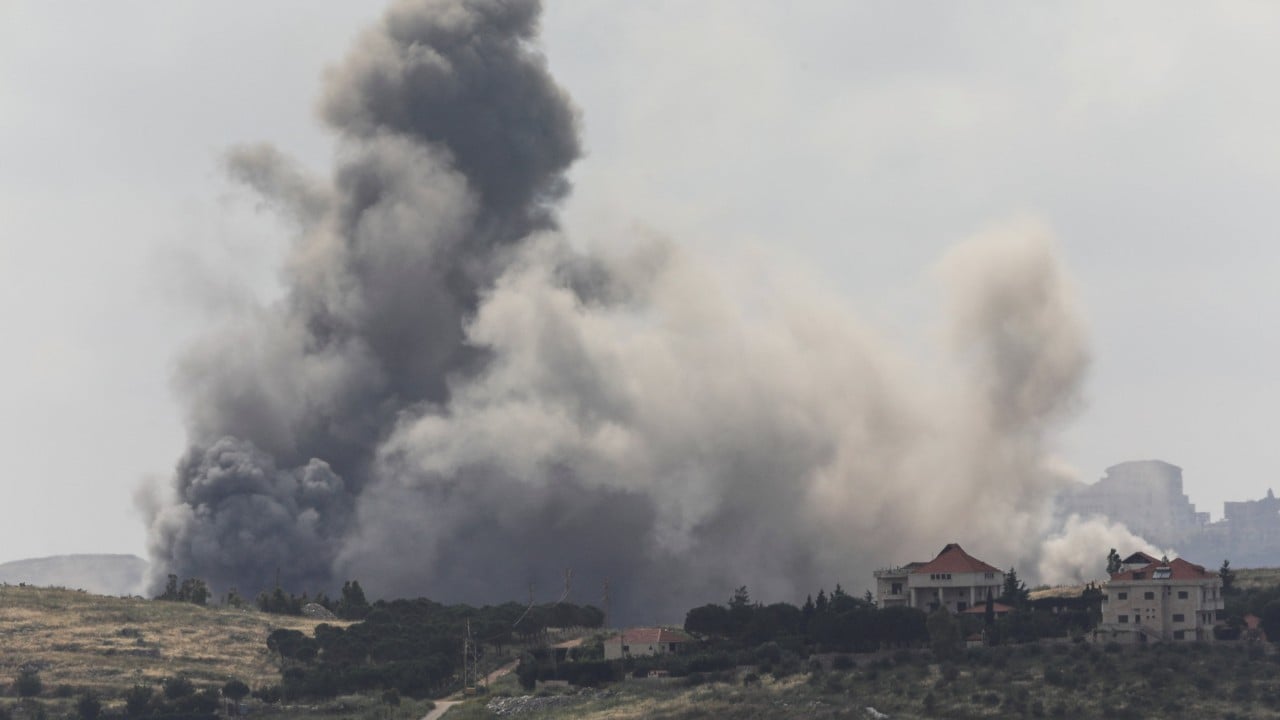
The diplomatic announcements emanating from regional capitals suggest a fragile peace is holding along the Blue Line, but the reality on the ground tells a far more volatile story. While diplomats trumpet an extension of the ceasefire between Israel and Lebanon, a systematic pattern of military actions, targeted strikes, and logistical repositioning reveals that neither side is preparing for a permanent cessation of hostilities. Instead, this extension serves a tactical function, allowing both militaries to rearm, re-evaluate intelligence, and adjust their positions for an inevitable resumption of high-intensity conflict. The ceasefire exists largely on paper, a diplomatic fiction maintained to manage international pressure while the groundwork for the next phase of the war is actively laid.
To understand why this truce is failing to produce actual stability, one must look past the official press releases and examine the mechanics of enforcement. Ceasefires in this region traditionally rely on a delicate balance of mutual deterrence and international oversight, usually mediated by United Nations peacekeeping forces. However, the current framework lacks any real teeth. Over past decades, the buffer zone has become heavily militarized, rendering traditional monitoring methods obsolete. When a strike occurs now, it is not an accidental flare-up by rogue actors; it is a calculated test of the adversary’s response thresholds.
The Strategy Behind the Technical Violations
Military command structures do not operate in a vacuum. Every artillery shell launched and every drone sent across the border during a declared truce serves a specific intelligence-gathering purpose. By conducting what diplomats politely call "technical violations," commanders can map out the enemy’s newly established radar positions, test the reaction time of air defense networks, and observe how quickly troops scramble to bunkers.
This is a data-gathering exercise. If Israel conducts a precision strike on a specific facility in southern Lebanon, the primary objective might not be the physical destruction of the target itself, but rather the observation of the subsequent communications chatter. Who calls whom? Which routes do reinforcements take? Conversely, when cross-border fire originates from Lebanese territory, it forces the deployment of defense systems, exposing the exact coordinates of batteries that were moved under the cover of the initial truce agreement.
This cyclical testing creates a highly unstable environment where a single miscalculation can trigger a full-scale escalation. The concept of a ceasefire implies a pause in hostile intent, but current operations demonstrate that the intent remains entirely active. The forces arrayed along the border are using this operational pause to optimize their targeting banks, ensuring that when the formal agreement inevitably collapses, the initial salvos will be devastatingly precise.
The Economic and Domestic Pressures Driving the Charade
Diplomacy is often driven by internal pressures rather than a genuine desire for international harmony. For the political leadership involved, maintaining the appearance of a negotiation process provides vital breathing room at home.
Consider the economic realities. Prolonged mobilization drains national treasuries at an unsustainable rate. Reservists cannot stay away from their civilian jobs indefinitely without causing severe disruption to technology sectors, agriculture, and manufacturing. By agreeing to an extension of the ceasefire, governments can temporarily scale back active deployments, allowing citizens to return to work and stabilizing jittery financial markets, if only for a few weeks.
- Supply Chain Relief: Temporary pauses allow civilian logistics networks to clear backlogs near port cities and border zones.
- Political Shielding: Leaders can point to ongoing talks to deflect criticism from opposition factions demanding either immediate victory or total peace.
- International Aid Flows: Continued engagement with foreign mediators keeps the door open for financial assistance and diplomatic backing from Western powers.
Yet, this economic respite is a double-edged sword. It creates an artificial sense of recovery that masks the underlying structural decay caused by chronic insecurity. Businesses do not invest long-term capital in regions where the threat of bombardment hangs overhead, regardless of whether a temporary piece of paper says the guns are supposed to be silent.
The Failure of Traditional Mediation
International bodies have consistently misread the nature of this conflict by treating it as a border dispute that can be resolved through cartographic adjustments. The core of the issue is ideological and existential, factors that do not lend themselves to compromise over a few kilometers of territory.
Monitors stationed along the border find themselves increasingly marginalized. When a violation occurs, the protocol involves filing a report, convening a committee, and issuing a statement of condemnation. By the time these bureaucratic steps are completed, the strategic landscape has already shifted. The mediation apparatus is built for an era of conventional warfare that no longer exists, failing to account for asymmetric tactics, decentralized command structures, and autonomous weapon systems.
The Logistics of Reorganization
While the public focus remains on political speeches, the true indicators of future intent are found in the movement of supply trucks and fuel convoys. Satellite imagery and local reports indicate an unprecedented level of logistical activity just behind the front lines on both sides.
Ammunition depots that were depleted during the previous months of active combat are being systematically replenished. Heavy armor is being serviced, and concrete fortifications are being poured under the guise of defensive reinforcement. A military that intends to honor a long-term peace agreement does not construct hardened command bunkers right on the perimeter of a demilitarized zone. They are building infrastructure designed to withstand prolonged siege conditions.
This logistical buildup reveals the fundamental hypocrisy of the current diplomatic track. The negotiators in foreign capitals are speaking of de-escalation, while the logisticians on the ground are working double shifts to ensure that transport networks can handle thousands of tons of military hardware per day. It is an industrial preparation for war masquerading as an uneasy peace.
Weaponization of the Information Space
The conflict is fought as much in the media as it is in the trenches. Both parties use the ceasefire extension to craft a narrative of defensive victimization. Each side claims they are fully adhering to the terms of the agreement while accusing the other of flagrant breaches.
This narrative warfare is crucial for maintaining international legitimacy. If a state can convince the global community that it was forced to resume military operations due to the persistent provocations of its neighbor, it can mitigate the risk of international sanctions or diplomatic isolation. Therefore, the periodic strikes that occur during the truce are carefully calibrated to be provocative enough to inflict damage, but just below the threshold that would force the international community to assign definitive blame to the initiator.
The Human Toll of Perpetual Suspense
For the civilian populations living within the strike zones, this state of neither war nor peace is psychologically devastating. Towns along the border remain largely deserted. Those who fled during the height of the bombardment refuse to return, recognizing that a ceasefire extension offers no real security guarantee.
The social fabric of these border communities is fraying permanently. Schools remain closed or operate out of temporary facilities deep inland. Local economies have collapsed completely, as fields go unharvested due to the danger of unexploded ordnance and sporadic artillery fire. The current diplomatic approach treats these populations as collateral variables in a larger strategic equation, ignoring the fact that a truce which does not allow civilians to return home safely is not a truce at all.
The international community's insistence on celebrating these hollow extensions avoids the harder work of addressing the root geopolitical imbalances. By accepting a superficial pause in major operations as a success, global powers are merely kicking the container down the road, ensuring that the eventual resumption of conflict will be larger, faster, and far more destructive than the last. The diplomatic process has become decoupled from the tactical reality, leaving a dangerous vacuum where the only certainty is the preparation for the next strike.