The geopolitical establishment is obsessed with a ghost. Whenever tensions flare in the Persian Gulf, the script remains identical: a head of state announces a "coalition of the willing," mentions that certain countries are "on the way" to help, and the media treats the Strait of Hormuz like a garden hose that a single thumb could plug forever.
This narrative is a fantasy. It relies on the outdated assumption that 21st-century energy security is a matter of "policing the lanes" with gray-hulled destroyers. I have spent years analyzing maritime choke points, and I can tell you that the obsession with physical naval presence in the Strait is not only inefficient—it’s a strategic liability that masks the real structural rot in global energy logistics.
The Myth of the "Plugged" Strait
The common consensus suggests that if a hostile actor—usually Iran—decides to close the Strait, the global economy collapses instantly. This "Doomsday" scenario is the bread and butter of defense contractors and cable news pundits. They want you to believe that a few more frigates from "allies on the way" will solve the problem.
They won't.
The Strait of Hormuz is roughly 21 miles wide at its narrowest point. However, the shipping lanes (the actual "road" for VLCCs or Very Large Crude Carriers) are only two miles wide in each direction, separated by a two-mile buffer zone.
Logic dictates that you cannot "protect" a two-mile wide lane against modern asymmetric threats using traditional naval escort. We are no longer in the era of the 1980s "Tanker War" where dumb mines and speedboats were the primary threats. We are in the era of loitering munitions, anti-ship ballistic missiles (ASBMs), and subsurface drones. A billion-dollar destroyer is a massive, slow-moving target in a confined bathtub.
The Coalition of the Unwilling
When leadership brags that other nations are "on the way" to assist, they are usually talking about symbolic contributions. A single frigate from a mid-tier European power or a logistics ship from an Asian partner does nothing for tactical security. It is geopolitical theater designed to spread the "blame" if things go south.
The reality is that most "allies" have no interest in kinetic engagement in the Gulf. Their "help" is a diplomatic courtesy, not a military solution. If a real shooting war starts, these "on the way" assets will be the first to retreat to safer waters, leaving the primary hegemon to foot the bill and take the hits.
I’ve seen naval planners agonize over "interoperability" with these small-batch contributions. In truth, managing a patchwork coalition in the cramped confines of the Gulf creates more signal noise than security. It’s a management nightmare disguised as a strategic victory.
The Mathematical Reality of Oil Flows
The "People Also Ask" crowd wants to know: How much would gas prices rise if Hormuz closed?
The standard answer is "to the moon." The contrarian truth is that the market prices in the fear of closure more than the closure itself.
Consider the volume: roughly 20% of the world's liquid petroleum passes through Hormuz. If it "closes," the world doesn't run out of oil tomorrow; it runs out of cheap oil. But here is the nuance the "coalition" advocates miss:
- The Pipeline Pivot: Saudi Arabia and the UAE have spent decades building bypass infrastructure. The East-West Pipeline (Petroline) in Saudi Arabia can move 5 million barrels per day to the Red Sea. The ADCOP pipeline in the UAE bypasses Hormuz entirely to reach Fujairah.
- The China Factor: China is the largest customer of Gulf oil. If the Strait closes, it isn't just a Western problem—it's a Beijing problem. The idea that the U.S. or its "coalition" needs to be the sole guarantor of these lanes is a legacy of the 1970s that no longer fits the 2020s.
By providing free security for the Strait, the U.S. is essentially subsidizing the energy costs of its primary economic rivals. Why are we begging countries to be "on the way" to help us protect their supply lines?
The Asymmetric Trap
Imagine a scenario where a localized militia uses $50,000 "suicide" drones to target the engine room of a tanker.
The "coalition" destroyers, costing $2 billion each, respond by firing $2 million interceptor missiles. This is a mathematical defeat. You cannot win a war of attrition when your "solution" costs 40 times more than the threat. The more ships we send "on the way," the more targets we provide for a cost-effective saturation attack.
True maritime security in the modern age isn't about more hulls; it’s about resilience and redundancy.
Stop Policing, Start Diversifying
If we actually wanted to "fix" the Hormuz problem, we would stop talking about naval escorts and start talking about:
- Insurance Backstops: The real threat to shipping isn't a missile; it's the revocation of insurance. When Lloyd’s of London declares a zone "uninsurable," the ships stop moving regardless of how many destroyers are nearby. A global maritime insurance guarantee fund would do more for stability than an extra carrier strike group.
- Strategic Storage: Moving the focus from "just-in-time" delivery to massive regional storage hubs outside the Gulf.
- Deep-Water Port Expansion: Doubling down on ports like Salalah (Oman) and Duqm, which sit comfortably outside the "choke" of the Strait.
The Cost of Professional Delusion
The "allies are coming" rhetoric is a comfort blanket for a public that doesn't understand the geography of the Middle East. It suggests that the world is a tidy place where "good guys" patrol the "high seas."
The high seas in the Gulf are a myth. It is a coastal pond. Every ship in it is within range of shore-based batteries from the moment it enters until the moment it leaves. Sending more ships into that pond isn't "securing" it; it's crowding the kill zone.
We have spent forty years terrified of a "Hormuz Closure" that has never fully happened because the nations bordering the Strait need the revenue as much as the world needs the oil. Even during the height of the Iran-Iraq war, the oil kept flowing.
The real danger isn't a physical blockade. It's the continued reliance on a 20th-century military solution for a 21st-century economic reality. We are burning billions of dollars to protect a route that the market—and our rivals—should be protecting themselves.
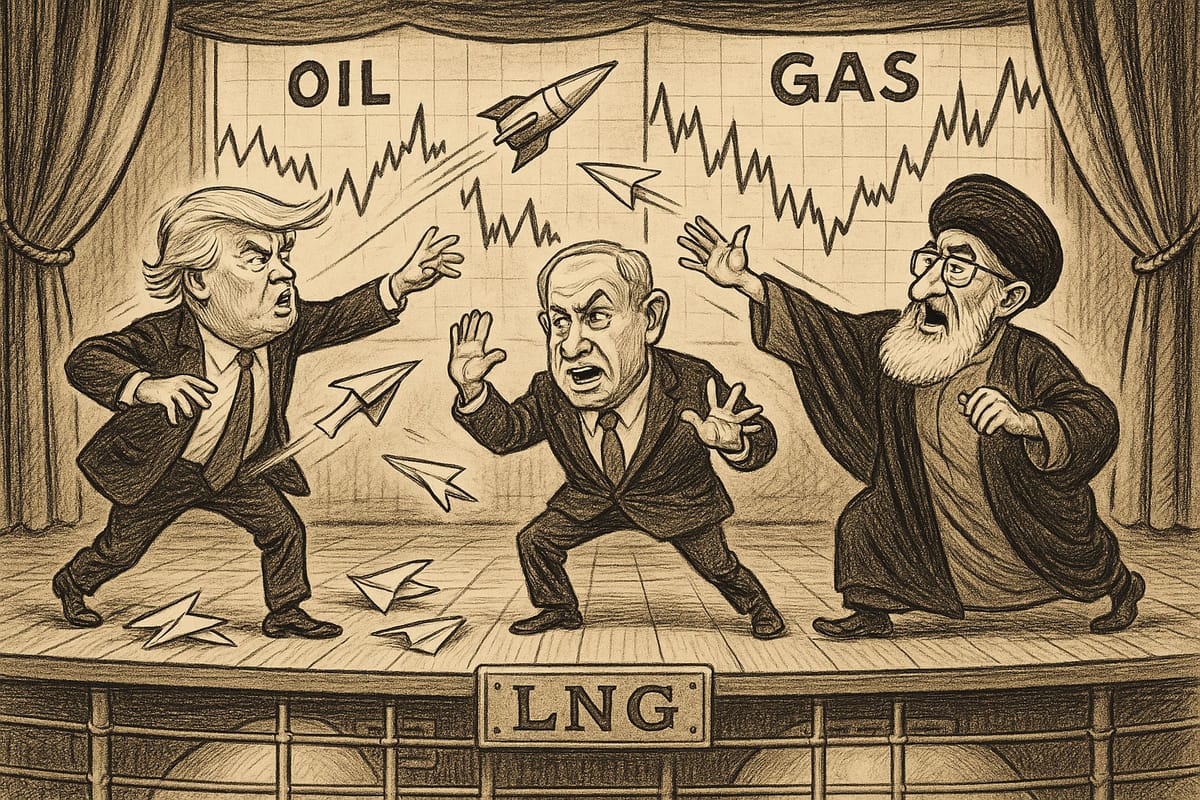
The next time a politician tells you that help is "on the way" to the Strait, realize you are watching a theater production. The ships are real, the sailors are brave, but the strategy is a relic.
Pull the fleet back. Let the primary buyers handle the risk. Watch how fast the "unclosable" Strait becomes a non-issue when the primary protector stops offering a free ride.
The era of the global maritime policeman is over. Those who haven't realized it are just waiting for a very expensive lesson in physics and economics.
Stop looking at the horizon for reinforcements. The reinforcements are the problem.
Would you like me to analyze the specific bypass capacity of the East-West pipeline to show exactly how much Hormuz-reliant oil is actually "optional" in a crisis?