The UK government is currently chasing ghosts. Westminster's latest push for a "toll-free" Strait of Hormuz and a comprehensive Lebanon ceasefire deal isn't just optimistic—it is a fundamental misreading of how power functions in the Middle East. While diplomats polish their memos in London, the actual mechanics of global energy transit and regional proxy wars are moving in the opposite direction.
Western foreign policy has become addicted to the idea that international law governs maritime bottlenecks. It doesn't. Leverage does. Calling for a "toll-free" Hormuz sounds noble in a press release, but it ignores the reality that the strait is already technically governed by the United Nations Convention on the Law of the Sea (UNCLOS). The problem isn't a lack of rules; it’s the lack of a credible enforcement mechanism that doesn't trigger a global depression. Meanwhile, you can explore related developments here: The Myth of the Heroic Exit Why Chaos Engineering Saves More Lives Than Intentional Bravery.
The Hormuz Toll is Paid in Risk Not Dollars
The UK wants to ensure that shipping remains unmolested by Iranian interference. But here is the truth nobody in the Foreign Office wants to admit: The "toll" is already being paid. It’s paid in skyrocketing insurance premiums, the cost of naval escorts, and the "war risk" surcharges that every tanker captain factors into their voyage.
When London asks for a guarantee of free passage, they are asking for a return to a unipolar world that died a decade ago. To see the full picture, we recommend the excellent analysis by Reuters.
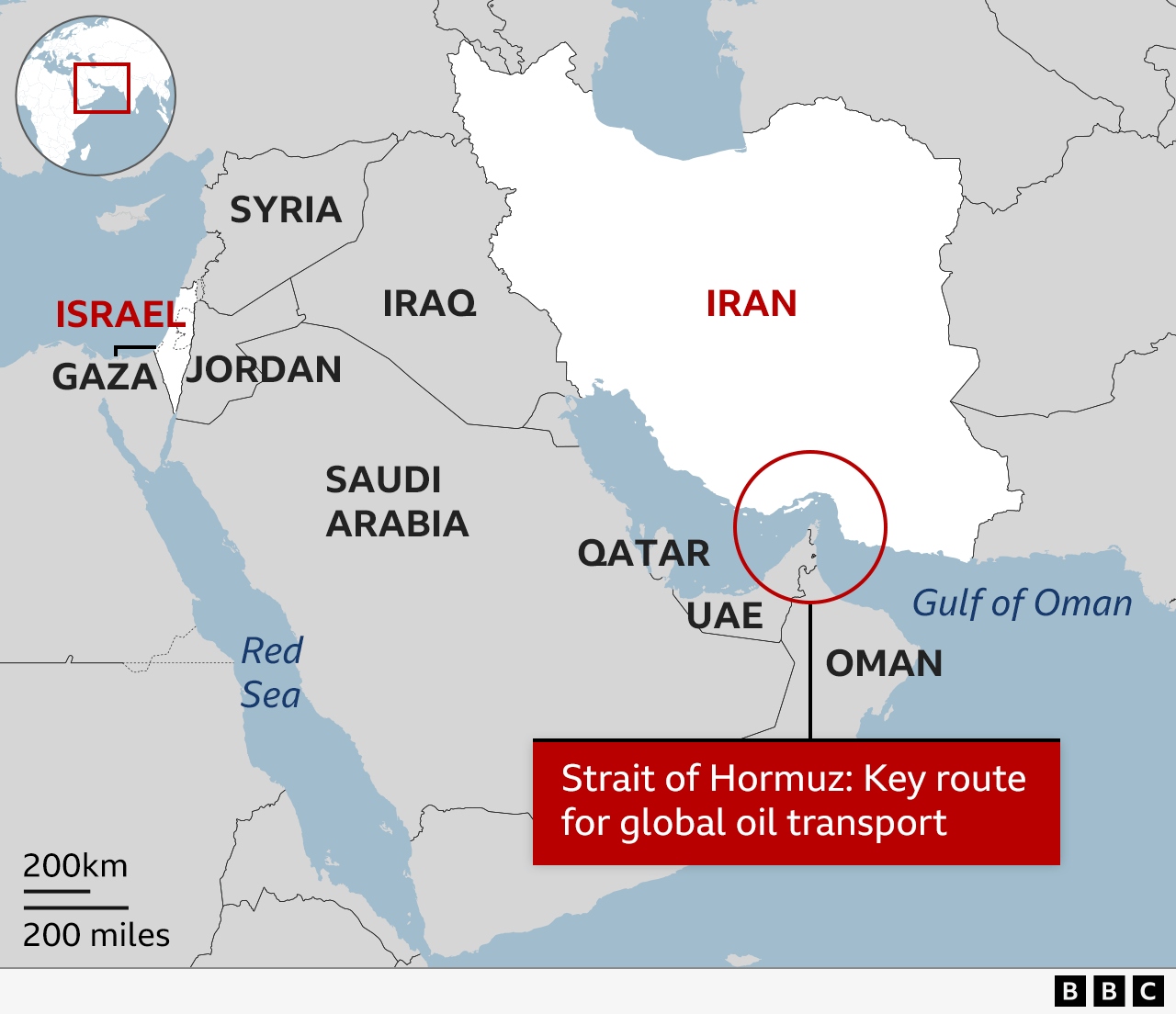
- The Geography Trap: The Strait of Hormuz is only 21 miles wide at its narrowest point. The shipping lanes—two miles wide in each direction—lie almost entirely within Omani and Iranian territorial waters.
- The Transit Passage Myth: While UNCLOS grants "transit passage," that right is conditional on ships not being "threatening." For a regime in Tehran looking to squeeze the West, "threatening" is a flexible definition.
- The Asymmetric Reality: Iran doesn't need to sink a ship to close the strait. They only need to make it uninsurable.
I have watched analysts track "shadow fleets" for years. The UK’s demand for a formal, frictionless corridor assumes that the actors involved want stability. They don't. Volatility is the currency of the IRGC. By demanding a "toll-free" strait, the UK is essentially asking its primary adversary to hand over its most effective weapon for nothing in return. That isn't diplomacy; it’s a Christmas list.
Lebanon Is Not a Sovereign Negotiator
The second pillar of the UK’s current strategy is folding Lebanon into a broader regional ceasefire. This is a classic Western mistake: treating Lebanon as a functional Westphalian state.
Lebanon is a collection of fiefdoms masquerading as a country. To suggest that the Lebanese government can "sign" a deal that binds Hezbollah is a hallucination. In the real world, the Lebanese Armed Forces (LAF) are effectively a logistical support wing for the very groups the West wants to disarm.
If you want to understand why ceasefire talks fail, look at the math of power:
$$P_{total} = P_{state} + P_{militia}$$
In Lebanon, $P_{militia}$ is an order of magnitude larger than $P_{state}$. Any deal signed by the state that doesn't have the explicit, tactical blessing of Tehran is a scrap of paper.
The UK’s push for a ceasefire is a performative attempt to stabilize the Eastern Mediterranean without addressing the hard truth: You cannot have a ceasefire with a ghost. Hezbollah is woven into the social, economic, and political fabric of the country. Asking the Lebanese government to enforce a ceasefire is like asking a hostage to negotiate the terms of their captor's surrender.
The High Cost of Paper Promises
Every time a Western power brokers a "deal" that ignores the ground reality, it erodes the credibility of international mediation. We saw this with the 2006 UN Resolution 1701. It was supposed to keep the area south of the Litani River free of armed personnel. It failed spectacularly.
Why? Because the West prioritizes the image of peace over the mechanics of security.
- The Logistics of Evasion: Hezbollah has spent decades building tunnels and infrastructure that UNIFIL (United Nations Interim Force in Lebanon) is either unable or unwilling to inspect.
- The Economic Collapse: Lebanon's economy is in a state of hyper-decay. When a population is starving, they don't look to the UN for help; they look to the entities providing social services. Currently, those entities aren't the ones the UK is talking to in Beirut.
We are told that a ceasefire will "pave the way" for investment. This is the "lazy consensus" of the banking sector. No serious capital is flowing into a region where the underlying conflict remains unresolved. Real investors—the ones who actually move the needle—don't care about ceasefires. They care about the balance of power. And right now, the balance is tilted toward chaos.
Stop Solving for Yesterday
The UK's obsession with these deals is a relic of 1990s-style liberal internationalism. It assumes that if we just get everyone around a table and talk about trade routes, everyone will see that "peace is profitable."
But for some, the status quo is more profitable than peace.
For Iran, a volatile Hormuz keeps oil prices high enough to fund their regional ambitions despite sanctions. For the various factions in Lebanon, a permanent state of "near-war" justifies their grip on power and their control over the black market.
If the UK actually wanted to secure the Strait of Hormuz, they wouldn't be issuing statements. They would be doubling down on the "India-Middle East-Europe Economic Corridor" (IMEC) to bypass the strait entirely. But that requires long-term infrastructure investment and actual political will, rather than the short-term dopamine hit of a diplomatic "call for peace."
The Brutal Honesty of Geography
You cannot "negotiate" your way out of a geographic choke point when your opponent is willing to die to hold the plug.
The Strait of Hormuz will never be "toll-free" as long as the West depends on it. The toll is the leverage Tehran holds over the global economy. They aren't going to give it up because a minister in London thinks it’s the right thing to do.
Similarly, Lebanon will not find peace through a multi-party deal brokered in a European capital. Peace in Lebanon requires a total systemic collapse of the current sectarian power-sharing model—a process that would be violent, prolonged, and ugly. The "ceasefire" the UK wants is just a pause button that allows both sides to re-arm.
The Actionable Pivot
The UK needs to stop trying to be the world’s mediator and start being a realist.
- Accept the Surcharge: Acknowledge that the "Hormuz Toll" is a permanent feature of the modern energy market. Build the domestic resilience (nuclear, storage, alternative routes) to make that toll irrelevant.
- Bypass, Don't Negotiate: Put every ounce of diplomatic energy into the land bridges through Saudi Arabia and Jordan. If the Strait is a bottleneck, stop using the bottle.
- End the Lebanon Charade: Stop funding a Lebanese state that has no agency. Redirect those resources to specific, localized humanitarian corridors that bypass the central government entirely.
The current strategy is a recipe for managed decline. It’s an attempt to maintain an old world order with words while the rest of the world is using drones, missiles, and economic sabotage.
The Strait of Hormuz isn't a legal problem to be solved; it’s a strategic reality to be outmaneuvered. Lebanon isn't a partner to be coached; it’s a tragedy to be contained. Until Westminster understands that power isn't granted at a podium, they will continue to be spectators in a theater they think they are directing.
Stop asking for a seat at a table that has already been flipped over.