The Hong Kong Monetary Authority (HKMA) just locked the city’s base rate at 4%, a move that surprised exactly no one but should worry everyone. By mirroring the U.S. Federal Reserve’s decision to pause, Hong Kong continues its decades-long tradition of importing American monetary policy regardless of whether it actually fits the local economic reality. This is the mechanical reality of the Linked Exchange Rate System. When Washington sneezes, Hong Kong doesn’t just catch a cold; it’s forced to take the same medicine as the patient, even if its own symptoms are entirely different. While the Fed battles a sticky U.S. labor market and fluctuating domestic energy costs, Hong Kong is grappling with a fragile property market and a sluggish post-pandemic recovery that this 4% rate does little to help.
The Straightjacket of the Linked Exchange Rate System
To understand why the HKMA had no choice, you have to look at the 1983 mandate. The Hong Kong dollar is pegged to the U.S. greenback at a tight range of 7.75 to 7.85. To maintain this stability, the HKMA must keep its interest rates in lockstep with the Fed. If they don’t, arbitrageurs will swoop in, selling the lower-yielding currency to buy the higher-yielding one, forcing the HKMA to burn through reserves to defend the peg.
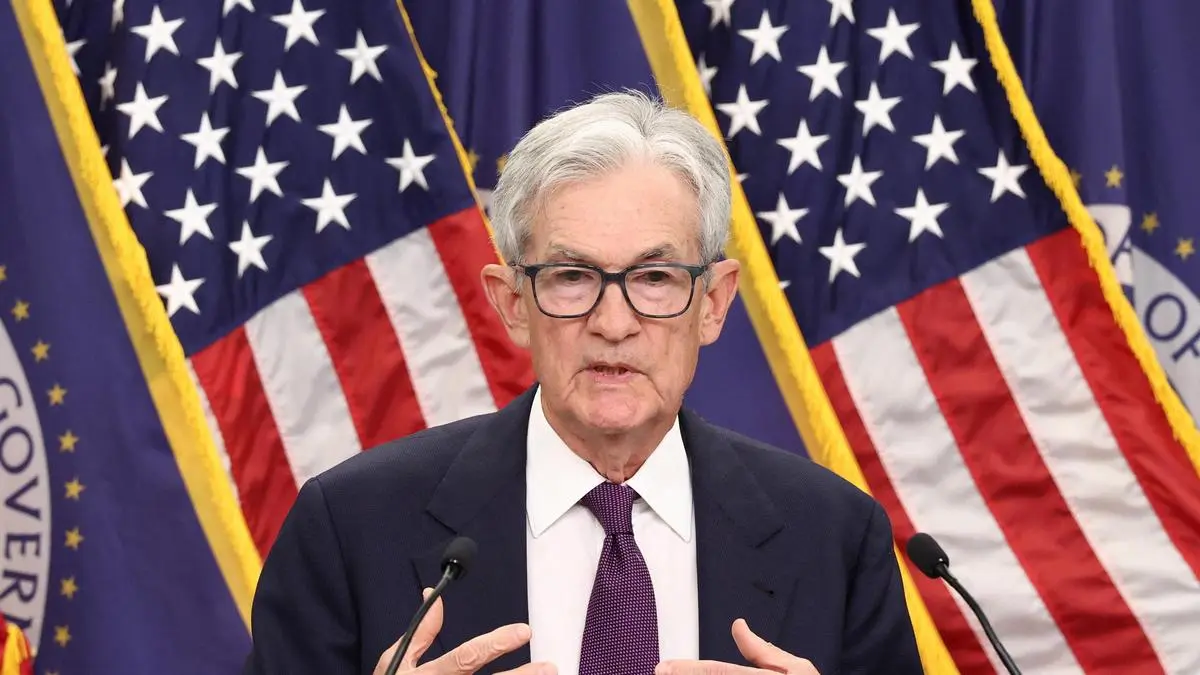
It is a policy of survival over flexibility. While other central banks can tweak rates to cool or heat their specific economies, the HKMA is effectively a passenger on a ship steered by Jerome Powell. The Fed is currently obsessed with "war inflation"—the price spikes driven by geopolitical instability in Eastern Europe and the Middle East. These pressures are real, but they impact a massive, resource-rich continent like the U.S. differently than they do a service-oriented, import-dependent hub like Hong Kong.
The Property Market at a Breaking Point
The most immediate casualty of this 4% base rate isn't the billionaire class; it’s the mortgage holder. Hong Kong’s residential property market, once the most expensive and envied in the world, is currently gasping for air. High borrowing costs have pushed potential buyers to the sidelines, leading to a significant drop in transaction volumes and a cooling of prices that hasn't been seen in years.
Most mortgages in the city are linked to the Hong Kong Interbank Offered Rate (HIBOR). When the base rate stays high, HIBOR follows. We are seeing a generation of homeowners who bought at the peak of the market now facing a brutal "higher for longer" reality. Their monthly payments have surged, eating into disposable income and effectively stifling local consumption. If you want to know why the retail sector in Tsim Sha Tsui feels quiet, don't look at the tourists—look at the mortgage statements of the locals.
Negative Equity Risks
The specter of negative equity is no longer a theoretical risk. As property values dip and interest rates remain anchored at 4%, more households find themselves owing the bank more than their homes are worth. The HKMA’s decision to follow the Fed’s pause provides a temporary reprieve from further hikes, but it offers zero relief. A pause is not a pivot. Keeping rates at this level is essentially holding a heavy weight steady; it’s better than adding more weight, but the muscles are still screaming under the pressure.
The Inflation Ghost in the Machine
The official narrative suggests that keeping rates high is necessary to combat inflation. However, Hong Kong’s inflation profile is unique. Unlike the U.S., where wage-price spirals were a major concern, Hong Kong’s inflation is largely imported. We pay for what we eat and use in foreign currencies, often pegged to the dollar.
The "war inflation" cited by the Fed refers to global supply chain disruptions and energy volatility. For Hong Kong, these costs are unavoidable. Raising interest rates doesn't make a shipment of grain from South America or oil from the Gulf any cheaper. Instead, high rates act as a blunt instrument that crushes domestic demand in hopes of slowing an economy that is already struggling to find its footing. It’s an external solution for an internal problem that doesn't exist in the same way.
The Divergence of Two Economies
The fundamental issue is the widening gap between the U.S. and Chinese economic cycles. The U.S. economy has shown surprising resilience, with low unemployment and steady consumer spending. China, and by extension Hong Kong, is facing a different set of challenges, including a massive debt restructuring in the mainland property sector and a shift in global trade patterns.
By following the Fed, Hong Kong is tightening its belt at a time when its regional neighbors and its own primary economic driver—mainland China—might benefit from a more accommodative stance. This divergence creates a massive friction point. Hong Kong is forced to be a high-interest rate island in a region that desperately needs liquidity to stimulate growth.
Capital Outflows and the Search for Yield
Money is cold. It goes where it is treated best. With the base rate at 4%, one might think capital would stay put in Hong Kong. But the reality is more complex. Investors are looking at the risk-adjusted returns across the region. If the U.S. continues to keep rates high, the Hong Kong dollar remains strong, making Hong Kong exports and services more expensive for everyone else in Asia.
This strength is a double-edged sword. It protects the purchasing power of the city to some extent, but it hurts the tourism and service sectors that rely on being a competitive destination. Why shop in Causeway Bay when your currency goes twice as far in Tokyo or Seoul? The peg ensures stability, but it also ensures that Hong Kong remains one of the most expensive places on earth to do business during a global downturn.
The Banking Sector's Thin Margin
On the surface, high interest rates are great for banks. They can charge more for loans. But in a high-rate environment with low growth, the volume of new loans dries up. Furthermore, the risk of non-performing loans (NPLs) increases.
Banks in Hong Kong are currently sitting on relatively healthy balance sheets, but the prolonged duration of these rates is testing their credit risk models. Small and medium enterprises (SMEs), which form the backbone of the Hong Kong economy, are particularly vulnerable. These businesses don't have the cash reserves of multinational conglomerates. For them, a 4% base rate plus the bank’s margin means borrowing costs that can easily hit 6% or 7%. In a low-growth environment, those margins are unsustainable.
The Liquidity Trap
There is also the matter of the Aggregate Balance—the sum of balances maintained by banks with the HKMA. This balance has shrunk significantly over the last two years. While it hasn't reached a crisis point, the tightening liquidity in the interbank market means that even if the Fed pauses, HIBOR can still spike due to local demand for cash. The HKMA has the tools to manage this, but their hands are tied by the primary goal of defending the peg. They cannot simply flood the market with HKD to lower rates without risking the 7.85 limit.
Looking Past the Fed’s Shadow
The obsession with the Fed’s dot plot has become a distraction from the structural reforms Hong Kong actually needs. Whether the rate is 4% or 4.25%, the city is still facing a demographic shift, a changing role in global finance, and a need to diversify its economy away from a pure reliance on real estate and traditional finance.
The HKMA’s move to hold rates is a signal of stability, yes. But it is also a signal of stagnation. It confirms that for the foreseeable future, Hong Kong’s economic pulse will be measured in Washington D.C., not in the streets of Central or the industrial blocks of Kwun Tong.
The real danger isn't that rates might go up another quarter point. The danger is that they stay right here, at 4%, for another eighteen months. That is plenty of time for the "higher for longer" mantra to turn into a "lower for longer" reality for property prices, consumer spending, and business investment.
Investors shouldn't be asking when the Fed will cut. They should be asking how Hong Kong intends to grow while its monetary policy is effectively held hostage by a foreign central bank fighting a completely different war. Stability is a virtue, but when the cost of that stability is the gradual erosion of domestic economic vitality, it's time to stop calling it a "pause" and start calling it what it is: a squeeze.
Move your capital into high-yield, liquid instruments or focus on sectors with zero debt exposure, because the relief everyone is waiting for isn't on the Fed's agenda, and therefore, it isn't on the HKMA's either.