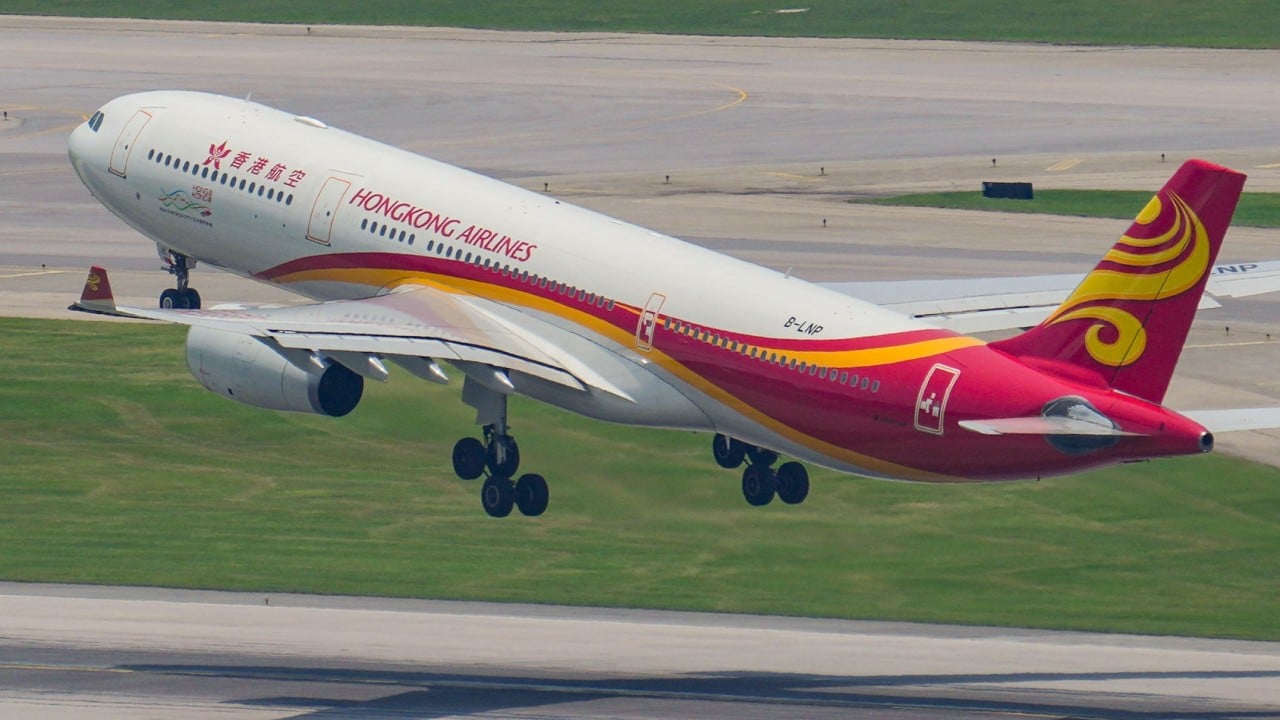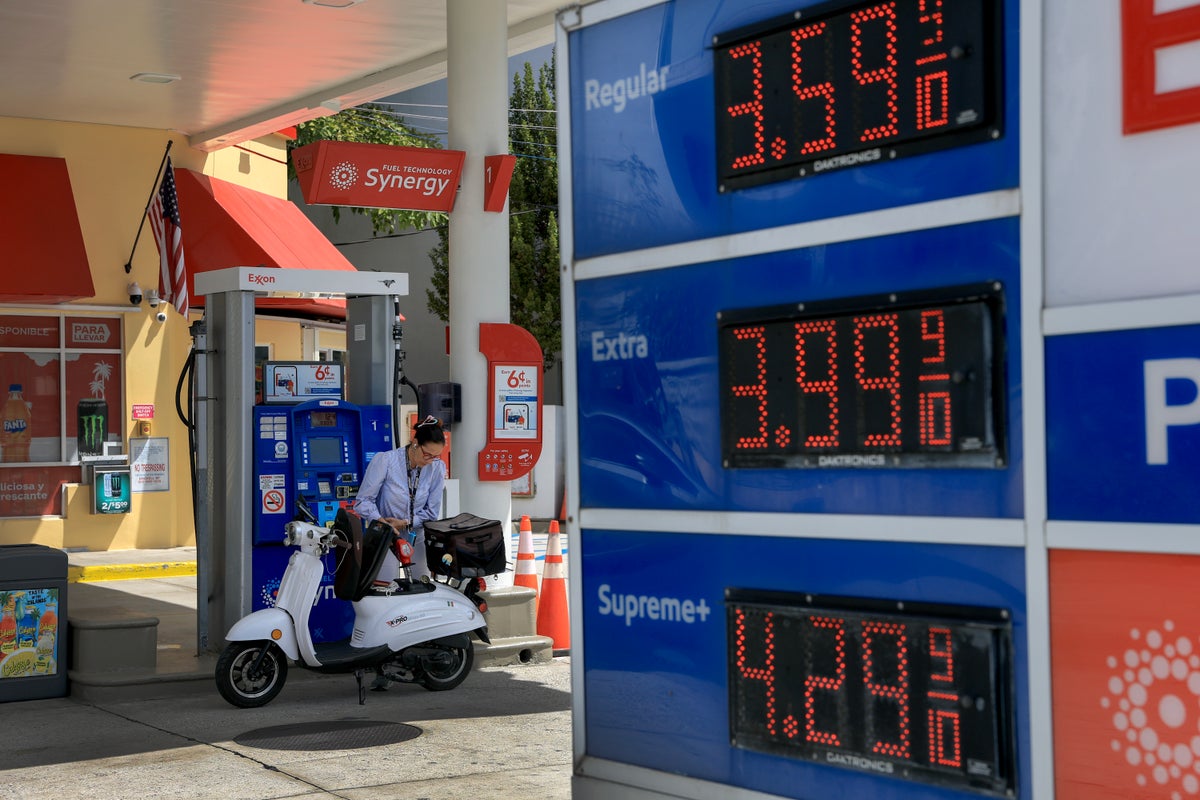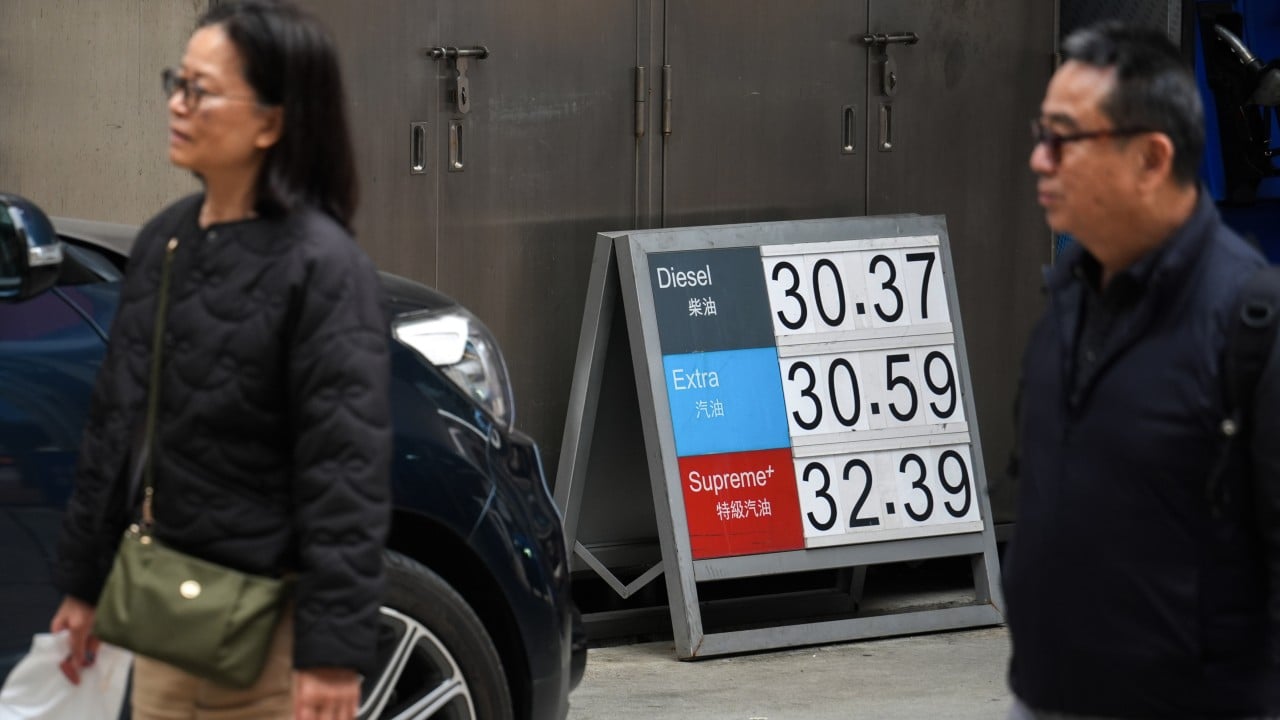
Hong Kong motorists are currently facing a predatory surge in fuel costs driven by nothing more than geopolitical shadows. While global oil markets react to the theoretical threat of a widened war in the Middle East involving Iran, local pump prices in the SAR have decoupled from reality. The government is "monitoring" the situation, but for the average driver, that monitoring looks a lot like complicity. The fundamental issue is that Hong Kong’s retail fuel market operates as a functional oligopoly, where price hikes are synchronized with surgical precision and "supply chain anxiety" is used as a convenient mask for margin expansion.
The math simply does not add up for the consumer. When Brent crude fluctuates on a rumor, Hong Kong prices jump within hours. When crude prices stabilize or retreat, the "adjustment period" for local pumps stretches into weeks. This isn't just a matter of logistics; it is a systemic failure of competition.
The Invisible Premium Of Geopolitical Speculation
The current spike is being blamed on the tension between Israel and Iran. In the world of energy trading, fear is a commodity more valuable than the oil itself. Traders bake in a "war premium" the moment a missile is fueled or a diplomat leaves a room in a huff. However, the physical supply of oil to Hong Kong has not been interrupted. There is no shortage of refined product sitting in the tanks at Tsing Yi.
What we are seeing is anticipatory pricing. Oil majors argue that they must raise prices today to afford the replacement stock they will buy tomorrow. It is a logical argument on paper that falls apart under scrutiny. If the industry were truly sensitive to replacement costs, we would see aggressive downward movements the moment tensions ease. Instead, we see a "rocket and feather" effect: prices shoot up like a rocket on bad news and drift down like a feather on good news.
The vulnerability of Hong Kong is unique. Unlike mainland China, which maintains a heavy strategic reserve and a regulated pricing mechanism that caps spikes, Hong Kong is a pure price-taker in a rigged game. We pay the highest pump prices in the world—often exceeding $24 or $25 HKD per liter—because the land premiums and the lack of new market entrants create a barrier to entry that is virtually impenetrable.
Why The Government Monitoring Is A Paper Shield
The Environment and Ecology Bureau frequently releases statements claiming they are in "close communication" with oil companies. In the language of bureaucracy, this is a white flag. The government lacks the statutory power to cap prices or dictate margins. They rely on "transparency," which translates to publishing a website that tells you exactly how much you are being overcharged without offering a way to stop it.
The structural flaw lies in the tendering process for petrol station sites. The government sells these sites to the highest bidder. To recoup the massive capital expenditure required to secure a lease in Hong Kong, oil companies must maintain high retail margins. This creates a perverse incentive: the government benefits from high land sales, and the oil companies protect those investments by keeping prices high. The consumer is the only one left out of the equation.
If the government were serious about price relief, they would look at the following levers:
- Reviewing the Duty Structure: Currently, the duty on unleaded petrol is fixed at a flat rate. While this doesn't increase as oil prices rise, it provides a floor that ensures prices can never drop below a certain pain point.
- Breaking the Land Monopoly: Smaller, independent players cannot enter the market because they cannot compete with the bidding power of Shell, Esso, or Sinopec. Without a "budget" alternative, there is no downward pressure on pricing.
- Mandatory Margin Reporting: Forcing companies to disclose the gap between the Import Unit Value and the retail price would expose exactly how much of the "war hike" is profit and how much is cost.
The Myth Of The Singapore Benchmark
The industry’s favorite shield is the Means of Platts Singapore (MOPS). They claim local prices reflect the cost of refined petrol in Singapore, plus taxes and local operational costs. But the correlation is often selective.
Research into historical pricing trends shows that when MOPS drops, the retail price in Hong Kong often lags by a significant margin. The industry calls this "inventory timing." Critics call it "margin grabbing." By the time the lower-cost inventory supposedly reaches the pump, another geopolitical "crisis" has usually emerged to justify keeping the price high.
The tension with Iran is the perfect catalyst for this cycle. Because the Strait of Hormuz is a critical chokepoint, any rhetoric from Tehran provides immediate cover for price hikes. Even if not a single drop of Hong Kong’s fuel actually passes through the Strait—much of it is refined in mainland China or Singapore—the global benchmark allows local players to piggyback on the volatility.
The Real Cost Of A Commute
For a delivery driver or a small business owner in the New Territories, a $1 or $2 increase per liter isn't a statistic. It is a direct hit to the viability of their business. When fuel costs rise, the cost of everything else follows. Logistics companies slap on "fuel surcharges" that never seem to go away. This is how "premature" price hikes drive broader inflation across the city.
We are told that the market is free. But a market where four or five players move in lockstep is not free; it is managed. The synchronization of price changes across different brands in Hong Kong happens with a speed that would be the envy of any military operation. Within hours of one major brand announcing a hike, the others typically follow suit, often down to the exact cent.
Technical Realities Versus Market Rhetoric
To understand the absurdity of the current situation, one must look at the actual flow of energy. Refined petroleum is a fungible product. The "crude oil" price you see on the news is for $WTI$ or $Brent$.
$$Price_{Retail} = Price_{MOPS} + Duty + Land_Premium + Operating_Costs + Margin$$
While $Price_{MOPS}$ is volatile, the other variables are relatively static. However, the Margin is the accordion of the oil industry—it expands when the news cycle is scary and contracts only under intense public pressure. The current narrative about the Iran war is essentially a giant smokescreen that allows the Margin variable to expand without the usual public outcry. After all, who can blame a local petrol station for a war in the Middle East?
The reality is that the oil companies are hedge funds with pipes. They have already hedged their costs months in advance. The fuel you are pumping today was bought and paid for long before the latest drone was launched or the latest threat was issued. You are paying for a risk that the oil companies have already mitigated for themselves.
The Failure Of The Competition Commission
The Competition Commission has looked into the fuel market before. Their findings are usually a masterclass in professional caution. They point out "highly similar pricing" but stop short of calling it a cartel because they cannot find a "smoking gun" of explicit collusion.
In a sophisticated market, you don't need a secret meeting in a dimly lit room to fix prices. You just need price leadership. One company moves, and the others follow because it is in their collective interest to keep the floor high. As long as no one breaks ranks to offer a significantly lower price, the profits remain protected for everyone.
The Commission’s inability to tackle this "parallel pricing" is why the public feels the system is rigged. Without the power to force structural changes—such as requiring petrol stations to display "real-time" price comparisons on highways or introducing more independent operators—the Commission remains a toothless tiger in the face of the energy giants.
A Path To Actual Reform
The solution isn't "monitoring." It is intervention. If the Hong Kong government wants to protect its economy from the ripple effects of Middle Eastern instability, it must change the rules of the local game.
- Decouple Land Sales from Fuel Prices: The government should consider a model where a portion of petrol station sites are leased at lower rates specifically to companies that commit to a "low-cost" pricing model.
- Triggered Price Caps: Introduce a temporary cap on retail margins during periods of extreme international volatility. If the gap between import costs and retail prices exceeds a historical average, the government should have the power to freeze price hikes.
- Transparent Data Feeds: The government should provide a mandatory, real-time API of all pump prices in the city, allowing third-party apps to foster actual competition by guiding drivers to the cheapest options instantly.
The "unfair and premature" hikes we are seeing today are a symptom of a deeper malaise in how Hong Kong manages its essential resources. We are told we live in a high-efficiency hub, yet we tolerate a retail energy sector that operates with the transparency of a medieval guild.
Stop looking at the maps of the Persian Gulf to understand why your tank costs more. Look at the lease agreements and the lack of a "budget" fuel option in your own neighborhood. The war premium is being collected in Hong Kong, but the beneficiaries aren't in the Middle East. They are much closer to home.
Demand a breakdown of the "operating costs" that supposedly justify a 300% markup over the base cost of the refined product. Use the official "Pump Price" apps to find even the smallest discrepancy and reward the outliers. Until there is a financial penalty for lockstep pricing, the oil majors will continue to use every geopolitical tremor as an excuse to reach into your pocket.