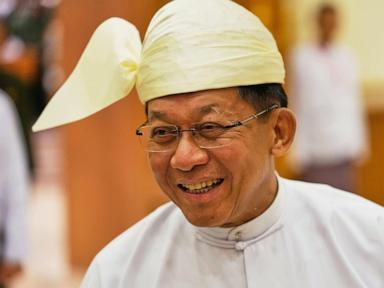
The rain in Naypyidaw doesn’t wash away the dust; it turns the world into a slick, grey smear. For a young soldier crouching in a jungle trench hundreds of miles away, or a grandmother sheltering in a displacement camp near the Thai border, the announcements coming out of the capital usually sound like thunder: loud, distant, and threatening. This week, however, the broadcast carried a different frequency. Senior General Min Aung Hlaing, the man who has commanded Myanmar’s military since the 2021 coup, stood before a podium and spoke of peace.
He called for an end to the fighting. He invited the ethnic armed organizations and the People’s Defence Forces to come to the table. He spoke of elections. To a casual observer, it might look like a breakthrough. To those who have spent the last three years watching their villages burn, it sounds like a desperate man trying to find a ladder out of a hole he dug himself.
The Mathematics of a Losing Hand
War is often framed through ideology, but it is felt through logistics and geography. Since the military seized power, the map of Myanmar has shifted from a unified state into a jagged mosaic of resistance. The military—known as the Tatmadaw—once prided itself on being an unbreakable monolith. Now, it is bleeding.
Consider the reality on the ground. Over the past year, coordinated offensives by resistance groups have stripped the junta of its grip on key border crossings. These are not just lines on a map; they are the lungs of the country. When you lose the trade routes to China and Thailand, you lose the foreign currency needed to buy jet fuel and bullets. When you lose the outposts in Shan State and Rakhine, you lose the ability to project power.
The General’s proposal for "peace talks" isn't coming from a position of benevolent strength. It is coming because the barracks are emptying. Forced conscription laws were activated earlier this year because the army can no longer rely on volunteers. They are dragging nineteen-year-olds off the streets of Yangon to fight veterans of jungle warfare who are fueled by a singular, burning purpose: to ensure their children never have to live under a boot again.
The Ghost at the Table
If we were to pull up a chair at these proposed talks, we would find a glaring absence. You cannot talk about peace in Myanmar without talking about the millions who have been displaced. Let’s look at a hypothetical family—call them the Maungs. They lived in a small village in Sagaing. One morning, the sound of a jet engine tore through the silence, followed by the whistle of shells. They didn't have time to pack. They grabbed a bag of rice, a plastic jug of water, and ran into the teak forests.
For the Maungs, "peace" isn't a political settlement or a restructured election. Peace is the ability to walk back to a plot of land that isn't littered with landmines. It is the assurance that the men in green uniforms won't return at midnight. When Min Aung Hlaing speaks of a "new peace," he is talking to the leaders of armed groups, trying to peel them away from the resistance coalition. He is not talking to the Maungs.
The resistance knows this. The National Unity Government (NUG), which acts as a shadow administration for those opposing the coup, has spent years building a fragile but historic bridge between ethnic minorities and the Bamar majority. This unity is the junta's greatest nightmare. For decades, the military stayed in power by playing one group against another—a classic "divide and rule" strategy. Now that the groups are talking to each other, the General is suddenly very interested in talking to them individually.
The Mirage of the Ballot Box
Central to this new peace overture is the promise of an election in 2025. In a healthy democracy, an election is a release valve for tension. In Myanmar, it is currently being used as a smokescreen.
The military-backed government wants to hold a census—a task that is practically impossible when you don't control half the country. They want to compile voter lists in areas where civil servants have joined the Civil Disobedience Movement and refused to work for the regime. Imagine trying to run a polling station in a town where the local police station was burned down last month and the "government" officials live behind three layers of concrete and barbed wire.
The international community, particularly neighbors like China and the ASEAN bloc, are watching this with a mixture of exhaustion and anxiety. They want stability. They want the trade routes reopened and the refugee flows stopped. Some might be tempted to take the General’s offer at face value, hoping that any talk is better than more gunfire.
But the resistance leaders have a long memory. They remember 2010. They remember 2015. They remember how the military wrote a constitution that guaranteed them 25 percent of the seats in parliament, ensuring they could veto any change they didn't like. They remember how the military ignored the results of the 2020 election when it didn't go their way.
The Invisible Stakes
Why does this matter to someone sitting in London, New York, or Tokyo? Beyond the humanitarian catastrophe—which is staggering—Myanmar sits at the crossroads of Asia. It is a bellwether for the global struggle between authoritarianism and the will of the people.
If the junta can successfully "peace-wash" its way back into legitimacy, it sends a message that brute force, if applied long enough, eventually wins. It suggests that if you kill enough people and hold out until the world gets bored, you can eventually trade your fatigues for a suit and be welcomed back into the fold.
But the internal pressure is different this time. The people of Myanmar aren't just fighting for a political party; they are fighting for their lives. The internet is full of videos of "Generation Z" protesters who have swapped their laptops for rifles. These aren't career soldiers. they are poets, baristas, and medical students. When they hear the General talk about peace, they see it as a stall tactic—a way to catch his breath while his frontline defenses crumble.
The Sound of Silence
The tragedy of the General’s proposal is that peace is actually what everyone wants. The country is tired. The economy is in freefall. The kyat, Myanmar’s currency, has plummeted in value, making basic goods like cooking oil and medicine unaffordable for the average family.
True peace, however, requires more than a press release. It requires accountability. It requires the military to return to the barracks and stay there. It requires a recognition that the people’s will cannot be suppressed by a 155mm howitzer.
As the monsoon clouds hang low over Naypyidaw, the General waits for a response. He is offering a branch, but it is stripped of its leaves and brittle to the touch. In the mountains and the deltas, the resistance watches the smoke rise from another skirmish. They know that a peace built on the denial of reality is just a different kind of war.
The world waits to see if any group will take the bait. If they do, it will likely be out of exhaustion rather than trust. But for the millions hiding in the forests, the only peace that matters is the one where they can finally sleep without one ear tuned to the sky, listening for the sound of approaching engines.
The General has spoken. Now, the silence of the people speaks louder.