The sun hadn't yet cleared the jagged teeth of the Rockies when the first brake lights flickered on Highway 1. It is a road defined by its scale. To the west, the mountains rise like an ancient, indifferent wall of limestone and shale; to the east, the sprawling Canadian plains wait in the silence. Between them lies a thin ribbon of asphalt that serves as the primary artery for dreamers, truckers, and tourists.
But on this particular morning near Canmore, the rhythm of the Trans-Canada Highway broke.
Most people experience this stretch of road at 110 kilometers per hour. It is a blur of pine green and glacial blue. You are thinking about your hotel reservation in Banff, or the price of diesel, or the podcast humming through the speakers. You are moving. You are alive. Then, the traffic slows. A sea of red lights stretches back toward the horizon. The air, usually crisp with the scent of cedar and cold stone, grows heavy with the smell of idling engines and unspoken dread.
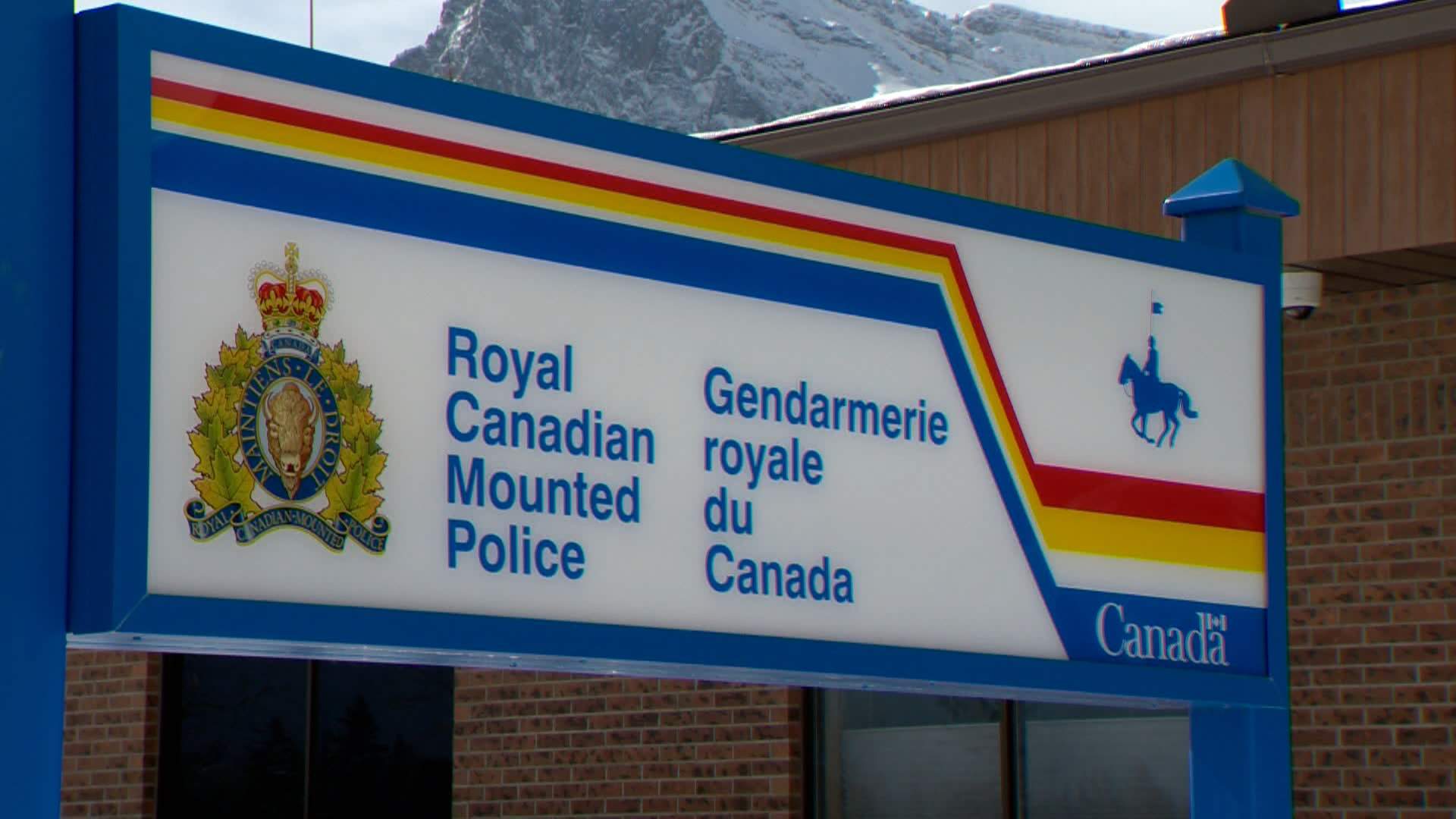
The RCMP cruisers arrived first, their blue and red lights clashing violently against the natural palette of the Bow Valley. They weren't there for a fender bender or a speeding ticket. They were there because the road had claimed something it wasn't supposed to hold.
A body.
The Anatomy of a Roadside Mystery
When a person is found on a highway, the world stops being a map and starts being a crime scene. The RCMP didn’t immediately release a name, a gender, or a cause of death. They didn’t have to. The silence spoke for them. In the early hours of the investigation, the stretch of Highway 1 eastbound became a vacuum. No one goes in; no one comes out.
Consider the logistics of such a discovery. To the casual observer, it’s a news ticker at the bottom of a screen. To the investigators on the ground, it is a mathematical puzzle involving physics, biology, and the cruel reality of human fragility. They look at the scuff marks on the pavement. They look at the way the grass is matted down at the shoulder. They look for the things that shouldn't be there—a stray shoe, a shattered piece of plastic, a droplet of something that doesn't belong to a car.
The RCMP’s Major Crimes Unit doesn’t get called for every roadside incident. Their presence signals a shift in the gravity of the situation. It means the story isn't simple. It means there are questions that the asphalt can't answer on its own. Was this a hit-and-run, a tragic accident of a pedestrian lost in the dark? Or was the highway merely a stage for a final act that began somewhere else entirely?
The Human Cost of the Commute
We tend to view our highways as sterile environments. We call them "corridors." We treat them as non-places—spaces we occupy only to get somewhere else. But for the residents of Canmore and the surrounding Bow Valley, this isn't just a corridor. It’s their backyard.
Imagine a local resident, perhaps a morning runner or a worker heading into a shift at one of the mountain town’s cafes. They see the police tape. They see the black tarp. In that moment, the majestic beauty of the mountains curdles. The peaks that usually offer a sense of grandeur and peace suddenly feel cold and observant.
The disruption is more than just a traffic jam. It is a psychological breach. When a body is found in the wilderness, we attribute it to the "wild." A fall, a bear, the elements. But the highway is ours. It is built, maintained, and governed by us. When death appears there, it feels like a failure of the safety we’ve paved over the earth.
The Invisible Stakes of a Forensic Search
As the hours ticked by, the RCMP warned motorists to expect "significant delays." For those stuck in the queue, the frustration is real. Bladders ache. Meetings are missed. Tempers flare. But then, you look out the window and see the officers walking in a line, shoulders hunched, eyes fixed on the dirt.
They are looking for the "invisible." In a forensic search, the stakes are measured in millimeters. A single fiber can tell a story of a struggle. A specific paint chip can identify a make and model of a vehicle from five years ago. This is the painstaking work of reconstructing a life—or the end of one—from the debris of a high-speed world.
While the public waits for a press release, the investigators are dealing with the "human element" in its most raw form. They are the ones who have to look at the face that no longer has a name. They are the ones who have to cross-reference missing persons reports from Calgary, from Vancouver, from small towns in the interior that most people have never heard of.
The road is a transient place. People disappear on highways. They start lives over. They run away. They get lost. The person found near Canmore could be anyone. A traveler whose car broke down. A hitchhiker. Someone who felt they had nowhere else to go but the shoulder of the fastest road in the country.
The Ripple Effect in a Mountain Town
Canmore is a town of 14,000 people that feels like a village and functions like a global destination. News here doesn't travel via the wire; it travels through the grocery store aisles and the trailhead chats. When the highway shuts down, the town breathes differently.
The local impact of a Major Crimes investigation is a heavy cloak. People start checking in on their neighbors. They look at the "van-lifers" parked in the lots with a little more concern, wondering if everyone is accounted for. The "invisible stakes" are the peace of mind that comes with living in a place defined by its beauty. When that beauty is punctuated by a police cordon, the narrative of the town shifts from "paradise" to "crime scene."
There is a specific kind of loneliness to a highway death. There are no walls, no roof, no privacy. Only the wind and the roar of the trucks that didn't stop.
The Truth Under the Asphalt
The RCMP eventually cleared the scene. The tape was rolled up. The cruisers turned off their lights and drifted back to their stations. The traffic began to flow again. First a trickle, then a steady stream, until the Trans-Canada was once again a roaring river of steel and rubber.
By the next day, the skid marks will be faded. The grass will begin to straighten itself out. To the thousands of people driving past that specific kilometer marker today, it is just another stretch of road. They won't know that twenty-four hours ago, the world stopped right there. They won't know that a team of people spent the night on their hands and knees trying to find justice in the gravel.
We demand answers from our news cycles. We want a name, a motive, and a resolution. We want to be told that we are safe, that this was an anomaly, a "one-off." But the truth is often slower than the news. The truth is found in toxicology reports that take weeks and DNA samples that take months.
The highway keeps its secrets well. It is designed for movement, not for memory.
As you drive through the mountains, it is easy to feel small. The scale of the rock faces is designed to remind us of our fleeting nature. Usually, we find comfort in that—the idea that something so massive and permanent exists while we hurry about our lives. But when the road stops, and the lights flash, and a life is found ended on the shoulder, the mountains don't look like protectors anymore. They look like witnesses.
The investigation continues. Somewhere, a family is waiting for a phone call they never expected to receive. Somewhere, a detective is staring at a piece of evidence that doesn't quite make sense yet. And out on Highway 1, the wind continues to howl through the gap in the peaks, blowing over the spot where the world stood still for a moment, before the engines started again and the silence was left behind.