Tim Cook is a master of the grid. For over a decade, he has run Apple with the precision of a global clockmaker, ensuring that the gears of supply chains and the levers of profit margins moved in perfect, profitable synchronicity. He took Steve Jobs’ volatile lightning and bottled it into the most efficient treasury the world has ever seen. But a treasury is a building, not a spark. As the rumors of his eventual departure solidify into a timeline, the question isn't about who can manage the books. It is about who can feel the vibration of a glass edge or the specific, tactile resistance of a button.
Enter John Ternus. Learn more on a related subject: this related article.
To understand the shift coming to Cupertino, you have to look past the spreadsheets. You have to look at the hands. If Cook was the architect of the system, Ternus is the architect of the object. He is the "product guy," a title that carries a near-religious weight within the walls of Apple Park. His rise signals a pivot away from the era of pure operational excellence and back toward the obsessive, often irrational pursuit of the perfect machine.
The Weight of a Hinge
Consider a hypothetical engineer sitting in a windowless lab in 2018. They are obsessing over the tension of a laptop lid. To a bean counter, a hinge is a commodity—a part sourced for the lowest price that meets a durability standard. To John Ternus, who oversaw the transition to Apple’s own silicon and the redesign of the iMac, that hinge is the first handshake between a human and a computer. If it’s too stiff, the magic dies. If it’s too loose, the quality feels cheap. Additional analysis by Wired delves into related perspectives on the subject.
Ternus spent years in the hardware trenches. He wasn't moving numbers across a ledger; he was moving electrons across logic boards. His fingerprints are on every major hardware pivot of the last decade, from the iPad’s evolution into a professional tool to the controversial but ultimately triumphant removal of the headphone jack. He understands that Apple succeeds not when it is a service provider, but when it creates an object so desirable that the service becomes an afterthought.
The stakes are invisible until they aren't. We live in an era where software is becoming ephemeral, floating in clouds and managed by invisible algorithms. In that world, the physical device is the only anchor left. If Apple loses its grip on the "thingness" of its products, it becomes just another software company. Ternus is the insurance policy against that drift.
The Ghost of the Visionary
There is a specific kind of tension that exists when a "product person" takes the lead. Steve Jobs was the ultimate product person, but he was also a tyrant of aesthetics. He would demand the inside of a computer—parts no user would ever see—be beautiful. John Ternus represents a modern evolution of that ethos. He is described by colleagues as a "nice guy," a stark contrast to the sharp edges of the Jobs era or the cool, detached efficiency of the Cook years.
But "nice" can be deceptive. In the world of high-stakes hardware, being a product guy means having the stomach to say no to the easy path. It means telling the marketing department that a device needs to be thicker to accommodate a better battery, or telling the finance team that a specific CNC-milled finish is worth the extra four dollars per unit.
When Ternus speaks about the internal architecture of the Mac, his eyes light up with a specific kind of nerd-core intensity. He isn't talking about "market penetration." He is talking about thermal envelopes. He is talking about the way a chip sits on a board to minimize latency. This is the language of a builder. For the first time since 2011, Apple may soon be led by someone who actually knows how to pick up a screwdriver and understand the soul of the machine.
The Silicon Pivot
The most significant data point in the Ternus trajectory is the move to M-series chips. This wasn't just a technical upgrade; it was a declaration of independence. Under Ternus’s leadership in hardware engineering, Apple stopped waiting for Intel to tell them what was possible. They started dictating the terms of reality.
The transition to Apple Silicon was a massive gamble. It required a level of deep-tissue coordination between hardware and software that few companies can survive. Ternus was at the center of that storm. He didn't just oversee the hardware; he helped define the relationship between the physical metal and the digital instructions.
This matters because the future of Apple isn't just phones. It’s the Vision Pro. It’s the potential for AI-integrated wearables. It’s the devices that haven't been named yet. These products require a leader who understands that the hardware isn't just a container for the software—the hardware is the experience. If the weight distribution on a headset is off by ten grams, the product fails. No amount of operational brilliance from a Tim Cook figure can fix a heavy headset. You need a builder for that.
The Cultural Pendulum
Every great company breathes. It inhales creativity and exhales efficiency. For the last thirteen years, Apple has been in a long, sustained exhale. Cook maximized everything. He optimized the oxygen. He made the company bigger than anyone thought possible.
But a company cannot exhale forever. Eventually, it needs to breathe in new ideas, new risks, and new obsessions.
Ternus represents the inhale.
The concern among investors, of course, is whether a product-focused leader can maintain the ruthless fiscal discipline that Cook perfected. It is easy to spend billions chasing a dream that never materializes. We saw this with the Apple Car—a decade-long odyssey that swallowed resources and yielded nothing but lessons. A leader who loves the product too much might forget to love the profit.
However, the internal consensus suggests Ternus isn't a dreamer in the impractical sense. He is a pragmatist who uses beauty as a tool. He understands that at Apple, the margin is a result of the magic, not the other way around. If you make the best thing in the world, people will pay a premium for it. Cook proved that you could sell the best thing to everyone. Ternus has to prove he can keep making the best thing.
The Invisible Transition
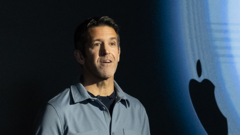
Transitions at this level are never sudden. They are long, slow fades. We are currently in the overlap. You can see it in the way Ternus has been positioned in recent keynote addresses. He is no longer just the guy talking about the new iPad Air; he is the face of the company’s technical soul. He speaks with a calm, understated authority that mirrors the products he builds: clean, functional, and devoid of unnecessary flourish.
The real test will come when the first major crisis hits post-Cook. When a product launch falters or a supply chain breaks, will the builder be able to steady the ship? Or will he be too busy redesigning the mast?
There is a story, perhaps apocryphal, about an engineer who brought a prototype to a senior leader at Apple. The leader didn't look at the screen. He just held the device in his hand, feeling the weight, closing his eyes to sense the balance. He wanted to know if the object felt "right" before he cared if it worked.
John Ternus is the man who cares if it feels right.
In a world increasingly dominated by the intangible and the virtual, there is something deeply comforting—and strategically vital—about a leader who still believes in the power of physical perfection. The era of the accountant is drawing to a close. The era of the maker is returning. The lights in the design studio are staying on later these days, and for the first time in a long time, the person at the top might actually know exactly what those engineers are dreaming about.
The machine is ready. Now, someone just has to give it a soul.