The wind off the coast of the Carolinas doesn’t care about policy. It is a relentless, invisible force that has spent eons battering the dunes and dictating the lives of those who live at the edge of the map. For nearly a decade, that wind represented something more than weather. It was a line items on a balance sheet, a promise of a new industrial revolution, and a frantic race to plant steel forests in the churning Atlantic.
Now, the silence is returning. In related updates, take a look at: Geopolitical Arbitrage and the Regulatory Asymmetry of Meta in China.
The federal government is currently cutting checks to make the future go away. In a move that signals a profound shift in how America powers its grid, the Trump administration has finalized agreements to pay two major energy companies to simply walk away. They aren't paying for turbines. They aren't paying for power. They are paying for the termination of leases—buying back the rights to empty patches of ocean.
The Cost of a Quiet Ocean
Equinor and Avangrid, two titans of the energy sector, recently sat across the table from federal regulators to hammer out the price of an exit strategy. The numbers are staggering. We are talking about hundreds of millions of dollars in "cancellation fees" designed to unwind deals that were once heralded as the cornerstone of American energy independence. The Economist has analyzed this fascinating issue in great detail.
Think of a young couple who spent years saving for a down payment on a home. They scouted the neighborhood, hired the architects, and dreamed of the view. Then, just as the foundation was being poured, they realized the soil was shifting beneath them. The bank changed the terms. The neighbors sued. The cost of lumber tripled. Eventually, they realized it was cheaper to pay the contractor to stop working and burn the blueprints than it was to keep building.
That is the state of offshore wind in 2024. The "soil" in this case is a volatile mix of high interest rates, a broken supply chain, and a political environment that has chilled faster than a January gale.
A Graveyard of Intentions
To understand why the government is paying companies to quit, you have to look at the ghost of a project known as Commonwealth Wind. Avangrid, the company behind it, found itself trapped in a math problem that no longer added up. When they signed their initial contracts, the world looked different. Money was cheap. The global shipping lanes were open and fluid.
Then the world tilted.
Inflation didn't just nudge the cost of steel; it shoved it off a cliff. The specialized vessels required to plant a turbine the size of the Chrysler Building into the seabed became nearly impossible to charter. Avangrid looked at their obligations and realized that if they built the farm, they would be losing money on every kilowatt-hour generated. They asked to renegotiate. The state regulators said no.
So, they pivoted. They chose the "kill fee."
By paying the government to take back the leases, these companies are performing a corporate mercy killing. It is a strategic retreat. For the administration, it is a way to clear the deck, removing "zombie projects" that are clogging up the development pipeline but have zero chance of actually reaching completion.
The Invisible Stakes for the Coastline
Imagine a welder in a shipyard in Virginia. For three years, he’s been told that his children will have jobs for forty years because of the "Wind Boom." He bought a new truck. He invested in specialized certifications. To him, these leases weren't just legal documents; they were a roadmap to a stable middle class.
When a lease is bought back and cancelled, that welder’s future becomes a little more blurred. The human element of energy policy is rarely found in the text of a federal register, but it is felt in the diners and union halls of coastal towns from New Bedford to Kitty Hawk. There is a specific kind of grief that comes with the death of an industry that never quite got off the ground.
It isn’t just about the environment or "green" goals. It is about the massive, lumbering machinery of American infrastructure. Every time a major project like this is dismantled before the first blade spins, we lose more than just carbon-free electricity. We lose the "learning curve."
In the world of engineering, there is a concept called $L = a \cdot X^{-b}$. It is the learning curve formula. It suggests that the more we do something, the cheaper and more efficient it becomes. By cancelling these leases, we are effectively hitting the pause button on our own education. We are deciding that, for now, the cost of learning is too high.
The Friction of the Transition
The administration’s critics argue that this is a funeral for an industry that was never viable without massive taxpayer lifelines. They point to the whales, the fishing rights, and the sheer mechanical audacity of placing high-voltage electronics in salt water. They see these buyouts as a necessary correction—a return to a reality where energy must be cheap and reliable above all else.
But the proponents see a tragedy of timing. They argue that we are abandoned the field just as the technology is maturing.
Consider the sheer scale of one of these turbines. A single blade can be longer than a football field. The nacelle—the box at the top that holds the generator—is the size of a suburban house. To get these pieces to the site, you need ports that don't exist yet and ships that are still being designed. It is a logistical ballet performed in the middle of a hurricane zone.
The friction isn't just physical. It’s bureaucratic. A project might need approvals from the Bureau of Ocean Energy Management, the Coast Guard, NOAA, and dozens of state-level agencies. By the time the last permit is signed, the economic reality that birthed the project has often vanished.
The Price of Walking Away
What does it mean for the taxpayer? On the surface, the government is "making money" on these cancellation fees. It feels like a win for the treasury. But that is a short-sighted accounting.
The real cost is the lost time.
Every year spent litigating and then unmaking these deals is a year where the American electrical grid remains tethered to aging infrastructure. Our demand for power is skyrocketing, driven by everything from AI data centers to the electrification of our heating systems. We need juice. Lots of it.
When we pay companies to walk away, we are essentially buying a delay. We are betting that something else—perhaps small modular nuclear reactors, or perhaps a sudden drop in natural gas prices—will save us before the lights start to flicker.
It is a high-stakes game of musical chairs. The music has stopped, and Equinor and Avangrid have decided it’s better to pay a fine than to be left without a seat.
The Horizon is Empty Again
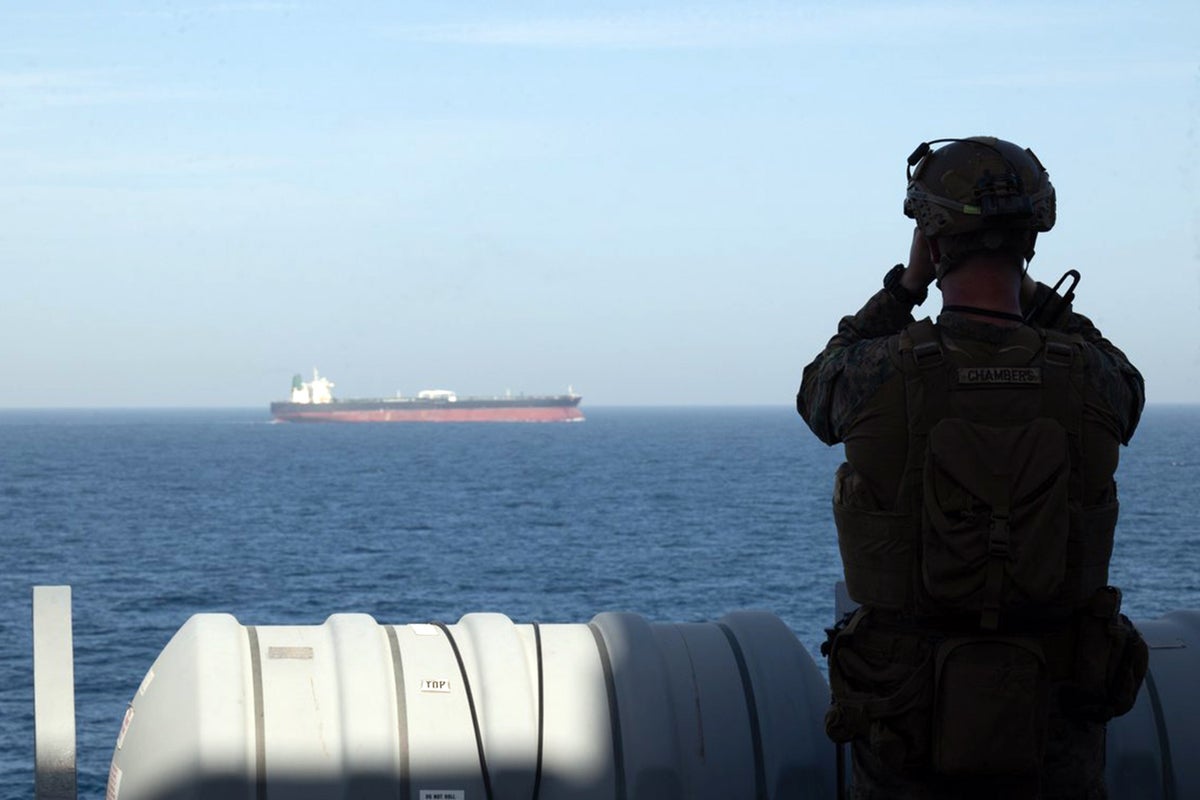
If you stand on the beach in the Outer Banks tonight and look east, you will see nothing but the black expanse of the Atlantic. There are no blinking red lights on the horizon. There is no humming of subsea cables.
For the people who live there, the ocean remains what it has always been: a beautiful, dangerous void. The promise of a high-tech, wind-swept future has retreated back into the boardrooms of Oslo and Boston.
The government’s checks will clear. The leases will be filed away in a drawer in D.C. The lobbyists will move on to the next big thing. But the wind—that raw, unharvested power—continues to blow across the empty water, indifferent to the fact that we were almost there, and then we decided it was just too hard.
We are left with a quiet coast and a very expensive lesson in how difficult it is to build the future when the present is so loud.
The ocean has a way of reclaiming everything eventually. Usually, it takes decades of salt and surf to erode a structure. This time, we didn't even give it the chance to try; we dismantled the dream ourselves, one legal settlement at a time, leaving the horizon exactly as we found it.