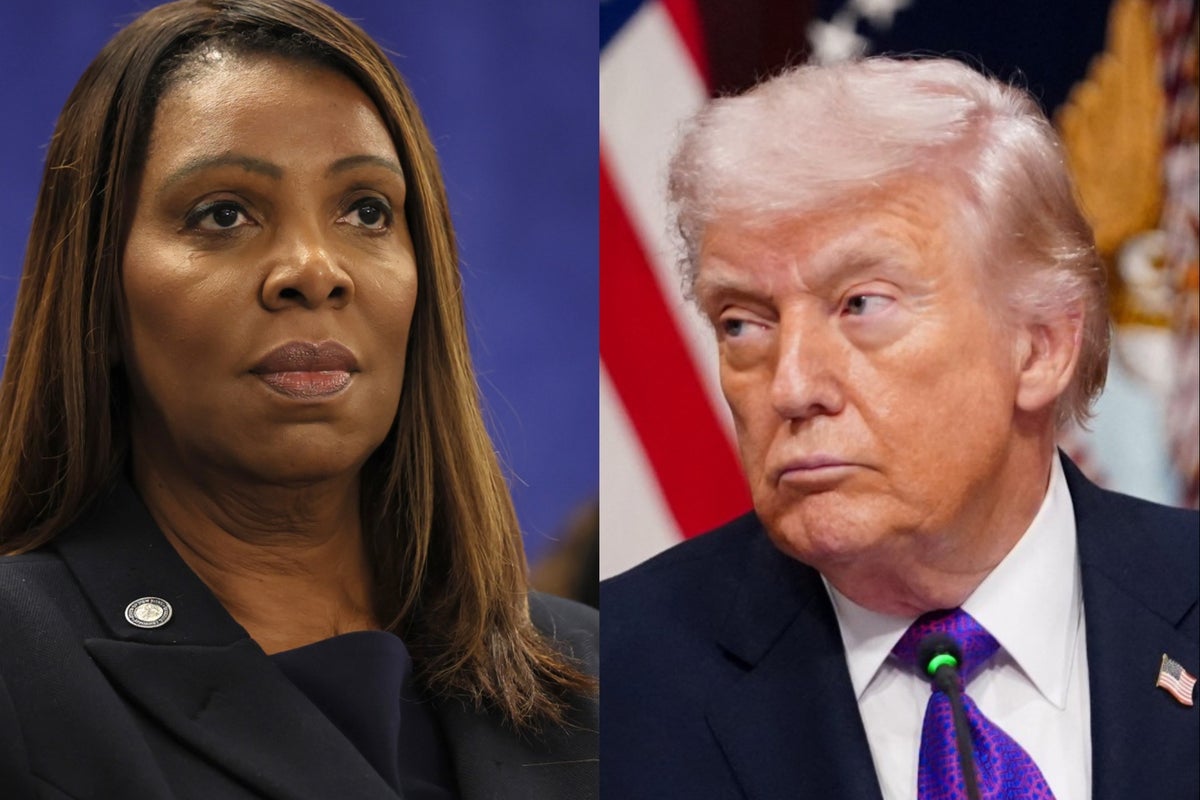
The American economy is currently the site of a high-stakes legal shell game. Just fourteen days after the Supreme Court dismantled President Trump’s previous trade regime, New York Attorney General Letitia James led a coalition of 22 states in a federal lawsuit to block a new 15% across-the-board tariff. This latest levy is a desperate pivot. After the high court ruled that the International Emergency Economic Powers Act (IEEPA) did not grant the White House the power to tax, the administration immediately reached for an obscure, 50-year-old provision known as Section 122 of the Trade Act of 1974.
The strategy is transparent. By swapping one acronym for another, the administration hopes to keep the revenue flowing while the inevitable years of litigation wind through the system. For the states, the cost is not theoretical. New York alone claims $13.5 billion in damages, while Connecticut estimates its losses at $1.7 billion. The lawsuit, filed in the U.S. Court of International Trade in Manhattan, argues that Section 122 is being weaponized for a purpose it was never intended to serve.
The Ghost of the Gold Standard
Section 122 is a relic. It was designed to address "large and serious balance-of-payments deficits" during the era of fixed-rate currency exchange. This was a time when the dollar was still tethered to gold, and a sudden currency flight could collapse the national economy. The law allows for temporary tariffs of up to 15% for a maximum of 150 days.
We no longer live in that world. The United States moved to a floating exchange rate in the 1970s. The coalition of states argues that "balance-of-payments" problems, in the technical sense intended by the 1974 Act, essentially ceased to exist when the gold standard died. The administration is conflating a simple trade deficit—buying more than we sell—with a systemic currency crisis.
Even the Department of Justice seemed to agree with this distinction until very recently. In legal filings last year, government lawyers admitted that trade deficits are "conceptually distinct" from balance-of-payments deficits. This admission is now a central pillar of the states' case. If the administration’s own lawyers previously argued that Section 122 didn’t apply to trade deficits, the sudden reversal looks less like a policy shift and more like a legal Hail Mary.
The Revenue Addiction
The federal government has become addicted to tariff revenue. In 2025, customs duties brought in $264 billion, a staggering jump from the $79 billion collected in 2024. This money has been used to offset federal debt, but the cost is being borne by the American consumer. The Tax Foundation estimates the average household burden increased by $1,000 in 2025 alone.
The 15% tariff under Section 122 is an attempt to keep that spigot open. While the Supreme Court’s February 20 ruling theoretically entitles importers to billions in refunds, the White House has shown no interest in writing those checks. Instead, they have doubled down. Treasury Secretary Scott Bessent signaled that the new 15% rate would be implemented "effectively immediately," ignoring the fact that the underlying legal authority is already under heavy fire.
This creates a chaotic environment for businesses. Importers are now operating in a world where the tax rate on their goods can change via social media post or executive memorandum. Some companies have begun "claims monetization," selling their rights to potential tariff refunds to institutional investors at a discount just to maintain liquidity.
A Question of Discriminatory Exemptions
The states are also attacking the specific way these tariffs are being applied. Section 122 requires that tariffs be applied "uniformly," yet the current proclamation is riddled with exceptions. There are 84 pages of specific product exclusions, and entire countries like Canada and Mexico have been granted reprieves.
If the goal is truly to protect the U.S. balance of payments, a discriminatory application makes no sense. The lawsuit argues that these exemptions prove the tariffs are not a response to a monetary crisis but are instead being used as political leverage. By picking winners and losers among trading partners and industries, the White House is overstepping the limited authority granted by Congress.
The 150 Day Clock
There is a ticking clock on this dispute. Because Section 122 tariffs expire after 150 days unless extended by Congress, the administration may be betting that they can collect the revenue and move on to the next legal justification before a court can issue a final ruling. It is a "catch me if you can" approach to trade policy.
However, the Court of International Trade has shown it is willing to move quickly. A judge recently ordered the government to begin planning for refunds of the original IEEPA tariffs. If the court grants a preliminary injunction in this new case, the 15% "emergency" levy could be frozen before the first 150 days are up.
The states aren't just fighting for their budgets; they are fighting for the principle that the power to tax belongs to the people’s representatives in Congress, not the executive branch. This isn't about trade strategy. It is about whether a president can use ancient, obsolete laws to bypass the Constitution.
You should prepare your supply chain for continued volatility by auditing all import dependencies and flagging items currently subject to the 15% Section 122 rate, as these specific costs may become eligible for refund claims within the next six months.