The crisp morning air of West London usually smells of damp earth, clipped boxwood, and extreme wealth. For one week in May, the Royal Hospital Chelsea transforms into the undisputed epicenter of the horticultural universe. It is a place of absolute perfection. Millions of pounds are spent to ensure that not a single leaf is out of place, that every petal of every delphinium reaches toward the sky at a mathematically precise angle. It is breathtaking. It is pristine.
It is also, historically, a little bit snobbish.
For over a century, the Royal Horticultural Society enforced a strict, unyielding code of conduct regarding what could and could not enter these sacred grounds. Among the most fiercely policed contraband? The humble garden gnome.
To the arbiters of high-society gardening, these garishly painted terracotta figures were the ultimate symbol of suburban tackiness. They were cheap. They were loud. They were common. For decades, a strict ban kept them firmly outside the gates, relegated to the front yards of working-class terrace houses far from the manicured lawns of Chelsea.
Then, the rules changed.
The shift did not happen because the authorities suddenly developed a taste for cheap plastic ornaments. It happened because someone realized that even the most exclusive institutions need a little humanity. To celebrate a milestone anniversary, the ban was temporarily lifted, triggering a bizarre, brilliant, and deeply British collision between high culture and low art.
Consider the sheer absurdity of the scene. On one side, you have the world’s elite garden designers, competing for the coveted Gold Medal, micro-managing the moisture levels of rare mosses. On the other side, you have a platoon of cheap earthenware gnomes.
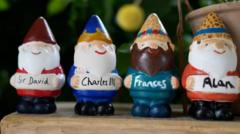
But these were not just any gnomes. They were blank canvases handed over to some of the most recognizable faces in British culture. Elton John, Judi Dench, Helen Mirren, and Maggie Smith were given a simple brief: paint them.
The Politics of Taste
Taste is a weapon. We use it to draw borders between "us" and "them," deciding what constitutes high art and what belongs in the dumpster of culture. For generations, the Chelsea Flower Show used its rulebook to maintain those exact boundaries. Brightly colored plastic, artificial grass, and, most famously, "creatures living or mythical" were explicitly forbidden.
To understand why this ban mattered, you have to understand the psychology of the British garden. It is not just an outdoor space; it is an ideological battleground. The grand estates of the aristocracy favor sweeping vistas, naturalistic planting, and classical stone statues. The suburban plot, meanwhile, is a space of personal expression, often filled with whimsy, humor, and, yes, little bearded men fishing by a plastic pond.
By banning the gnome, Chelsea was not just rejecting an ornament. It was rejecting a demographic.
That is what made the sudden lifting of the ban feel less like a policy update and more like a bloodless coup. It was a momentary crack in the armor of British elite culture. The institution did not crumble. Instead, it let the light in.
Imagine walking past a display of immaculate, million-pound show gardens, only to stumble upon a gnome customized by Laurence Llewelyn-Bowen, looking exactly as theatrical and flamboyant as you would expect. Or a figure touched by the understated elegance of Dame Helen Mirren. The contrast was deliberate. It was a visual joke, a polite middle finger to decades of rigid traditionalism.
The Human Element Behind the Earthenware
When you strip away the celebrity names and the media circus, the story transforms into something far more compelling than a simple PR stunt. It becomes a story about charity, community, and the democratization of art.
These painted figures were not just meant to sit there and look ridiculous. They were created to be auctioned off to raise funds for the RHS Campaign for School Gardening. The goal was simple: get children outside, dirty up their hands, and teach them how to grow things.
There is an undeniable poetry in using the ultimate symbol of "bad taste" to fund the future of British horticulture.
The auction itself became a high-stakes theater of the bizarre. People who would normally bid millions for an original painting were suddenly fighting over a terracotta ornament painted by a pop star. The collection raised hundreds of thousands of pounds. Sir Elton John’s gnome, unsurprisingly, fetched a staggering sum, proving that when you mix celebrity culture with a dash of eccentric charity, the traditional rules of valuation completely evaporate.
This fundraising effort targeted a quiet crisis in modern childhood. As urban spaces shrink and screens dominate daily life, the connection between young people and the soil has worn dangerously thin. By funding school gardens, the money raised by these silly little statues helped build thousands of tiny green sanctuaries across the country. It provided seeds, tools, and training to teachers who wanted to show children that food comes from the earth, not from a plastic tray in a supermarket aisle.
The gnomes, once barred from the high tables of horticulture, were now responsible for feeding its roots.
The Enduring Power of Whimsy
Why do we care so much about these tiny figures? Why did their presence at Chelsea cause such a stir, commanding headlines that overshadowed some of the most expensive garden designs in history?
The answer lies in our collective exhaustion with perfection.
We live in a world that is increasingly curated, polished, and filtered. From our social media feeds to the architectural designs of our cities, there is a relentless pressure to be sleek, sophisticated, and flawless. The Chelsea Flower Show is the pinnacle of this impulse. It represents nature tamed by immense wealth and flawless execution.
But humans do not naturally thrive in cold perfection. We are messy, eccentric, and occasionally tacky.
The gnome represents the part of us that refuses to take life too seriously. It is an acknowledgment that a garden does not have to be a museum piece to be loved. It can just be fun. When the celebrities took up their paintbrushes, they were not just participating in a charity drive; they were celebrating the joy of the unpretentious.
The event challenged the very definition of what makes a space valuable. Is a garden great because it conforms to the rigid standards of a judging panel, or is it great because it brings a smile to the face of a passerby?
A Short-Lived Freedom
The rebellion, however, was temporary.
The Royal Horticultural Society made it very clear that this was a one-time-only amnesty. Once the show concluded, the auctioned gnomes packed up and went to their new, wealthy homes. The gates of Chelsea swung shut, and the traditional rulebook was firmly reinstated. The mythical creatures were banished once more to the realm of the suburban backyard.
Walk through the showground today, and you will not find a single bearded face peeking out from the pristine foliage. The delphiniums are still perfectly straight. The moss is still mathematically moist. The air of exclusive perfection has returned.
Yet, something fundamentally shifted during that brief week of madness. The ice cracked. The institution proved that it could laugh at itself, even if only for a moment. Visitors who had felt alienated by the rarefied atmosphere of the show found a point of entry through a shared sense of humor.
The great gnome ban remains in place, but the memory of their invasion lingers. It serves as a reminder that the most memorable moments in culture rarely happen when everyone follows the rules. They happen when someone decides to let the ridiculous inside the gates, proving that even the most sophisticated gardens are nothing without a little bit of dirt, a little bit of humor, and a tiny, brightly painted rebel hidden in the bushes.