The air in the Oval Office doesn’t just carry the scent of floor wax and old paper. It carries the weight of a hundred different futures, all colliding at once. When a President speaks about the end of a ceasefire, he isn't just reciting a policy memo. He is holding the pulse of a region that has known more blood than rain.
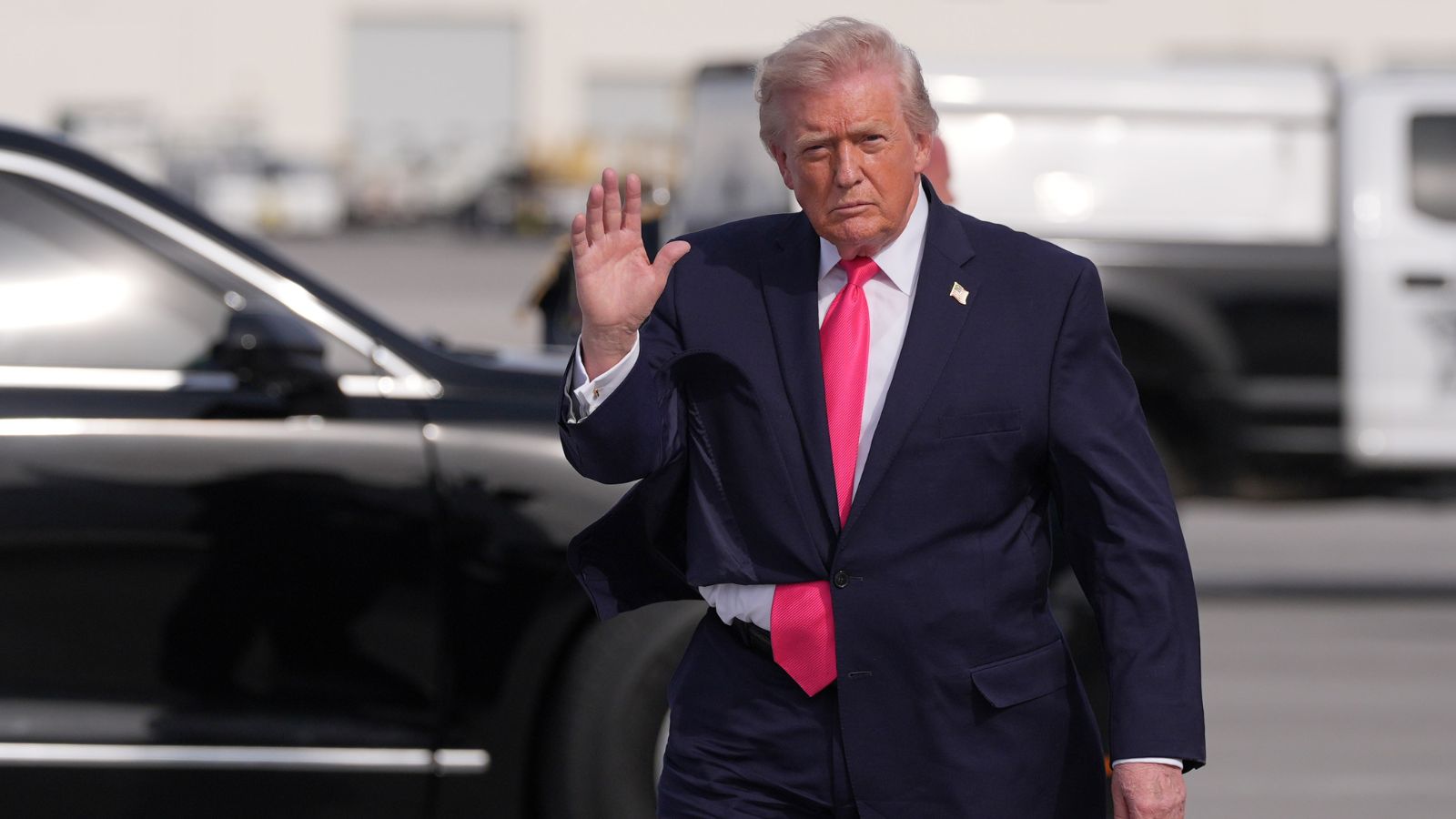
Donald Trump stood before the microphones, the flickering light of the cameras reflecting the volatile nature of the Middle East itself. The message was blunt. The ceasefire—that fragile, gasping lungs of a truce—might not be worth the paper it’s printed on if the underlying machinery of the Iran deal remains broken.
"Fighting resumes," he said.
Two words. They aren't just a headline. They are a physical sensation for a family in a border town whose names we will never know, but whose lives hang on the specific cadence of a politician’s doubt.
The Ghost of the 2015 Accord
To understand why a ceasefire feels like a temporary bandage on a deep wound, we have to look at the scars of the original Iran nuclear deal. It was designed to be a masterpiece of diplomacy. Instead, for many, it became a symbol of a ticking clock that no one knew how to stop.
Critics argued the deal didn't stop the fire; it just moved the matches out of sight.
Think of it like a neighbor who promises to stop building a bonfire in his backyard, but keeps stacking dry wood against your shared fence. You might have a "ceasefire" on the flames today, but you are staring at the fuel every single night. Trump’s skepticism isn't born from a vacuum. It comes from the belief that if the deal allows for "sunset clauses"—provisions that eventually expire—then we aren't buying peace.
We are just financing a delay.
The tension in the room during these announcements is a living thing. You can see it in the way the advisors shift their feet. There is a fundamental disagreement on the nature of time. One side believes that talking, even if the talking is circular, prevents shooting. The other side believes that talking without a hammer in the other hand is just a slow-motion surrender.
The Architecture of a Threat
When the President mentions that he is "not sure" the ceasefire needs an extension, he is playing a high-stakes game of psychological leverage. Diplomacy is rarely about what is said; it is about what the other person fears you might do.
Consider a hypothetical shopkeeper in a city like Haifa or Erbil. For this person, a "ceasefire" isn't a geopolitical term. It is the ability to open the shutters in the morning without looking at the sky. It is the difference between a child going to school or sitting in a basement.
When the rhetoric from Washington shifts toward the resumption of fighting, those shutters start to creak shut.
The facts are cold: Iran’s influence stretches through proxies like a nervous system across the map. From the Houthis in Yemen to Hezbollah in Lebanon, the reach is long and the grip is tight. The Trump administration’s stance is that a ceasefire that doesn't address this "nervous system" is a lie. If the money from a relaxed deal flows into these groups, the "peace" is actually a procurement phase for the next war.
The Weight of the "Not Sure"
"Not sure" is a dangerous phrase in international relations.
Usually, leaders want to project absolute certainty. They want to say "We will stand by this" or "We will crush that." But "not sure" creates a vacuum. It forces the opponent to wonder if the door is being left open for a strike or if it’s an invitation to a better deal.
The logic here is a sharp departure from the standard diplomatic playbook. It’s the logic of a negotiator who knows that the most powerful person in the room is the one willing to walk away from the table.
If the Iran deal fails to meet the "tougher" standards the administration demands—including permanent restrictions on enrichment and an end to ballistic missile testing—then the ceasefire becomes a liability. In this worldview, an extension of the truce is just giving the adversary more time to sharpen their blade.
But there is a human cost to this strategy.
Uncertainty is a heavy burden for those living on the front lines. Markets tremble. The price of oil, which dictates the survival of entire economies, fluctuates based on a single sentence uttered in the Rose Garden. The "invisible stakes" are the millions of people whose daily bread depends on the stability of a region that is currently being treated as a chessboard.
Breaking the Cycle of Temporary Fixes
We have seen this movie before.
A truce is signed. The world exhales. A few months pass, and a "violation" occurs—a rocket launch here, a hidden centrifuge there. The cycle repeats. The argument being made now is that we have to break the cycle entirely, even if the breaking is violent and messy.
The administration’s gamble is that by threatening to let the fighting resume, they can force a "real" deal. It is the strategy of burning the bridge to ensure the army moves forward.
Is it risky?
Terrifyingly so.
If you push a cornered adversary too hard without giving them a "golden bridge" to retreat across, they may decide that the ceasefire wasn't protecting them anyway. They may decide that if the fighting is going to resume eventually, it might as well resume on their terms, at a time of their choosing.
The Silence Between the Sentences
The real story isn't in the transcript of the speech. It’s in the silence that follows.
It’s in the way a soldier in a dusty outpost checks his equipment after hearing the news. It’s in the way a mother in Tehran looks at her savings and wonders if the currency will vanish by morning.
The "human element" is often lost in the discussion of "enrichment levels" and "geopolitical spheres of influence." But every percentage point of uranium enrichment is a brick in a wall that separates two worlds. Every day the ceasefire holds is a day someone doesn't die.
But if that day is used to prepare for a thousand deaths later, is it a gift or a curse?
That is the question at the heart of the current tension. It is a question that refuses to be answered by a simple "yes" or "no." It is a question that requires us to look at the reality of power. Power isn't just the ability to drop a bomb. It is the ability to decide when the peace ends.
The clock continues to tick.
Each second is a heartbeat, and each heartbeat is a choice. We are currently watching a leader decide if the clock is a tool for progress or a countdown to a collision that has been decades in the making.
The shutters in those border towns remain half-closed. They are waiting to see if the next words from the West will bring the dawn or the fire.
In the high-pressure chamber of global politics, "not sure" is the sound of a match being struck in a room full of oxygen.
The flame hasn't caught yet. But the heat is rising.
And everyone is holding their breath.