The screen glowed with a sterile, white light. It was 3:00 AM in a quiet suburb of New Jersey, the kind of neighborhood where the lawns are manicured to a perfection that feels almost aggressive. Inside, a man sat frozen. He wasn’t looking at lines of code or a quarterly budget. He was looking at a digital boarding pass he knew he couldn't use.
His mother was dying thousands of miles away in India. The air in her room likely smelled of sandalwood and antiseptic, a scent he could almost conjure if he closed his eyes. But he didn't close them. He stared at the blue "Approved" status of his H-1B visa—a document that had governed every breath he took for two decades—and realized it had finally become his prison. For another look, consider: this related article.
Twenty years.
That is 7,300 days of being a "guest." It is two decades of paying taxes into a Social Security system he may never collect from, buying a home he might be forced to sell in sixty days, and raising children who are American in every way except the one that matters to the Department of Homeland Security. Similar coverage regarding this has been provided by MIT Technology Review.
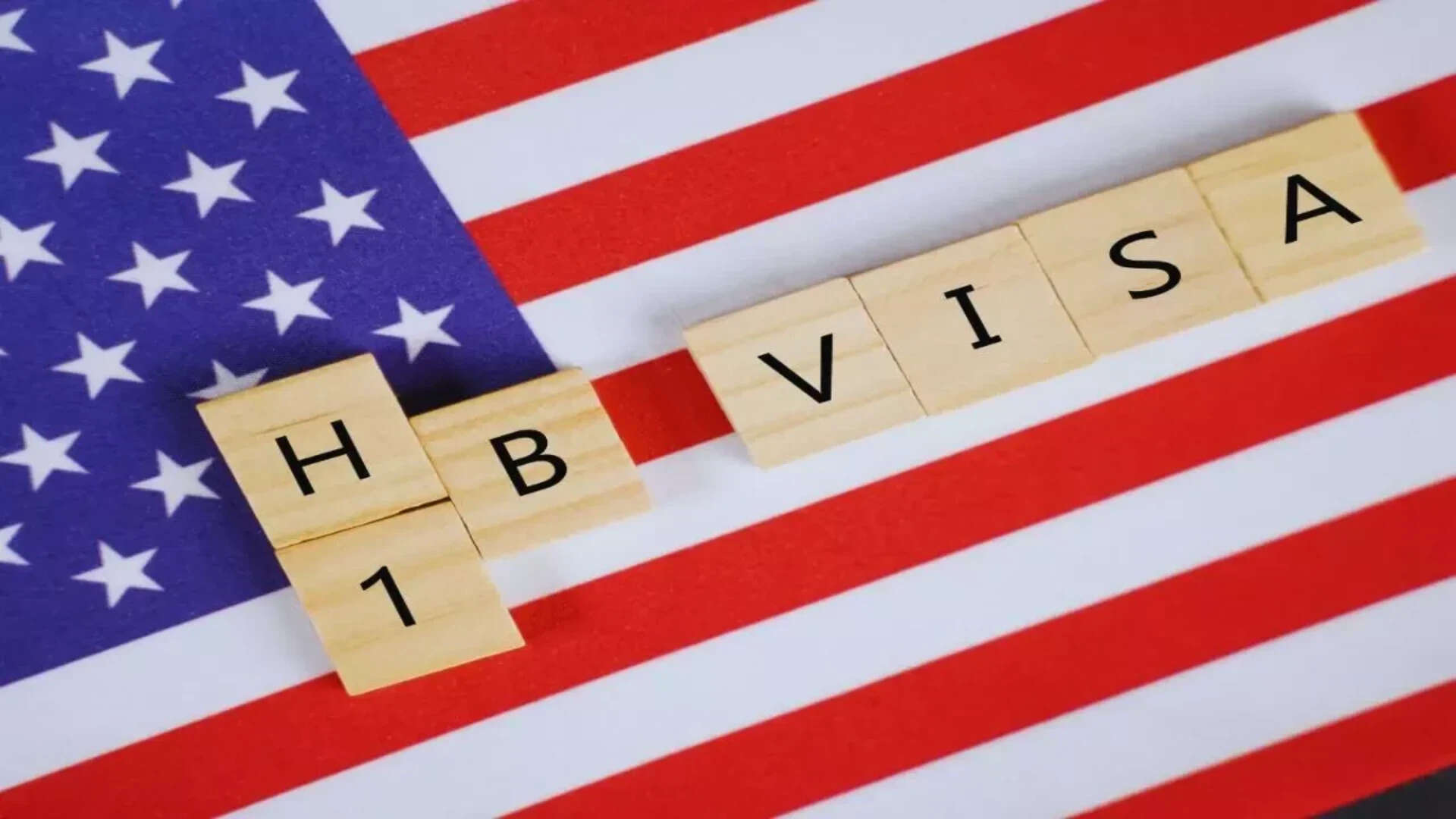
This is the reality of the Indian H-1B worker in America. It isn't a story of "waiting in line." It is a story of a line that has stopped moving entirely, a bureaucratic purgatory where the price of entry is your soul's peace of mind.
The Calculus of a Stalled Life
To understand why a man would stay in a country that refuses to fully claim him, even as his mother breathes her last, you have to understand the math of the Green Card backlog.
For Indian nationals, the employment-based Green Card system is a mathematical impossibility. Current projections suggest that a skilled worker entering the back of the line today might wait over 150 years for a permanent residency slot. It is a generational death sentence.
Consider the hypothetical case of "Arjun." Arjun arrived in 2004. He was the top of his class, a software architect who helped build the infrastructure of the modern web. He followed every rule. He renewed his visa every three years. He did his "stamping"—the process where you leave the country to get a physical sticker in your passport.
But stamping is a gamble. If your visa is stuck in "administrative processing" while you are abroad, you cannot return to your job, your mortgage, or your children. This is the "Travel Trap." When Arjun’s mother fell ill, he had to choose: Do I go to her bedside and risk being locked out of the life I’ve built for twenty years? Or do I stay here, legal but heartbroken, and say goodbye through a pixelated WhatsApp video call?
He stayed. He had no choice. The system is designed to value his labor, but it has no mechanism to value his humanity.
The Myth of the High Skilled Nomad
We like to think of tech workers as elite nomads, floating above the mundane struggles of the working class. The reality is far grittier. The H-1B visa binds an individual to a specific employer. It is, in its most cynical form, a modern iteration of indentured servitude wrapped in a Patagonia vest.
If Arjun loses his job, he has sixty days to find a new one or self-deport. This creates a power imbalance that is ripe for exploitation. He cannot easily start a company. He cannot easily switch careers to follow a passion. He must remain "useful" in the exact way the government dictated twenty years ago.
The psychological toll is a slow-motion erosion of the self.
Imagine living in a house for twenty years but never being allowed to paint the walls because you might be evicted by a computer error next Tuesday. Imagine your children—the "H-4 Dreamers"—growing up as Americans, only to realize at age twenty-one that they have "aged out" of the system and are now undocumented in the only home they’ve ever known.
The Invisible Stakes
Critics often argue that these workers should simply "go home" if the wait is too long. It is a cold argument that ignores the fundamental nature of time. After twenty years, "home" is a memory, a ghost of a place that has moved on without you.
The stakes aren't just about a plastic card. They are about the fundamental human right to belong.
When the viral post of the man who couldn't see his dying mother hit the internet, it wasn't just a complaint about paperwork. It was a scream into the void. It was the realization that the "American Dream" had been swapped for a subscription service. You pay every month, you provide the service, but you never actually own the product.
The numbers are staggering. Over a million people are trapped in this specific backlog. They are doctors in rural towns, engineers in Silicon Valley, and researchers in oncology labs. They are the backbone of the American innovation engine, yet they live with a suitcase perpetually packed in their minds.
The Architecture of Exclusion
The law that created this mess—the Immigration Act of 1990—set per-country caps. No single country can receive more than 7% of the total Green Cards issued in a year. This makes sense for a country like Iceland. It is a mathematical disaster for a country like India, which provides the vast majority of the high-skilled workforce.
It is a policy that treats humans like a diversified stock portfolio. Don't put too many eggs in the India basket, the policy says, even if those "eggs" are the very people keeping your tech economy from collapsing.
But the policy doesn't just hurt the workers. It hurts the country. When we create a system so cruel that a man has to choose between his mother’s funeral and his career, we are signaling to the world’s best and brightest that America is a place where you can work, but you can never truly live.
The competition is watching. Canada, Australia, and the UK have seen this opening. They are offering residency in months, not centuries. They are betting that eventually, the Arjuns of the world will tire of the white light of the 3:00 AM screen and the hollow promise of a dream that remains forever out of reach.
A Ghost in the Machine
Back in New Jersey, the man finally closed his laptop. The sun was beginning to peek over the horizon, casting long, thin shadows across the street. He walked to the window and watched his neighbor’s son catch the school bus.
He thought about the phone call he would have to make later. He thought about the words he would use to explain to his father why he wasn't there. There are no words in any language—English, Hindi, or the binary of code—that can adequately explain a twenty-year wait for a permission slip that never arrives.
He is a ghost in the machine of the Great Republic. He is essential, yet invisible. He is "approved," yet stuck.
He went to the kitchen and began to make coffee, the mundane rhythm of a life built on a foundation of sand. The American Dream used to be a ladder. For an entire generation of workers, it has become a treadmill, running at full speed, going absolutely nowhere, while the people they love vanish in the rearview mirror.
The coffee was bitter. He drank it anyway. He had a stand-up meeting at 9:00 AM, and the code wouldn't write itself.