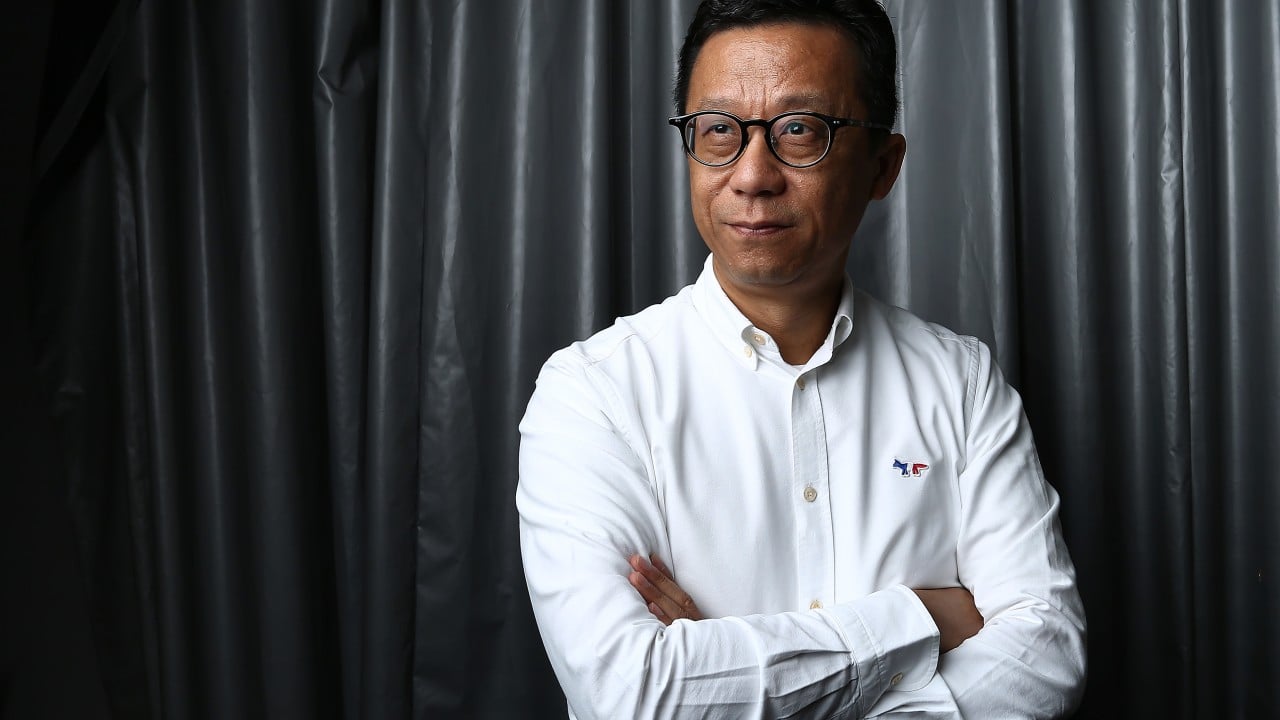
The air in a corporate boardroom usually smells of expensive espresso and filtered oxygen. It is a sterile scent, designed to mask the sweat of high-stakes decision-making. But for Ricky Wong, the architect of HKTVmall and a man who built a digital empire out of the sheer chaos of Hong Kong’s streets, the air recently took on a different quality. It grew heavy with the weight of ethical scrutiny, a pressure that no balance sheet can easily offset.
For years, Wong was the disruptor. He was the man who looked at the stagnant retail landscape of a crowded city and saw a future built on clicks and rapid-fire logistics. He was the hero of the underdog. Then, the whispers started. They weren't about late deliveries or surged pricing. They were about something much older, much more visceral: the cost of life in the name of science.
The controversy centered on the research methods utilized by entities linked to the HKTVmall ecosystem, specifically regarding animal testing. To the average consumer scrolling through an app to buy Japanese snacks or organic detergent, the laboratory is a distant, abstract concept. It is a place behind thick glass and NDAs. But when that glass shatters, the reflection is rarely flattering.
The Architect and the Aftermath
Ricky Wong didn’t get to the top by being soft. He is a man of calculated risks. Yet, when the protests began—small at first, then blooming into a digital wildfire—the silence from the executive floor was deafening. It wasn't just a PR crisis. It was a collision between two worlds: the relentless pursuit of "better, faster, cheaper" and the rising tide of empathetic consumerism.
Consider a hypothetical shopper named Elena. Elena is 29, works in fintech, and lives in a tiny apartment in Mid-Levels. She treats her rescue terrier like a child. For Elena, HKTVmall wasn't just a convenience; it was a lifeline during the lockdowns. But when she reads a headline about rabbits or mice used in harsh dermatological trials for a subsidiary brand, her loyalty doesn't just fray. It snaps.
This isn't just about a "product." It's about the invisible contract between a brand and a human soul. We want to believe that the things we bring into our homes are clean—not just of dirt, but of suffering.
The Logic of the Lab
Wong’s eventual break from silence wasn't a standard corporate apology. It was an attempt to bridge a chasm. He pointed to the regulatory maze that dictates how new products enter the market. In many regions, including parts of Asia that influence Hong Kong's supply chain, animal testing hasn't been a choice; it has been a legal prerequisite for "safety."
This is the grim irony of the modern world. To prove a shampoo won't blind you, someone, somewhere, often decides a creature must lose its sight first. Wong’s defense leaned into the complexity of global trade. He suggested that being a distributor often means inheriting the ethical debt of the manufacturer.
But the public didn't want a lesson in logistics. They wanted a manifesto of morality.
The statistics are often buried in annual reports under the heading of "Quality Assurance." In the global cosmetic and household industry, over 500,000 animals are used in testing every year. While many European markets have moved toward synthetic skin models and computer simulations, the transition in the East is slower, hampered by legacy laws and a deep-seated fear of litigation.
The Weight of a Digital Empire
Building an empire is a loud process. Maintaining one requires a different kind of strength. When Wong finally spoke, he was navigating a narrow corridor. On one side, the activists demanding an immediate, total cessation of any link to animal research. On the other, the cold reality of a massive supply chain that moves millions of items from thousands of different sources.
Wong’s challenge is the challenge of the 21st-century CEO. It is no longer enough to provide value for money. You must provide value for the spirit.
The shift is happening, but it is agonizingly slow. We are moving toward a time where "In Vitro" methods—testing on cell cultures instead of living organisms—become the gold standard. These methods are often more accurate because they use human cells rather than trying to extrapolate data from a different species. Yet, the cost of switching is high. It requires new machinery, new training, and a complete overhaul of the legal frameworks that protect companies from lawsuits.
Wong argued that HKTVmall is a platform, a bridge. But when you own the bridge, you are responsible for what crosses it.
The Human Cost of Choice
The true tension lies in our own mirrors. We demand cruelty-free products while often balking at the 20% price increase that comes with specialized research. We want the "disruptor" to fix the world, but we also want our groceries delivered in under twelve hours.
The protests against Wong weren't just about him. They were an expression of a collective guilt. We are realizing that our convenience has a shadow. Ricky Wong became the face of that shadow because he had become the face of our convenience.
His response was a delicate dance. He spoke of "reviewing protocols" and "encouraging partners to seek alternatives." To the activists, it sounded like corporate jargon. To the shareholders, it sounded like a necessary concession to keep the engines humming.
But look closer at the man. Wong has always been a fighter. He fought the government for a broadcast license. He fought the giants of retail to claim his space. Now, he is fighting a ghost—the ghost of an old-world methodology that is increasingly incompatible with a "woke" global market.
Beyond the Press Release
What happens when the cameras turn off? The lab lights stay on.
The shift toward ethical sourcing isn't a switch you flip. It is a grueling, inch-by-inch crawl. For HKTVmall, this means auditing thousands of suppliers. It means potentially delisting popular brands that refuse to change their ways. It means risking the very growth that made Ricky Wong a household name.
The silence was broken, but the conversation is only beginning. We are at a tipping point where "business as usual" is a death sentence for a brand's reputation.
Think of the lab mouse. A tiny heart beating 500 times a minute. It has no voice in the boardroom. It has no seat at the table. It relies entirely on the conscience of a man who spent his life thinking about data points, delivery routes, and market penetration.
Ricky Wong’s legacy won't be defined by how many parcels he moved across the Tsing Ma Bridge. It will be defined by whether he can move his empire away from the cage and toward the light.
The story of HKTVmall is no longer a story of retail. It is a story of evolution. It is about whether a titan of industry can learn to value the smallest pulse as much as the largest profit.
The digital icons we click every day are connected to a physical world. That world is breathing. It is feeling. And it is finally, loudly, demanding to be heard.
Wong is listening now. The question is how much he is willing to hear when the truth becomes expensive.
The espresso in the boardroom has gone cold. The reports are stacked high. Outside, the city of Hong Kong hums with the sound of a million lives, all interconnected, all waiting to see if the man who built the future actually has a place for everyone in it.
Power isn't just about building something big. It’s about being big enough to change.
Silence is easy. Leadership is a loud, messy, and expensive confrontation with the mirror.