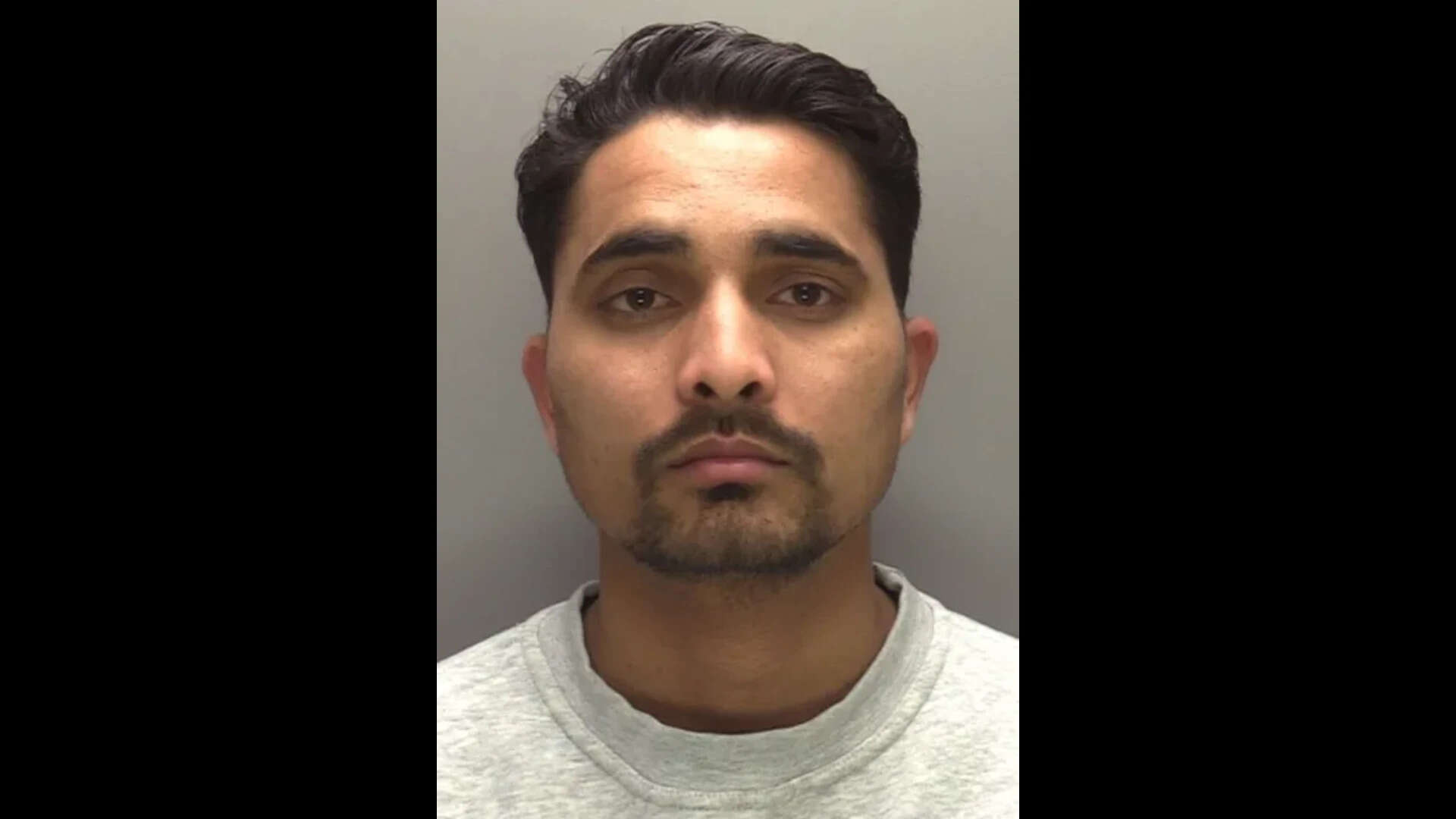
The conviction of Inderjit Singh, a 28-year-old Uber Eats driver who raped a customer in her own home, is more than a localized tragedy. It is a indictment of a digital infrastructure that prioritizes rapid onboarding over human safety. While the court in Lincoln heard of a "vulnerable" man who "knew no one" in the UK, the real story lies in the systemic failure of the background check protocols that allow high-risk individuals to roam neighborhoods under the banner of a trusted global brand.
The incident occurred after Singh delivered food to a woman in her 20s. Instead of leaving, he forced his way into her home, ignored her repeated pleas to stop, and committed a violent sexual assault. The defense’s attempt to frame Singh as a lonely migrant struggling with isolation does nothing to mitigate the chilling reality. He was a man vetted and verified by a platform that claims to use "industry-leading" safety measures.
The failure here is not a glitch. It is a fundamental feature of the low-friction growth model.
The Myth of the Rigorous Background Check
Gig economy giants frequently point to their "robust" screening processes to appease regulators and reassure the public. In the United Kingdom, this usually involves a Disclosure and Barring Service (DBS) check. On the surface, this sounds definitive. In practice, it is a static snapshot of a person’s past that offers almost no predictive value regarding their future behavior, especially when dealing with individuals who have recently arrived in the country.
When a platform hires someone like Singh, they are checking for existing criminal records within the UK. If a person has been in the country for a short period, their UK record is naturally a blank slate. The system rarely mandates a comprehensive international criminal history check for every courier, primarily because it would slow down the "onboarding funnel" and cost more money.
The platforms operate on a volume game. They need a massive, revolving door of contractors to keep delivery times low and investor confidence high. If the vetting process took three weeks instead of three days, the supply chain of cheap labor would dry up. By streamlining the entry process, these companies have effectively offloaded the risk onto the consumer’s front porch.
Algorithms Do Not Detect Predators
Safety features within delivery apps are designed to track GPS coordinates and ensure the food arrives hot. They are not designed to monitor the social interactions between a driver and a customer. Once the "delivered" button is swiped, the driver essentially disappears from the platform’s live oversight.
This creates a "dead zone" of accountability. In Singh’s case, the victim was in her own sanctuary, a place where she should have been safe after a routine commercial transaction. The app’s safety interface—which often includes a "safety toolkit" or an "emergency button"—is useless once the door is breached and the phone is out of reach.
The industry’s reliance on algorithmic management creates a false sense of security. We have been conditioned to trust the blue dot on the map. We assume that because a person has a profile photo and a rating, they have been adequately scrutinized. But an algorithm cannot detect intent. It cannot sense a predator. It only knows if the vehicle is moving at the prescribed speed toward the destination.
The High Cost of the Independent Contractor Loophole
Uber Eats, Deliveroo, and their peers maintain a legal distance from their drivers by classifying them as independent contractors. This isn't just about avoiding pension contributions or holiday pay. It is about liability.
By keeping drivers at arm's length, companies can claim they are merely a "marketplace" connecting hungry people with couriers. When an assault happens, the corporate response follows a predictable script: express "horror," ban the individual from the platform, and cooperate with police. This allows the brand to survive the scandal while the structural flaws remain untouched.
If these drivers were employees, the legal and financial stakes for a hiring failure would be catastrophic. The company would be forced to implement psychological profiling, face-to-face interviews, and continuous monitoring. Under the current contractor model, the company’s primary "safety" intervention is a periodic selfie-check to ensure the person holding the phone matches the ID on file. This prevents account sharing, but it does nothing to prevent a verified user from committing a crime.
The Lincolnshire Case as a Warning Shot
The details revealed during Singh’s sentencing paint a picture of a man who felt emboldened by the access his job provided. He used the legitimacy of his role to gain proximity to his victim. This is a classic "Trojan Horse" scenario. The uniform, the thermal bag, and the app notification act as a digital key to the private lives of millions.
The court heard that Singh’s life in the UK was "fragmented." He had no support system and lived in a state of social alienation. While the defense used this to seek leniency, an investigative lens views it as a massive red flag. Why are companies granting sensitive, door-to-door access to individuals without ensuring they have a stable, verifiable background?
The answer is simple: demand.
In rural and semi-rural areas like Lincolnshire, the pool of available drivers is often smaller than in major metros. Platforms are desperate to fill slots to maintain their service-level agreements. When the pressure to provide 20-minute delivery times meets a thin labor market, standards inevitably slip. The result is a system where the "lonely migrant" defense can be used in court for a man who used a billion-dollar app to find a victim.
Rethinking the Front Door Transaction
The convenience of the gig economy has blinded us to the inherent risks of "last-mile" logistics. We have traded our privacy and safety for the ability to have a burrito delivered at 11:00 PM.
To fix this, the burden of proof must shift. It should not be on the victim to report an assault; it should be on the platform to prove that their vetting process is capable of weeding out more than just people with existing UK convictions.
True reform would require:
- Mandatory International Background Checks: For any driver who hasn't resided in the UK for at least five years, a "Certificate of Good Conduct" from their home country should be a non-negotiable requirement.
- Real-Time Safety Audits: If a driver lingers at a delivery location for more than a few minutes after a drop-off, an automated safety check should be triggered for both the driver and the customer.
- End of the Contractor Shield: Legislation must be updated so that platforms are held vicariously liable for the criminal actions of their workers, regardless of their employment status.
The Silence of the Stakeholders
Investors rarely ask about safety metrics during earnings calls. They ask about "customer acquisition costs" and "average order value." As long as the market rewards growth over security, the incentives for these companies will remain skewed.
The Lincolnshire police and the UK justice system have done their part by putting Singh behind bars for 12 years. He will likely face deportation after his sentence. But the chair he occupied in the gig economy will be filled by another person tomorrow morning. Without a fundamental change in how these platforms operate, the next "lonely" individual with a dark intent is already on his way to a delivery.
We must stop treating these incidents as "isolated events." They are the logical outcome of a business model that treats human safety as a line item to be minimized. The convenience of the app is a thin veil over a very real and present danger.
Demand that the platforms you use provide more than just a map and a receipt. Demand to know exactly who they are sending to your door and what they have done to ensure that person isn't a threat.
The blue dot on your screen is not a person. It is a data point. And as Inderjit Singh proved, that data point can have devastating consequences when it stops moving at your front door.



