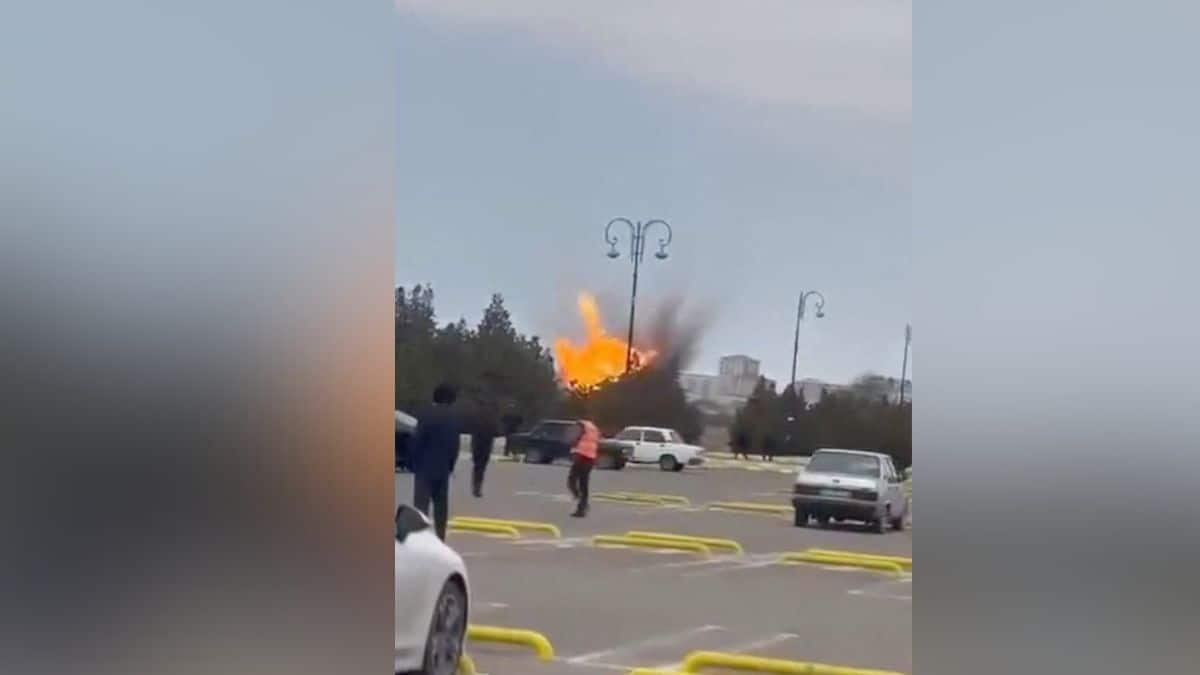
The security of the Southern Gas Corridor (SGC) represents the single most critical point of failure for European energy diversification. While political rhetoric often frames the recurring tension between Baku and Tehran as a religious or ideological rift, an objective analysis reveals a cold calculation of resource dominance and transit hegemony. The recent disruption of Iranian-backed intelligence cells targeting Azerbaijani energy infrastructure is not an isolated event; it is the physical manifestation of a zero-sum competition for the Caspian basin's export capacity.
To understand the stakes, one must move beyond the headlines of "foiled plots" and analyze the specific vulnerabilities of high-pressure midstream assets. A pipeline is not merely a pipe; it is a pressurized, multi-billion-dollar kinetic system where a single point of failure can trigger a cascade of economic and technical shutdowns across three continents.
The Triad of Infrastructure Vulnerability
Sabotage against energy infrastructure like the Baku-Tbilisi-Ceyhan (BTC) or the South Caucasus Pipeline (SCP) follows a specific tactical logic. These assets are vulnerable due to three distinct structural characteristics:
- Spatial Fixedness: Unlike maritime shipping, which can reroute in response to threats (e.g., bypassing the Red Sea), pipelines are static. Their coordinates are public knowledge, and their path often crosses remote, difficult-to-patrol terrain.
- Pressure Sensitivity: Modern pipelines operate at high pressures to move gas across vast distances. Any structural compromise—even a small explosive charge—utilizes the internal energy of the gas itself to exacerbate the destruction, leading to "cracking" or "blowouts" that require months of specialized metallurgical repair.
- The Chokepoint Effect: Because these pipelines feed into the European Union's energy mix, a 48-hour shutdown in the Caucasus creates immediate price volatility on the Dutch TTF (Title Transfer Facility) hub, effectively weaponizing the transit state’s internal security for global market manipulation.
Iran’s Strategic Calculus: The Cost Function of Destabilization
Tehran’s involvement in Azerbaijani domestic instability serves a clear economic objective. Iran possesses the world’s second-largest natural gas reserves but remains largely excluded from the European market due to sanctions and lack of infrastructure. Azerbaijan, conversely, has successfully positioned itself as the "Anti-Gazprom," gaining favor with Brussels.
The Iranian strategy utilizes a Proxy-Attrition Model. By activating local cells to target infrastructure, Iran attempts to raise the "Security Risk Premium" for Azerbaijan. If Baku is perceived as an unstable transit partner:
- Foreign direct investment (FDI) in new offshore fields like Shah Deniz Phase 3 slows down.
- Insurance premiums for midstream operators skyrocket.
- European buyers seek more "predictable" (though perhaps more expensive) alternatives, such as North Sea or US LNG.
The mechanism of these foiled plots—recruiting Azerbaijani nationals through religious or social networks—is a low-cost, high-leverage tactic. The cost to Iran is negligible, consisting primarily of digital coordination and small-arms smuggling. The potential cost to Azerbaijan is a multi-billion-dollar loss in annual export revenue and a tarnished reputation as a reliable energy guarantor.
Technical Barriers to Pipeline Interdiction
Azerbaijan's ability to foil these plots rests on a shift from reactive patrolling to predictive intelligence. The "foiled plots" mentioned in recent reports suggest the integration of two specific security layers:
The Signal Layer
Baku has increasingly deployed Distributed Acoustic Sensing (DAS) along its pipeline corridors. This technology uses fiber-optic cables buried alongside the pipe to detect minute vibrations. The system can distinguish between the footfalls of a wandering animal and the rhythmic digging or mechanical vibration associated with the placement of an Improvised Explosive Device (IED). When the State Security Service (DTX) intercepts a plot, it is often because these technical signatures were flagged long before a physical breach occurred.
The Human Intelligence (HUMINT) Layer
The socio-political friction between Azerbaijan’s secular government and Iranian-backed clerical influence creates a clear "threat profile." Azerbaijani counter-intelligence focuses on the intersection of illicit finance and ideological radicalization. The failure of recent Iranian attempts indicates a high "friction coefficient" in their recruitment efforts; the Azerbaijani domestic security apparatus has successfully mapped the financial flows from Qom and Mashhad into the Caspian region.
The Zangezur Corridor and the Shifting Bottleneck
The tension is exacerbated by the proposed Zangezur Corridor. This transport link would connect mainland Azerbaijan to its exclave, Nakhchivan, through Armenian territory. From Tehran’s perspective, this is an existential threat.
- It bypasses Iranian territory, depriving Tehran of transit fees.
- It creates a direct Turkic land bridge from Istanbul to the Caspian.
- It weakens Iran's "North-South" leverage over regional trade.
The plots against the pipelines are likely a "negotiation by other means." By demonstrating the ability to touch Baku’s most sensitive economic organs, Iran signals that any change to the regional map—specifically the Zangezur Corridor—will come at a cost to Azerbaijan’s energy security.
The Limitations of Infrastructure Defense
Despite the success in foiling these specific plots, Azerbaijan faces a diminishing return on traditional security. The shift in asymmetric warfare toward Unmanned Aerial Vehicles (UAVs) and cyber-kinetic attacks creates a new threat vector.
A pipeline’s SCADA (Supervisory Control and Data Acquisition) system is arguably more vulnerable than the physical pipe. A sophisticated cyber-actor could theoretically manipulate valve pressures to induce a "water hammer" effect, causing a rupture from the inside without ever planting a bomb. While Azerbaijan has tightened physical security, the transition to a fully digitized "Smart Pipeline" creates a larger attack surface that Iranian cyber units, among the most capable in the Middle East, are well-positioned to exploit.
Strategic Realignment
The current stalemate suggests that Azerbaijan must move beyond a bilateral security mindset. To insulate its energy assets from Iranian interference, the following strategic shifts are necessary:
- Redundancy Integration: Azerbaijan must accelerate the interconnectivity of its pipeline networks with the Trans-Anatolian Pipeline (TANAP). The goal is a "mesh network" where a breach in one section can be bypassed via automated rerouting, stripping the saboteur of the "Chokepoint Effect."
- Multilateral Security Frameworks: Baku should formalize an "Energy Security Pact" with Turkey and Israel. This would involve shared satellite reconnaissance and joint rapid-response drills specifically for midstream assets.
- Hardening of SCADA Networks: Transitioning pipeline control systems to "Air-Gapped" or sovereign-encrypted protocols to mitigate the risk of a remote-access shutdown.
The survival of the Southern Gas Corridor depends not on the absence of Iranian aggression, but on the increasing technical cost of that aggression. Baku has won this round of the "shadow war," but the structural incentives for Tehran to disrupt Azerbaijani energy remain unchanged. The next evolution of this conflict will likely move from the soil to the server.