The proposed imposition of a transit fee on maritime traffic through the Strait of Hormuz, denominated exclusively in Iranian Rials, represents a pivot from kinetic military posturing to economic asymmetric warfare. This strategy aims to weaponize the geography of the world’s most significant oil chokepoint to bypass unilateral sanctions while forcing international recognition of the Iranian currency. By shifting the friction point from physical blockage to financial compliance, Tehran seeks to create a permanent revenue stream and a defensive buffer against Western economic isolation.
Understanding the viability of this maneuver requires deconstructing the intersection of international maritime law, the mechanics of currency demand, and the logistical realities of global energy supply chains. If you found value in this post, you should look at: this related article.
The Geopolitical Cost Function of the Strait
The Strait of Hormuz serves as the jugular of the global energy market. Approximately 21 million barrels of oil flow through this 21-mile-wide passage daily, representing roughly 20% of global liquid petroleum consumption. Currently, the legal framework governing the strait is the United Nations Convention on the Law of the Sea (UNCLOS), specifically the right of "transit passage" for international straits.
Iran’s strategy introduces a new overhead to this passage. The "Cost of Transit" in this model is not merely a financial figure but a composite of three specific variables: For another perspective on this story, check out the recent coverage from NBC News.
- Legal Friction: The deviation from established UNCLOS norms. Since Iran has signed but not ratified UNCLOS, it argues that only "innocent passage" applies—a more restrictive standard that allows the coastal state to suspend transit for security reasons.
- Currency Conversion Loss: The requirement to pay in Rials necessitates a double-conversion process (USD/EUR to Rial, then to the Iranian Treasury). Given the Rial's volatility and the lack of deep liquidity in offshore markets, the "spread" acts as a hidden tax.
- Sanctions Risk: For a shipping company or an oil major, purchasing Rials from the Iranian Central Bank constitutes a direct violation of U.S. secondary sanctions. This transforms a simple toll into a binary choice between using the strait or maintaining access to the U.S. financial system.
The Rial Denominated Toll as a Liquidity Trap
The core of the Iranian proposal is not the fee itself, but the denomination. Most global commodities and maritime services are priced in U.S. Dollars ($). By mandating the Rial, Iran attempts to create artificial demand for a currency that has been systematically devalued.
In standard monetary theory, a currency's value is derived from its utility and the strength of the issuing economy. Tehran is attempting to bypass these fundamentals by creating coerced utility. If every tanker must pay a fee in Rials, every shipping firm must establish a mechanism to acquire Rials. This forces international banks to interact with Iranian financial institutions, effectively "punching holes" in the sanctions net.
However, this creates a significant bottleneck. The Iranian Rial is not a freely tradable currency on the global market. To acquire the necessary Rials, shipping agencies would likely need to trade hard currency (Gold, Yuan, or Euro) through intermediate exchanges in third-party jurisdictions like the UAE or Oman. This creates a "shadow liquidity" market where the price of the Rial for transit purposes may decouple from its domestic value, leading to a tiered exchange rate system that invites corruption and arbitrage.
Structural Breakdown of Maritime Legal Challenges
The legal validity of a toll on an international strait is highly contested. Iran justifies the fee as "compensation" for the security and environmental services it provides in the waterway. From a data-driven perspective, the maintenance of search-and-rescue operations, pollution control, and navigational aids does carry a quantifiable cost. However, international law generally prohibits the imposition of charges upon foreign ships by reason only of their passage through the territorial sea.
Charges may only be levied for specific services rendered to the ship. Iran's challenge is to redefine "transit" as a "service."
- Precedent of the Suez and Panama Canals: These are man-made waterways where tolls are universally accepted. The Strait of Hormuz is a natural waterway.
- The Territorial Overlap: The shipping lanes in the Strait of Hormuz fall within the territorial waters of Iran and Oman. Any unilateral tolling by Iran ignores Omani sovereignty over its portion of the channel.
If Iran moves forward, it effectively establishes a "de facto canal" status for a natural strait. This creates a dangerous precedent for other global chokepoints, such as the Strait of Malacca or the Bab el-Mandeb, where coastal states might similarly seek to monetize international trade routes.
Operational Impact on Global Energy Markets
The immediate impact of a Hormuz toll would be felt in the freight rates and insurance premiums rather than the spot price of Brent crude. Shipping companies operate on thin margins; an additional $10,000 to $50,000 fee per transit—while small compared to a $100 million cargo—triggers a cascade of logistical adjustments.
The "Risk Premium" would be calculated based on the following:
- Compliance Complexity: The man-hours required to navigate the legal minefield of paying a sanctioned entity.
- Retaliatory Seizures: The risk that a ship might be detained for "non-payment" or "improper currency valuation."
- Alternative Routing: While there are pipelines (such as the Habshan–Fujairah line in the UAE or the East-West Pipeline in Saudi Arabia), their combined capacity is less than half of the daily flow through the Strait. The lack of elasticity in transport options gives Iran significant leverage in the short term.
The Sanctions Divergence
The most critical variable in this scenario is the reaction of the "Gray Market" buyers—specifically China. Approximately 80% of Iran's oil exports currently go to China, often settled in Yuan or through barter arrangements.
If Iran mandates a Rial toll, it creates a friction point even for its allies. For China, paying in Rials is less problematic than it is for a European or Japanese firm, but it still requires a shift in the bilateral clearing mechanisms. This suggests the toll is aimed less at China and more at "hostile" nations using the strait. This creates a Discriminatory Toll Architecture, where friendly nations might receive "discounts" or "waivers" (perhaps through an energy-for-goods swap), while others face the full weight of the Rial requirement.
Strategic Fragility and the Escalation Ladder
The strategy of a Rial-denominated toll is inherently fragile. It relies on the assumption that the global community will prioritize the flow of oil over the integrity of the sanctions regime. This is a high-stakes calculation.
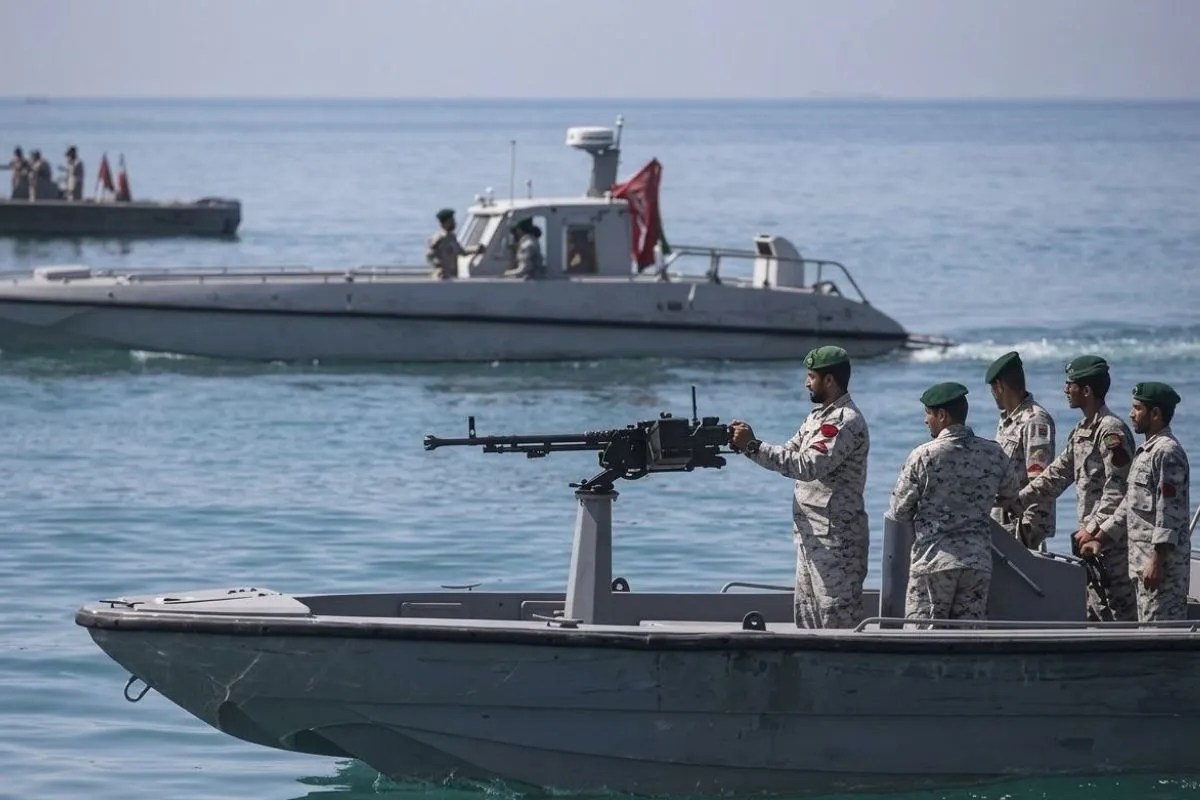
The first limitation is Enforcement. To collect a toll, Iran must be willing to physically intercept non-compliant vessels. This moves the conflict from the economic realm back to the kinetic realm. A single boarding of a commercial vessel to enforce a toll could trigger a "Freedom of Navigation" (FON) operation by the U.S. Navy and its allies.
The second limitation is Technological Circumvention. Advances in satellite monitoring and automated shipping could allow vessels to "hug" the Omani side of the strait with extreme precision. If the internationally recognized shipping lanes are moved entirely into Omani waters, Iran’s legal claim to a toll vanishes.
This leads to an inevitable escalation: if the toll is bypassed legally or geographically, Tehran must either concede or escalate to a full blockade. A blockade, however, is a self-defeating move that halts Iran's own oil exports and alienates its primary customers in Asia.
The Final Strategic Calculation
The proposal for a Rial-based toll in the Strait of Hormuz should be viewed as a tactical probe rather than a finalized policy. It is designed to test the cohesion of the international community and the elasticity of the U.S. sanctions framework.
For Iran, the goal is to establish a "New Normal" where maritime transit is contingent upon a financial transaction with the Iranian state. For the global economy, the risk is not the cost of the toll itself, but the fragmentation of maritime law and the potential for a "toll-booth" model of geopolitics to spread to every major shipping lane.
The most probable outcome is a period of "shadow tolling," where Iran leverages its paramilitary presence to pressure shipping agencies into "voluntary" service fees, likely disguised as environmental or security contributions, settled through non-Western intermediaries. This allows Tehran to claim a victory for the Rial while avoiding a direct military confrontation with the West. Global energy analysts must now incorporate "Currency Transit Risk" into their models for any cargo originating from or destined for the Persian Gulf. Any firm operating in these waters must immediately audit their "Sanctions-Neutral" payment capabilities or prepare for the significant logistical overhead of bypassing the Strait entirely.