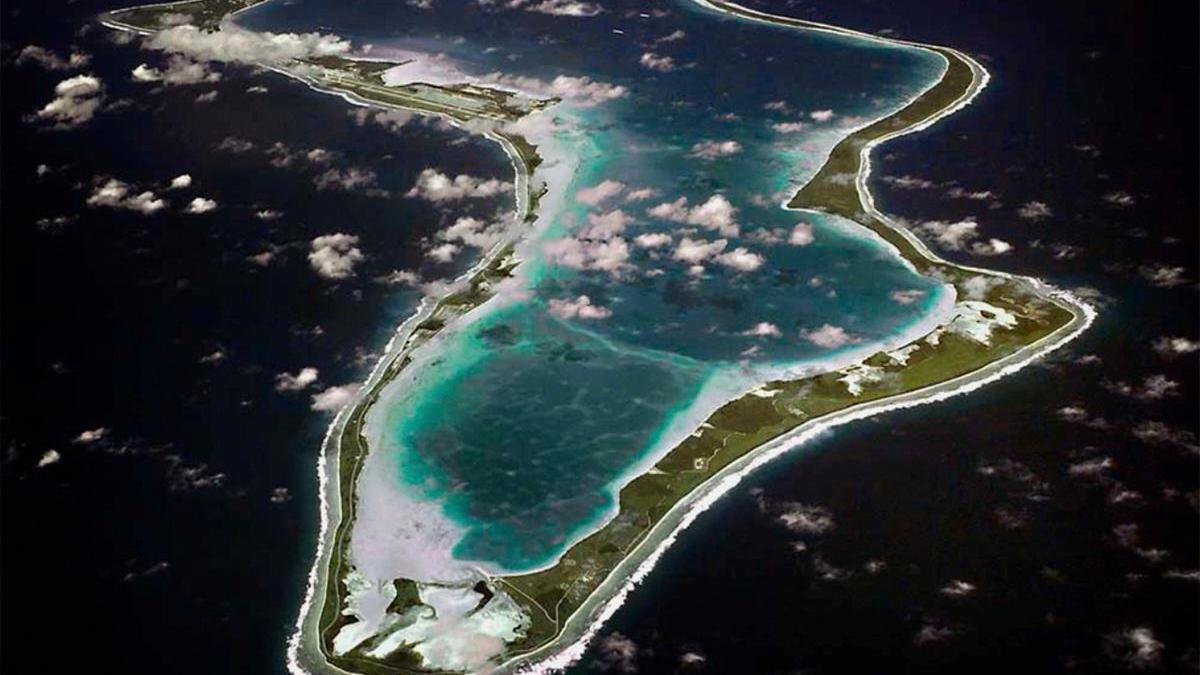
The United Kingdom’s decision to pause the transfer of the Chagos Archipelago to Mauritius is not a mere diplomatic delay; it is a forced recalibration of national security interests against the mounting friction of Great Power competition. This suspension reveals a fundamental tension between international legal decolonization and the operational continuity of the "Special Relationship." While the proposed treaty sought to resolve a decades-long legal vulnerability, it failed to account for the strategic value of Diego Garcia as an irreducible node in the United States’ Indo-Pacific architecture.
The pause stems from a structural misalignment between the UK Foreign Office’s desire for legal closure and the Pentagon’s requirement for absolute jurisdictional certainty. By analyzing the breakdown of this agreement, we can identify three distinct layers of geopolitical risk that led to the current stalemate: the Legal-Sovereignty Paradox, the Operational Security (OPSEC) Variable, and the Transatlantic Power Asymmetry.
The Legal-Sovereignty Paradox
The UK’s initial motivation to cede the British Indian Ocean Territory (BIOT) was driven by the deteriorating defensibility of its legal position. Multiple rulings, including a 2019 Advisory Opinion from the International Court of Justice (ICJ) and a 2021 judgment by the International Tribunal for the Law of the Sea (ITLOS), categorized the UK’s administration as an "illegal colonial occupation."
The strategic logic for the UK was to trade nominal sovereignty for long-term leasehold stability. Under the proposed framework, Mauritius would gain sovereign recognition, while the UK would retain a 99-year lease over Diego Garcia. However, this trade-off introduced a "Sovereignty Leakage" model:
- Jurisdictional Dilution: Transitioning from a British Overseas Territory to a leased facility under Mauritian sovereignty changes the legal basis for military operations.
- Third-Party Interference: Sovereignty grants Mauritius the right to enter into treaties with other states. The U.S. remains concerned that a Mauritian government, under financial or diplomatic pressure, could grant competing powers access to nearby islands in the archipelago.
- The Right of Return: The Mauritian claim is inextricably linked to the resettlement of the Chagossian people. Introducing a civilian population within the exclusion zone of a Tier-1 military asset creates an insurmountable security perimeter risk.
The Operational Security Variable
Diego Garcia serves as a "Floating Carrier" for U.S. Central Command (CENTCOM) and Indo-Pacific Command (INDOPACOM). It is one of the few locations globally capable of supporting long-range bomber operations (B-2 and B-52), nuclear submarine tenders, and sophisticated satellite tracking stations without the oversight of a host nation that might restrict "over-the-horizon" strike capabilities.
The U.S. opposition, which catalyzed the UK’s pause, is rooted in the degradation of the facility’s Strategic Depth. In military terms, strategic depth is the distance between the front line and the core assets. In the Chagos context, the entire archipelago acts as a buffer. Relinquishing the outer islands—even if the main base is retained—compresses this buffer.
The U.S. defense establishment views the Chagos as a single ecosystem. Splitting the archipelago into "military" and "civilian/sovereign" zones introduces variables that cannot be mitigated by a lease agreement. These include:
- Signal Intelligence (SIGINT) Vulnerability: Proximity of non-allied maritime traffic or civilian telecommunications infrastructure could compromise sensitive data transmissions.
- Physical Infiltration: The ability of foreign intelligence services to establish "research" or "fishing" outposts on neighboring islands under Mauritian jurisdiction.
- Legal Lawfare: The risk that future Mauritian administrations could use environmental or labor laws to restrict military activity, similar to the challenges faced by the U.S. in Okinawa or the Philippines.
The Transatlantic Power Asymmetry
The UK’s pause reflects a pivot in its post-Brexit "Global Britain" strategy. The Foreign Office initially prioritized the "International Rule of Law" to signal its commitment to global norms. However, this ran headlong into the "Special Relationship" reality. When the U.S. State Department and Department of Defense signaled that the treaty could undermine the security of the "Indo-Pacific "pivot," the UK’s calculation shifted from legalistic to realistic.
The power dynamic is quantified by the Defense Dependency Ratio. The UK relies on the U.S. for nuclear deterrent maintenance (Trident) and high-end intelligence sharing. The diplomatic cost of defying U.S. security requirements on Diego Garcia far outweighs the reputational cost of ignoring an ICJ advisory opinion.
The current pause is an admission that the UK cannot unilaterally settle the Chagos issue without a tripartite consensus that includes a "Hard-Security Guarantee" from the United States. This guarantee requires more than just a 99-year lease; it requires a mechanism that ensures the archipelago remains a closed military zone, effectively nullifying the "sovereignty" Mauritius seeks to gain.
Strategic Mapping of Potential Outcomes
The freeze in negotiations creates a period of high-stakes inertia. We can project three probable paths based on current geopolitical pressures:
- The Status Quo Persistence: The UK continues to exercise de facto control, ignoring international pressure while providing the U.S. with total operational freedom. The cost of this path is increasing diplomatic isolation in the UN General Assembly and potential sanctions from African Union blocs.
- The "Guantánamo Model": A treaty where Mauritius receives legal title, but the UK/U.S. retain "complete jurisdiction and control" in perpetuity. This satisfies the Mauritian need for "sovereignty" on paper but fails to deliver the "right of return" or actual governance, likely leading to future legal challenges.
- The Perimeter Security Compromise: A revised deal where the UK cedes only the most distant islands of the archipelago to Mauritius for resettlement, while maintaining a massive "Security Exclusion Zone" around Diego Garcia and its neighboring atolls. This would require a technological solution for monitoring the archipelago to ensure no "dual-use" infrastructure is built by third parties.
The China Factor as a Strategic Constraint
The shadow of the People’s Republic of China (PRC) looms over the negotiation. Mauritius has significant economic ties with China, including Free Trade Agreements and infrastructure investments. The U.S. security apparatus views any transfer of sovereignty as a potential "Belt and Road" entry point.
If Mauritius were to become the sovereign authority, the "Debt-Trap Diplomacy" framework suggests that the Chagos could eventually be leveraged for Chinese maritime access. Even if the current Mauritian government is pro-Western, sovereign states have the right to change their foreign policy. The U.S. operates on a 50-year planning horizon; it does not accept the risk that a 2045 Mauritian government might invite a Chinese "Scientific Research Vessel" to dock 50 miles from Diego Garcia.
Final Strategic Calculation
The UK must now navigate a narrow corridor between legal illegitimacy and strategic irrelevance. The pause indicates that security concerns have regained primacy over international law. For the UK, the "Global Britain" brand is currently being sacrificed to maintain the "Security Britain" reality.
Moving forward, any successful resolution will require a "Hardened Sovereignty" framework. This involves a legal innovation where sovereignty is transferred but "Executive Authority" is permanently delegated to a joint UK-U.S. military commission. Without such a mechanism, the archipelago will remain in a state of "frozen decolonization." The UK will continue to occupy the islands, the U.S. will continue to project power, and the international legal community will continue to protest—a stable, if uncomfortable, equilibrium that satisfies the immediate requirements of the Pentagon while deferring the "Chagos Question" to a future era of less intense global competition.