The current friction between the United States and its North Atlantic Treaty Organization (NATO) allies regarding the 2026 conflict with Iran represents a fundamental shift from institutional security to transactional bilateralism. While traditional analysis views the threat of U.S. withdrawal from NATO as a rhetorical tool for defense spending, the 2026 data indicates a more structural divergence. The United States, under a second Trump administration, is currently testing a "Selective Hegemony" model, where alliance value is measured by active participation in kinetic operations rather than passive deterrence.
The bottleneck in current transatlantic relations is not merely financial; it is operational. The refusal of European allies to join the U.S.-Israeli strikes against Tehran in February and March 2026 has transitioned NATO from a "shield of Europe" to what the current U.S. administration terms a "paper tiger." This creates a critical breakdown in the mutual defense logic that has governed the West since 1949.
The Tri-Node Conflict Architecture
To understand the current escalation, the conflict must be deconstructed into three distinct operational theaters, each with its own cost function and strategic objective.
1. The Kinetic Theater: Iran and the Strait of Hormuz
The 12-day war in 2025 and the renewed strikes in early 2026 have severely degraded Iran's fixed nuclear infrastructure. However, the "Hormuz Variable" remains the primary leverage point for Tehran. By shutting the Strait, Iran has effectively weaponized global energy supply chains, forcing the U.S. to choose between an expensive maritime clearing operation or accepting high domestic inflation.
The U.S. strategy here is one of "Energy Coercion." By removing sanctions on specific Russian and transit-phase Iranian oil, the administration is attempting to decouple global prices from Iranian obstruction. The strategic failure of this model lies in its reliance on non-allied energy actors to stabilize a market disrupted by U.S. kinetic action.
2. The Institutional Theater: The NATO Utility Test
The administration’s "punishment" of NATO is not a peripheral consequence but a core strategic pivot. The administration has categorized NATO’s refusal to participate in the Middle East theater as a breach of the "implicit contract."
- The Participation Metric: U.S. policy now measures ally value through the deployment of naval assets to the Strait of Hormuz.
- The Capabilities Gap: The public rebuke of the United Kingdom’s naval readiness—specifically the operational failures of its aircraft carriers—highlights a shift from demanding "2% GDP spending" to demanding "deployable high-end capability."
- The Decoupling Signal: Threatening withdrawal is no longer about burden-sharing; it is about "Strategic Autonomy." The U.S. is signaling that it will no longer provide a security umbrella for nations that do not align with its secondary theater objectives.
3. The Proxy Theater: The Israel-Hezbollah-Iran Loop
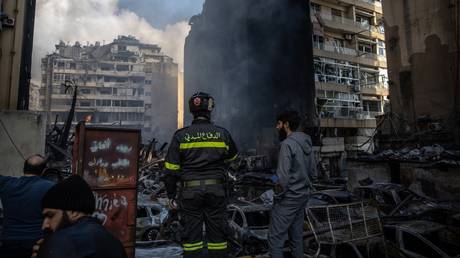
The March 2026 strikes on "regime targets" in Tehran, which killed at least 25 individuals, represent a shift from counter-proliferation to leadership decapitation. The ongoing Israeli operations in Lebanon to establish a buffer zone further complicate the regional math. While Israel views this as an existential necessity, the lack of a clear end-state has created an "Escalation Loop."
The Cost Function of U.S. Isolationism
The shift toward isolationism in 2026 is a response to the perceived imbalance between the costs of global dominance and the diminishing returns of traditional alliances. This is not a retreat into passivity but a transition to "Selective Bilateralism."
The economic nationalism currently being deployed prioritizes the Western Hemisphere over the Middle East and Europe. This creates a strategic vacuum that China and Russia are positioned to fill, particularly in the vacuum of the UN Security Council, which has remained deadlocked throughout the 2026 conflict.
Mechanism of the Security Breakdown
The second-term Trump administration's approach follows a specific logical progression:
- Define Objective: Secure the Strait of Hormuz and degrade Iranian nuclear capacity.
- Issue Ultimatum: Allies must provide kinetic support (ships, bases, personnel).
- Evaluate Loyalty: Refusal by allies (e.g., Keir Starmer’s UK government) triggers a downgrade in security guarantees.
- Execute Punishment: Targeted threats of NATO withdrawal or the imposition of trade tariffs as a "security surcharge."
Strategic Variables and Market Impacts
The April 8, 2026, ceasefire is fragile because it addresses the symptoms of the conflict rather than the underlying structural issues. The primary unresolved variables include:
- Nuclear Reconstitution: Much of Iran's program is currently "buried beneath tons of rubble," but the technical knowledge base remains. Without a comprehensive treaty—which the U.S. has currently signaled it will only sign on "maximum pressure" terms—reconstitution is a matter of time.
- Terrorism as Asymmetric Cost: As Iran’s conventional capabilities and nuclear sites are degraded, the incentive for asymmetric retaliation via proxies (Hezbollah) or international terrorism increases. This shifts the risk from military targets to civilian infrastructure and global transit hubs.
- Energy Market Volatility: The threat to target Iranian energy sites if the Strait of Hormuz remains closed creates a permanent risk premium on oil. Even with the "ceasefire," the uncertainty surrounding U.S. strikes keeps Brent Crude at elevated levels.
The Pivot to Western Hemisphere Security
The long-term strategic play involves a deprioritization of the Middle East in favor of unchallenged supremacy in the Americas. This "Monroe Doctrine 2.0" assumes that the U.S. can sustain its economy and security by securing its own borders and regional neighbors, while letting "paper tiger" alliances in Europe and the Middle East manage their own regional instabilities.
The limitation of this strategy is the "Interlinkage Bottleneck." In a globalized economy, the U.S. cannot fully insulate itself from the inflationary shocks of a Middle Eastern war or the security vacuum created by a weakened NATO.
The current ceasefire is not a transition to peace but a tactical pause. The strategic recommendation for regional actors and global markets is to prepare for a period of "High-Frequency Instability." The U.S. will likely continue its pattern of short, high-intensity kinetic strikes followed by transactional diplomatic pressure, regardless of the institutional damage to the NATO alliance. Stakeholders must price in the reality that the U.S. security guarantee is no longer a permanent fixture but a renewable contract based on immediate operational alignment.



