The collapse of the United States-Iran relationship is not a series of unfortunate accidents but a logical outcome of diverging strategic imperatives and the failure of institutional path dependency. To understand why these two nations moved from a "Twin Pillars" security architecture to a state of permanent cold war, one must analyze the transition through three distinct vectors: the erosion of the Monarchical Security Compact, the ideological reorganization of the Iranian state, and the resulting divergence in regional hegemony costs.
The Erosion of the Monarchical Security Compact
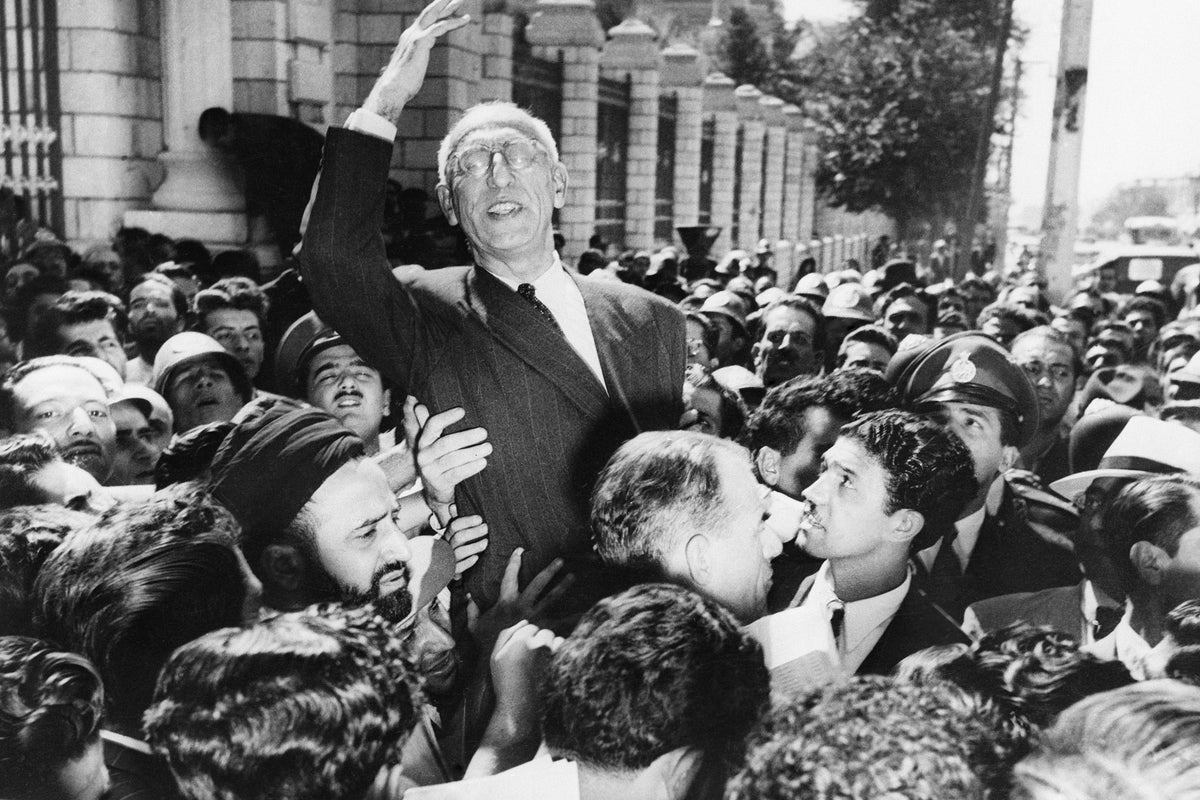
Between 1953 and 1979, the relationship functioned as a high-trust, high-yield security arrangement. Washington viewed Tehran as a regional proxy capable of containing Soviet expansionism and stabilizing global energy markets. For the Pahlavi dynasty, the United States provided the military hardware and political legitimacy required to modernize a traditional society from the top down.
This compact failed because it ignored the internal cost of rapid westernization. The "White Revolution" created a social friction that the Shah’s security apparatus, the SAVAK, could not suppress indefinitely. When the 1979 Revolution occurred, it wasn't just a change in leadership; it was a total liquidation of the strategic assets the United States had spent three decades building. The seizure of the US Embassy in Tehran served as the terminal event for this era, transforming Iran from a "security asset" into a "security liability" in the American calculation.
The Ideological Reorganization of the State
The post-1979 Iranian state adopted a governance model that made rapprochement with the West structurally impossible. This model is built on the concept of Velayat-e Faqih (Guardianship of the Islamic Jurist), which internalizes "Anti-Imperialism" as a core pillar of domestic legitimacy.
In this framework, the United States is categorized as the "Great Satan"—not merely a political rival, but a metaphysical threat to the survival of the Islamic Republic. This creates a "Locked-In Effect" where any Iranian leader attempting to normalize relations risks undermining the very theological foundation of their power. Conversely, the United States moved toward a policy of "Containment and Sanctions," viewing the new Iranian regime as a revisionist power seeking to upend the Westphalian order in the Middle East.
The Divergence in Regional Hegemony Costs
The most significant driver of the modern rift is the fundamental disagreement over the regional security architecture. The United States seeks a stable, status-quo Middle East that ensures the free flow of oil and the security of its primary allies, Israel and Saudi Arabia. Iran, conversely, views this status quo as an existential threat.
Tehran’s strategy evolved into the "Axis of Resistance." This is a low-cost, high-impact asymmetric warfare model that utilizes non-state actors—such as Hezbollah in Lebanon, the Houthis in Yemen, and various militias in Iraq—to project power.
- Strategic Depth: By fighting its battles in the Levant and the Arabian Peninsula, Iran ensures that any conflict remains far from its own borders.
- Asymmetric Leverage: The use of proxies allows Iran to disrupt global trade (e.g., the Red Sea shipping lanes) or threaten allied capitals without triggering a direct conventional war with a superior military power.
- The Nuclear Hedge: The development of nuclear enrichment capabilities serves as the ultimate insurance policy. It raises the "entry cost" for any Western-led regime change operation.
For the United States, countering this "Axis" requires a massive, ongoing expenditure of military and financial capital. This creates a permanent state of friction where neither side can afford a full-scale war, yet neither can afford to retreat.
The Failure of Diplomatic Path Dependency
Attempts to repair the relationship, most notably the 2015 Joint Comprehensive Plan of Action (JCPOA), failed because they attempted to solve a technical problem (nuclear enrichment) without addressing the underlying structural divergence.
The JCPOA operated on the assumption that economic integration would lead to behavioral change. This proved to be a flawed hypothesis. The Iranian leadership viewed the deal as a tactical pause to gain sanctions relief, while US domestic politics proved too volatile to sustain a long-term commitment to the agreement. The 2018 withdrawal by the United States and the subsequent "Maximum Pressure" campaign re-established the baseline of the relationship: mutual distrust and economic warfare.
The Current Equilibrium of Hostility
We are now in a period of "Violent Equilibrium." The relationship is defined by a predictable cycle of escalation and de-escalation that avoids total war but prevents any form of meaningful cooperation. This equilibrium is maintained by three variables:
- Sanctions Saturation: The US has exhausted most of its non-military leverage. Additional sanctions yield diminishing returns as Iran integrates its economy with non-Western powers like China and Russia.
- Technological Parity in Asymmetry: Iranian drone and missile technology has reached a level where it can bypass sophisticated defense systems, increasing the "Risk Premium" for US regional operations.
- The Succession Crisis: Both nations are facing internal political shifts. In Iran, the eventual succession of the Supreme Leader creates a period of high domestic sensitivity. In the US, the shift toward isolationism and a "Pivot to Asia" reduces the appetite for Middle Eastern entanglement.
Strategic Realignment and the Indo-Pacific Variable
The US-Iran relationship can no longer be viewed in a vacuum. It is increasingly a subset of the broader competition between the United States and the China-Russia bloc. Iran provides China with discounted energy and a strategic foothold in the Persian Gulf, while Russia provides Iran with advanced military hardware and diplomatic cover at the UN Security Council.
This "Triangular Diplomacy" raises the cost for the United States. To contain Iran, Washington must now account for the second-order effects on its competition with Beijing. If the US focuses too heavily on Iran, it leaves a power vacuum in the Indo-Pacific. If it withdraws from the Middle East, it hands a strategic victory to its primary global competitors.
The Strategic Path Forward
The objective for US policy moving forward is not "Grand Bargain" or "Regime Change"—both of which have failed as viable strategies. Instead, the focus must shift to Managed Attrition.
This strategy requires three operational shifts:
- De-linking Nuclear and Regional Issues: Treat the nuclear program as a permanent containment task while addressing proxy threats through localized defense integration among Arab allies.
- Economic Disruption of the Proxy Supply Chain: Shift from broad-based sanctions to high-precision financial warfare targeting the logistics and middle-management of the "Axis of Resistance."
- Exploiting the Gray Zone: Utilize cyber and information operations to increase the internal friction within the Iranian security apparatus, forcing the regime to spend more on domestic stability and less on foreign adventurism.
The friendship didn't just fall apart; it was replaced by a new logic of survival. The "normalization" of US-Iran relations is a relic of 20th-century thinking. The 21st-century reality is a permanent, managed rivalry that tests the limits of American endurance and Iranian resilience.


