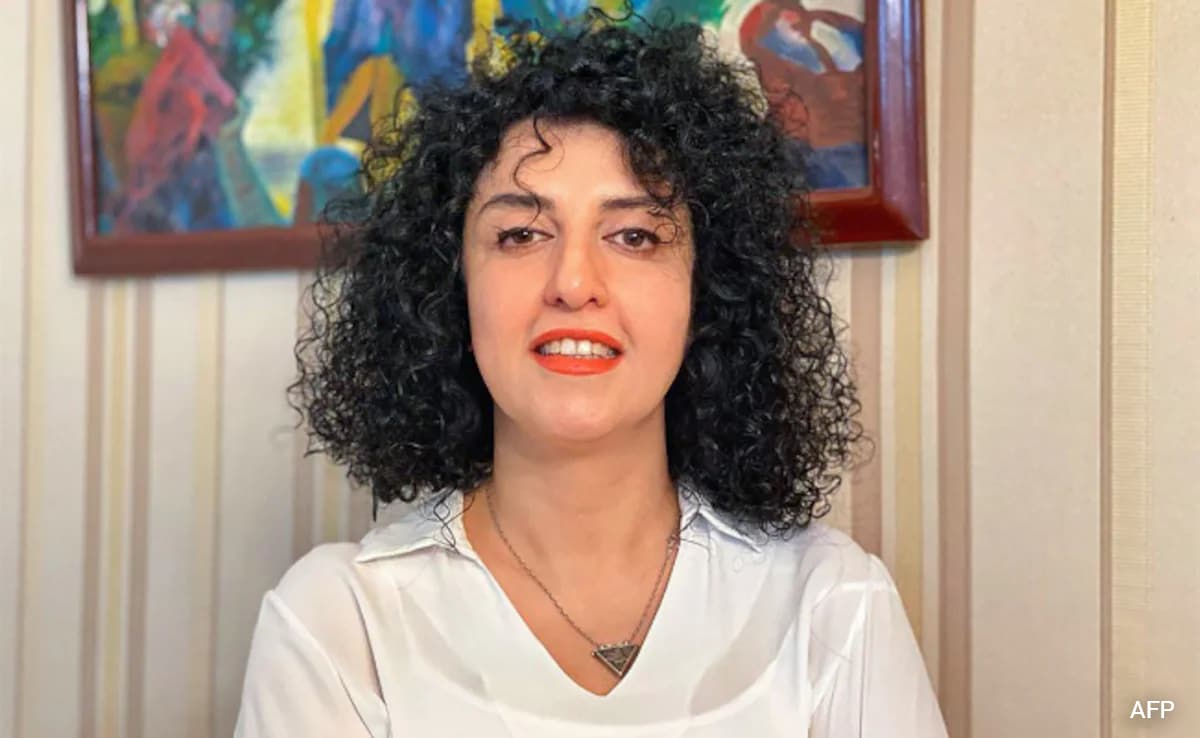
The hospitalization of Narges Mohammadi, the 2023 Nobel Peace Prize laureate currently serving a multi-year sentence in Tehran’s Evin Prison, represents a critical failure in the Iranian state’s risk management strategy. This event is not merely a medical emergency; it is the physical manifestation of a deteriorating trade-off between domestic suppression and international legitimacy. When a state detains a high-profile dissident, it incurs a compounding "political interest rate" where the health of the prisoner becomes the primary variable in a volatility index.
Mohammadi’s transfer to a hospital after weeks of denied medical care for bone marrow issues and heart complications highlights a specific structural vulnerability within the Iranian judiciary: the inability to decouple the physical custody of a symbolic figure from the global optics of that figure’s mortality. For a different view, check out: this related article.
The Triad of Institutional Risk
The situation surrounding Mohammadi’s health can be analyzed through three distinct risk vectors that the Iranian state must balance. Each vector carries a specific cost that increases non-linearly as the prisoner's health declines.
1. The Legitimacy Deficit
Political imprisonment operates on a law of diminishing returns. Initially, the removal of a dissident from the public sphere silences a specific node of dissent. However, the Nobel designation transformed Mohammadi into a decentralized symbol. In this framework, the physical body of the prisoner becomes a proxy for the state’s adherence to international norms. The denial of medical care functions as a public admission of state incapacity or intentional malice, both of which erode the "sovereign buffer" Iran attempts to maintain in diplomatic negotiations. Related coverage on this trend has been published by The New York Times.
2. The Martyrdom Multiplier
The most significant tactical risk for an autocratic regime is the transition of a dissident from a living activist to a static icon. A living prisoner can be bargained with, silenced, or isolated. A deceased prisoner becomes a permanent, unassailable rallying point. The 2022 protests following the death of Mahsa Amini demonstrated the explosive potential of a single biological failure within the state's custody. By allowing Mohammadi’s health to reach a "very high risk" threshold, the state inadvertently increases the probability of a mass-mobilization event that it may not have the resources to contain.
3. The Diplomatic Friction Coefficient
Every day Mohammadi remains in critical condition without adequate care, the friction in Iran’s external relations increases. This is particularly relevant regarding the European Union and the United Nations. The "cost" here is measured in the hardening of sanctions regimes and the closing of back-channel diplomatic corridors. For Western leaders, the political price of engaging with Tehran rises in direct proportion to the perceived cruelty of Mohammadi’s detention conditions.
Mechanistic Breakdown of Medical Neglect as a Tool of Statecraft
The delay in Mohammadi's treatment is rarely a result of simple administrative incompetence. Rather, it functions as a calibrated mechanism of "attrition-based deterrence." By modulating access to specialists and medication, the state attempts to extract a psychological price from the prisoner and their network.
This mechanism follows a predictable sequence:
- Access Denial: Initial symptoms are ignored to establish dominance and test the prisoner’s resolve.
- Conditional Provision: Medical care is offered in exchange for "confessions" or the cessation of hunger strikes.
- Emergency Intervention: When the risk of a "martyrdom event" becomes statistically significant, the state provides the bare minimum of care to stabilize the prisoner without actually addressing the underlying pathology.
In Mohammadi’s case, the bone marrow issues and heart conditions represent a failure of this calibrated attrition. The state has pushed the biological limit too far, moving the situation from a manageable deterrent to an unmanaged crisis.
[Image of the human heart and cardiovascular system]
The Economic Impact of Human Rights Volatility
There is a direct correlation between the treatment of high-profile political prisoners and the volatility of the Iranian Rial (IRR). While the connection may seem secondary, global investors and state actors view human rights escalations as leading indicators of future sanctions.
The "Mohammadi Variable" affects the risk premium associated with any potential thaw in frozen assets. If her condition worsens, the probability of new, targeted "Magnitsky-style" sanctions increases. These sanctions do not just target individuals; they signal a broader isolationist trend that discourages the few remaining trade partners from deepening ties. The Iranian central bank must, therefore, account for the health of a single prisoner in Evin as a factor in its currency stabilization efforts.
Logical Fallacies in Current Reporting
Most media coverage focuses on the emotional narrative of a "mother separated from her children." While factually true, this focus obscures the structural logic of the situation. To understand the stakes, one must discard the emotional lens and view the event through the lens of Systems Theory.
The Iranian prison system is a closed system attempting to manage a high-energy particle (Mohammadi). When the system fails to provide medical care, it creates "heat" (international pressure, domestic unrest). If the heat is not dissipated through hospitalization or release, the system reaches a point of "criticality," where a single event (death) triggers a chain reaction across the entire social fabric.
Furthermore, the "Very High Risk" label used by medical professionals and activists is not just a clinical assessment. It is a data point in a broader security forecast. If Mohammadi’s bone marrow failure progresses, the state loses its primary lever of control. You cannot threaten a dying person with further imprisonment.
The Strategy of the Free Iran Movement
The activists supporting Mohammadi, including the "Free Narges" campaign, utilize a strategy of Information Cascades. By releasing frequent updates on her health, they ensure that the "cost" of her detention remains high for the Iranian government.
This strategy involves:
- Verification: Using family and legal channels to confirm medical reports, creating a credible data stream.
- Amplification: Leveraging the Nobel platform to ensure the data reaches policy-makers in G7 nations.
- Linkage: Connecting Mohammadi’s specific health issues to the broader "Woman, Life, Freedom" movement, ensuring that her individual plight remains synonymous with a collective struggle.
This creates a pincer movement on the Iranian judiciary. They are caught between the desire to punish a critic and the necessity of preventing her from becoming a catalyst for the next revolution.
Projected Outcomes and Strategic Shifts
The immediate hospitalization of Mohammadi suggests that the Iranian security apparatus has calculated that the risk of her death in a cell currently outweighs the benefits of her isolation. However, this is a temporary equilibrium.
Three scenarios are now probable:
- The Navalny Parallel: Continuous cycles of "hospitalize-stabilize-reimprison" designed to keep the prisoner in a state of permanent physical weakness, thereby neutralizing their ability to lead or write.
- Medical Parole as De-escalation: Granting a temporary release on medical grounds to move the "risk" off the state's balance sheet and into the private sphere.
- Hardline Recalcitrance: Returning her to prison prematurely to signal that international pressure will not dictate domestic judicial policy, a move that would significantly increase the "Martyrdom Multiplier."
The strategic play for international observers is to shift the focus from "humanitarian concern" to "state liability." By framing the health of Mohammadi as a non-negotiable metric of Iranian state competence, foreign actors can increase the pressure on the regime's pragmatic factions. The goal is to make the cost of her continued detention exceed the perceived security benefits of her silence.
The move to the hospital is the first admission that the cost is already too high. The next phase will be determined by whether the Iranian state prioritizes its internal desire for retribution over its external need for stability. Given the current economic pressures on Tehran, the logical move is medical parole, yet ideological rigidity often overrides logical optimization in the Iranian security core. The failure to release her permanently remains a strategic error that ensures the "Mohammadi Variable" will continue to destabilize Iranian foreign policy for the foreseeable future.