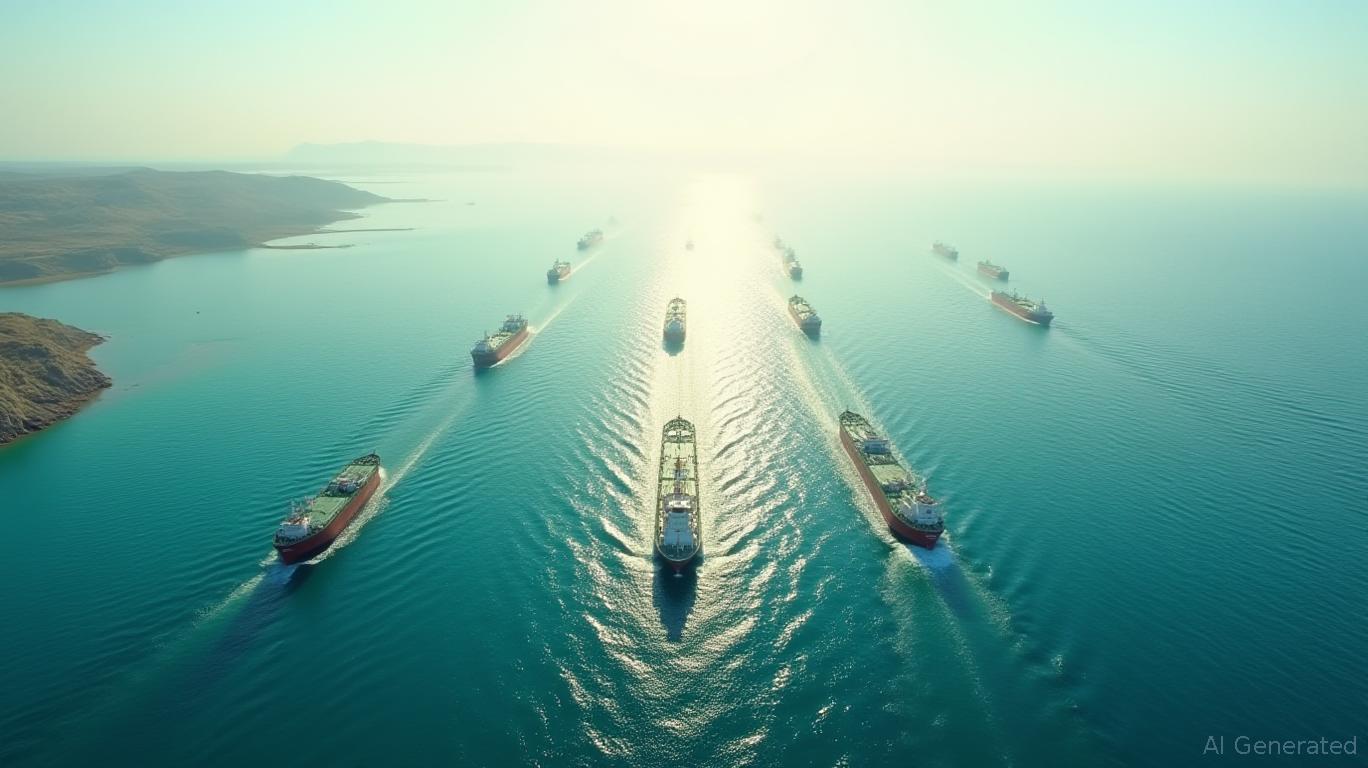
The Strait of Hormuz functions as the carotid artery of the global energy market, facilitating the transit of approximately 21 million barrels of oil per day—roughly 21% of global petroleum liquids consumption. For China, the world’s largest importer of crude oil, this maritime chokepoint represents a singular point of failure in its national security architecture. When Beijing exerts diplomatic pressure on Tehran to ensure the "reopening" or stabilization of this corridor, it is not merely requesting a favor; it is managing a critical supply chain disruption that threatens its industrial baseline. The intersection of Chinese economic necessity and Iranian regional leverage creates a volatile dependency that redefines Middle Eastern power dynamics.
The Strategic Fragility of the Malacca-Hormuz Nexus
China’s energy strategy is governed by the "Malacca Dilemma," but the Hormuz chokepoint is an even more immediate tactical constraint. While Malacca is a transit corridor, Hormuz is the origin point. A closure of the Strait does not just necessitate longer shipping routes; it creates a hard physical ceiling on available global supply.
The mechanics of this dependency are quantified by three primary variables:
- Import Concentration: Over 50% of China’s crude oil imports originate from the Persian Gulf.
- Infrastructure Rigidity: China’s refinery configurations are heavily optimized for the "sour" crudes typical of Middle Eastern producers. Switching to alternative grades from West Africa or Latin America incurs significant "retooling" costs and yields lower efficiency.
- The Strategic Petroleum Reserve (SPR) Buffer: While China’s SPR is estimated to hold between 70 to 90 days of net imports, this volume is a defensive cushion, not an operational solution for a sustained blockade.
The Triad of Iranian Leverage
Iran’s ability to influence the Strait is not based on conventional naval parity with the West, but on a strategy of "Asymmetric Denial." This framework utilizes three distinct operational layers:
- Geographic Advantage: At its narrowest point, the shipping lanes in the Strait are only two miles wide. Iran’s coastline provides high-ground advantages for anti-ship cruise missiles (ASCMs).
- The Swarm Logic: Use of Fast Attack Craft (FAC) and Fast Inshore Attack Craft (FIAC) allows Iran to saturate the defensive systems of larger, more sophisticated vessels.
- Sub-surface Interference: The deployment of smart mines and midget submarines in the shallow, noisy waters of the Strait creates an environment where the cost of clearing a path exceeds the immediate value of the cargo being protected.
Beijing’s directive to Tehran highlights a shift from passive observation to active risk mitigation. Iran uses the threat of closure as a "security dividend"—a way to force its largest trading partner to provide diplomatic cover at the UN Security Council or to circumvent unilateral sanctions.
The Economic Cost Function of Maritime Instability
When the Strait is threatened, the global market reacts through a predictable sequence of escalatory costs. We define this as the Hormuz Risk Premium.
Phase 1: Insurance Escalation
The first impact is not the price of oil itself, but the cost of protecting it. War Risk Insurance premiums for tankers transiting the Gulf can spike by 1,000% within 48 hours of a kinetic incident. For a Very Large Crude Carrier (VLCC), this can add upwards of $200,000 to a single voyage.
Phase 2: Freight Contraction
Ship owners begin to "blank" (cancel) sailings or divert vessels to less risky regions. This reduces the global supply of available tonnage, driving up Worldscale (WS) rates globally, even for routes that do not pass through the Middle East.
Phase 3: The Backwardation Trap
As physical supply fears mount, the futures market enters "backwardation," where current prices are higher than future prices. This discourages stockholding, further tightening the spot market and creating a feedback loop of price volatility that hit's China’s manufacturing sector through increased input costs for petrochemicals and transport.
Beijing’s Structural Response: Beyond Diplomacy
China is not relying solely on Iranian cooperation. It is actively building a "Hormuz Bypass" through a multi-modal infrastructure strategy. This is not a project of convenience, but an existential requirement.
The Gwadar-Kashgar Pipeline (CPEC)
The China-Pakistan Economic Corridor is designed to move oil from the Arabian Sea directly into Xinjiang via pipeline. This would bypass both Hormuz and Malacca. However, the technical challenges are immense: the pipeline must traverse the Karakoram Range at altitudes exceeding 4,000 meters, requiring massive pumping stations and heating elements for the crude.
The Petro-Yuan and Sanction Immunization
By denominating oil trades in Yuan (RMB), China attempts to decouple its energy procurement from the USD-based SWIFT system. This reduces the impact of secondary sanctions that might be triggered if Iran uses the Strait as a weapon. If the currency of the trade is insulated, the physical flow becomes the only remaining bottleneck.
The Friction of Interests: Why Tehran Hesitates
The assumption that Iran will simply obey Chinese requests ignores the "Maximum Pressure" counter-logic. For Tehran, the Strait is its only "Great Power" lever. If Iran reopens the Strait without extracting concessions—such as the lifting of sanctions or the guarantee of security investments—it loses its primary bargaining chip against the West.
This creates a structural friction point in the China-Iran 25-year Cooperation Program. China demands Stability for Growth, while Iran requires Instability for Leverage.
The second limitation of this relationship is Russia’s role. As a fellow energy exporter, Russia benefits from the higher oil prices caused by Hormuz tension. This places Beijing in a complex position where its two most significant strategic partners have misaligned incentives regarding the Strait’s operational status.
Operational Indicators of Escalation
To assess the likelihood of a sustained closure versus a temporary disruption, analysts must monitor three specific indicators:
- IRGC Naval Exercises: The frequency and location of Islamic Revolutionary Guard Corps naval drills in the eastern approaches to the Strait (the Gulf of Oman) serve as a leading indicator of intent.
- Tanker Tracking and "Dark" Transits: An increase in vessels turning off their Automatic Identification System (AIS) transponders suggests that the risk of seizure or attack has reached a threshold where anonymity is the only remaining defense.
- The Spread Between Brent and Dubai Crudes: Since China is the primary buyer of Dubai/Oman grades, a widening spread between these and the Brent benchmark indicates that the market is pricing in a regionalized supply shock.
Strategic Playbook for Global Energy Managers
The geopolitical reality dictates that the Strait of Hormuz will remain a theater of managed instability. For organizations and states reliant on this corridor, the strategy must shift from "Just-in-Time" to "Just-in-Case" procurement.
Diversify refinery intake to accommodate a 20% minimum of non-Sour crude. This provides the flexibility to source from the Atlantic Basin if the Gulf is shuttered. Simultaneously, increase investment in the "Middle Corridor"—the Trans-Caspian International Transport Route—which offers a land-based alternative for energy and goods that avoids the primary maritime chokepoints of the Southern Rim.
The long-term play for Beijing is the electrification of its transport fleet, effectively "onshoring" its energy security. Until that transition is complete, China will remain a captive of the 21-mile-wide passage between Iran and Oman, forced to play the role of a reluctant mediator in a region where its interests are purely economic and its partners are fundamentally volatile.