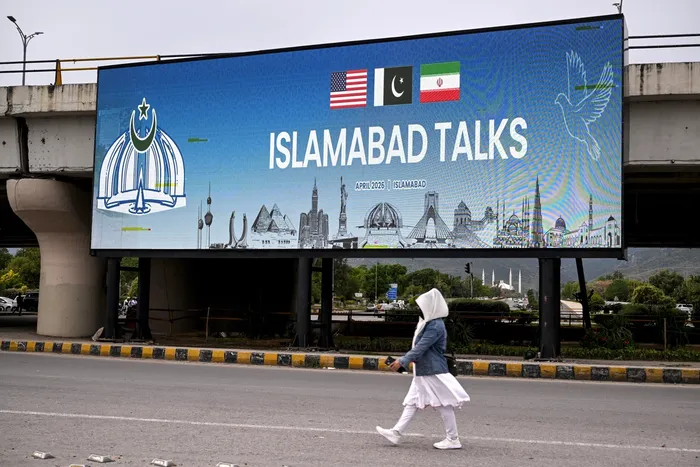
The shift in executive rhetoric regarding a potential diplomatic breakthrough with Iran represents a pivot from maximum pressure toward a calculated arbitrage of geopolitical risk. When a sitting administration transitions from aggressive containment to signaling the "prospects of a deal," the change is rarely driven by a fundamental shift in ideological alignment; instead, it is a response to a recalibrated cost-benefit analysis within three primary domains: regional security equilibrium, global energy market volatility, and internal political leverage.
The mechanism at play is a tactical de-escalation intended to extract concessions while the target state remains under the maximum weight of economic isolation. By signaling openness to a "deal," the United States introduces a psychological decoupling between the Iranian leadership and its internal hardline factions, effectively testing the elasticity of Tehran’s resistance.
The Tri-Pillar Framework of Diplomatic Signaling
To understand the sudden optimism surrounding these negotiations, one must view the situation through a structural lens. The viability of any "deal" rests on three distinct pillars of leverage that dictate the boundaries of the discussion.
- The Economic Compression Variable: The baseline for any negotiation is the current state of the Iranian economy under the sanctions regime. The efficacy of sanctions is not binary; it operates on a curve of diminishing returns. Once the target state has reached a state of maximum adaptation, the leverage provided by additional sanctions decreases. A "deal" becomes attractive when the US realizes it has reached the peak of this curve and seeks to trade the "lifting" of those sanctions for tangible security concessions before the target state finds permanent bypass mechanisms (e.g., increased trade with the BRICS+ bloc).
- The Proxy Deterrence Calculus: The United States views Iranian influence through a network of regional proxies. A deal is not merely about nuclear centrifuges; it is an attempt to price out the cost of regional instability. If the US can trade financial liquidity for a reduction in proxy activity, it effectively offshores the cost of regional stability back to Tehran.
- The Nuclear Breakout Threshold: The most immediate constraint is the "breakout time"—the duration required to produce enough weapons-grade uranium for a single device. When this time shrinks to a critical threshold, the risk of a kinetic military conflict increases exponentially. Diplomatic "optimism" serves as a pressure valve to freeze this clock without initiating an actual hot war.
The Logistics of the "Grand Bargain" vs. Incrementalism
The primary strategic friction in these negotiations lies in the choice between a comprehensive "Grand Bargain" and a series of "Incremental Steps." History suggests that the former is prone to systemic collapse because it requires total alignment on disparate issues (human rights, ballistic missiles, nuclear energy, and regional proxies) simultaneously.
The current strategy appears to favor a Transactional Incrementalism. This approach prioritizes immediate, high-impact variables over long-term ideological shifts. By focusing on "looking really good" in the short term, the administration is likely targeting a limited freeze-for-freeze model:
- Action: Iran limits its enrichment levels to 60% or lower and grants expanded IAEA access.
- Reaction: The US grants limited waivers for Iranian oil exports or releases frozen assets in third-party bank accounts.
This creates a Feedback Loop of Compliance. Each successful transaction builds a narrow corridor of trust, but more importantly, it creates a "sunk cost" for the Iranian leadership. Once they begin receiving financial relief, the domestic political cost of returning to a state of total isolation becomes a deterrent against breaking the agreement.
Market Volatility and the Energy Premium
A critical factor often ignored in standard political reporting is the Geopolitical Risk Premium embedded in global oil prices. The mere suggestion of a deal with Iran exerts downward pressure on Brent Crude. For a US administration, this is a potent tool for managing domestic inflation.
The Strait of Hormuz acts as a global economic choke point. Iran’s ability to disrupt this passage represents a "veto power" over global energy stability. By moving toward a deal, the US effectively reduces the "fear index" in the energy markets. This is not a side effect; it is a primary objective. The quantification of this effect can be seen in the immediate reaction of oil futures to executive statements. A 5% to 10% reduction in the geopolitical premium of oil has a direct, measurable impact on US consumer sentiment and industrial input costs.
The Bottleneck of Domestic Verification
The structural weakness of any proposed deal is the verification bottleneck. The US political system requires a high degree of transparency and permanence that the Iranian political system, built on opaque power structures like the IRGC (Islamic Revolutionary Guard Corps), struggle to provide.
This creates a Credibility Gap.
- The US Perspective: A deal must be "treaty-level" or involve legislative backing to survive a change in administration.
- The Iranian Perspective: The 2018 withdrawal from the JCPOA proved that US commitments are subject to the four-year electoral cycle.
Because of this gap, any "good prospects" for a deal are likely rooted in executive-level "Understandings" rather than formal treaties. These "non-paper" agreements avoid the need for Congressional approval but remain fragile because they lack the force of law. They are, in essence, a high-stakes rental of peace rather than a permanent purchase.
The Cost Function of Non-Agreement
If the prospects of a deal are "looking really good," the unspoken corollary is that the cost of not reaching a deal has become unacceptably high. The cost function for the US includes:
- Direct Military Expenditure: The deployment of carrier strike groups and missile defense batteries to the Middle East.
- Opportunity Cost: The inability to "Pivot to Asia" while mired in Persian Gulf security dilemmas.
- Intelligence Degradation: Without a deal and its accompanying inspections, the "fog of war" regarding Iran’s nuclear progress thickens, increasing the risk of a miscalculation.
For Iran, the cost function is primarily Social and Regime Stability. Prolonged economic strangulation risks internal unrest that the state may eventually find unmanageable. Thus, both parties are currently incentivized to find a "Middle Path" that allows for a "Win-Win" narrative for domestic consumption while maintaining their core strategic red lines.
Structural Recommendation for Stakeholders
In an environment where diplomatic signals are used as market-moving tools, observers and analysts should prioritize the following indicators over executive rhetoric:
- Monitoring IAEA Enrichment Reports: Actual physical changes in enrichment levels are the only valid metric of Iranian intent. Statements are noise; kilograms of U-235 are data.
- Tracking Oil Tanker Movements: An informal "blind eye" policy toward Iranian exports is the most reliable sign of a "silent deal" in progress. If Iranian barrels are hitting the market without US seizure, a de facto agreement is already operational.
- Evaluating Third-Party Asset Transfers: The movement of funds through intermediaries in Qatar or Oman serves as the functional clearinghouse for any diplomatic progress.
The current "optimism" is a strategic positioning tactic designed to freeze the status quo. The primary play for the US is to maintain a state of "perpetual negotiation"—a condition where the threat of escalation is neutralized by the hope of a deal, allowing for the management of regional tensions without the political risk of a formal treaty. This state of "Permatense" is the most likely equilibrium for the foreseeable future.