Sri Lanka is currently walking a tightrope over a canyon of debt, and the wind is picking up from the Gulf. While the domestic narrative focuses on IMF benchmarks and tax hikes, the island’s economic survival remains tethered to a Middle East that is increasingly volatile. Any sustained escalation of conflict in that region does not just threaten global oil prices; it strikes at the three pillars of Sri Lanka’s precarious recovery: migrant remittances, energy costs, and tea exports. If these pillars buckle, the hard-won stability of the last eighteen months could vanish before the next harvest.
The math of a small island economy is unforgiving. Sri Lanka imports nearly all its fuel and a significant portion of its food. When the Middle East destabilizes, the cost of shipping insurance spikes and oil prices follow a predictable upward trajectory. For a nation with limited foreign exchange reserves, a $10 increase in the price of a barrel of oil is not a statistic. It is a potential blackout. It is a transport strike. It is the difference between a surplus and a deficit that the central bank cannot afford to fund.
The Remittance Engine Under Pressure
Over 1.5 million Sri Lankans work abroad, and the vast majority are concentrated in the Middle East. These workers are the unsung architects of the nation’s recent stabilization. In 2023 and early 2024, the steady flow of US dollars sent home by housemaids, construction workers, and engineers in Saudi Arabia, the UAE, and Qatar provided the liquidity necessary to end the fuel queues of 2022.
If a regional conflict expands, the threat is twofold. First, the physical safety of these workers becomes a primary concern, potentially forcing mass repatriations that the Sri Lankan state is ill-equipped to handle. Second, the economic slowdown within host nations could lead to job losses or wage freezes. Unlike a domestic recession, a "remittance recession" is impossible to manage with local monetary policy. You cannot print the dollars that aren't coming across the border.
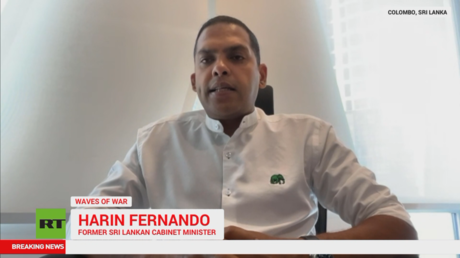
The dependency is absolute. When the Colombo government calculates its ability to repay restructured debt, it assumes a consistent level of private transfers. If those transfers drop by even 15%, the "recovery" narrative collapses. The former administration’s warnings about being at "great risk" are not mere political posturing; they are a recognition that the country has no margin for error.
The Tea Trade and the Sanctions Trap
Sri Lanka’s export economy is dangerously concentrated. "Ceylon Tea" remains a global benchmark, but its biggest buyers are often the very countries most affected by Middle Eastern geopolitical shifts. Iran, Iraq, and Turkey have historically been massive markets for Sri Lankan tea.
Trade with these nations is already a logistical nightmare due to international banking sanctions and shipping disruptions in the Red Sea. When Houthi rebels target shipping lanes, the "freight on board" costs for Sri Lankan exporters skyrocket. Small-scale tea factory owners in the central highlands feel the impact of a drone strike in the Bab el-Mandeb strait within weeks. They see it in the reduced orders and the rising cost of fertilizers, which are often petroleum-based byproducts.
The Energy Vulnerability
Energy security in Sri Lanka is an oxymoron. The country’s transition to renewables is moving at a snail's pace, leaving the Ceylon Electricity Board (CEB) and the Ceylon Petroleum Corporation (CPC) at the mercy of global spot prices.
When the Middle East is in turmoil, the risk premium on oil shipments to South Asia rises. Sri Lanka often buys on credit or through short-term arrangements that are highly sensitive to market volatility. A sudden spike in procurement costs forces the government into an impossible choice: raise electricity tariffs and risk a popular uprising, or subsidize the cost and blow a hole in the IMF-mandated fiscal targets. Neither option is sustainable.
The Hidden Cost of Maritime Rerouting
The geography that makes Sri Lanka a potential maritime hub also makes it a victim of Red Sea instability. As shipping giants like Maersk and MSC reroute vessels around the Cape of Good Hope to avoid conflict zones, the traffic through the Port of Colombo changes. While some might argue that diverted ships could stop in Colombo for transshipment, the reality is more grim.
Rerouting adds ten to fourteen days to transit times. This delays the arrival of essential raw materials for Sri Lanka’s garment industry—the nation’s largest industrial export. Modern supply chains operate on "just-in-time" delivery. A two-week delay in fabric arriving from East Asia or chemicals from Europe means missed deadlines for Western retailers. In the hyper-competitive world of fast fashion, a missed deadline often means a canceled contract.
Tourism and the Perception of Safety
Tourism was supposed to be the "golden goose" for 2024 and 2025. The numbers were trending upward, with arrivals from Russia, India, and Europe reaching pre-crisis levels. However, tourism is a coward’s industry; it flees at the first sign of regional instability.
While Sri Lanka is geographically distant from the Levant, travelers often view "the East" as a monolith. More importantly, the rise in aviation fuel prices—a direct result of Middle East tension—leads to more expensive airfares. If a flight from London or Berlin to Colombo becomes 20% more expensive due to fuel surcharges and longer flight paths to avoid restricted airspace, the casual tourist chooses Thailand or the Caribbean instead.
The Debt Restructuring Gamble
Everything comes back to the debt. Sri Lanka is currently finalizing the details of its agreement with international bondholders and bilateral creditors like China and India. These agreements are built on economic projections that assume "normal" global conditions.
- Growth Projections: The IMF assumes a modest but steady GDP growth.
- Currency Stability: The Rupee is expected to remain within a specific band.
- Reserve Accumulation: The central bank must continue to buy dollars to build a cushion.
A Middle East crisis acts as a "black swan" event that renders these spreadsheets useless. If the cost of living surges due to imported inflation, the government will face immense pressure to break its promises to the IMF to provide relief to a starving population. If the government breaks its promises, the next tranche of funding is withheld. If the funding is withheld, the country defaults again.
This is the cycle that keeps central bankers in Colombo awake at night. They are managing a recovery that is statistically real but practically fragile. The "great risk" isn't just a headline; it is the structural reality of a post-default nation that hasn't yet diversified its economy enough to withstand a global shock.
Strategic Diversification or Bust
The solution isn't found in more loans. It is found in a radical shift in how the country earns and spends its foreign exchange. Sri Lanka must move away from being a labor-exporting nation and toward a value-added export economy.
Relying on the physical safety of the Middle East to keep the local economy afloat is a failed strategy. The government needs to incentivize "knowledge exports"—software, legal services, and accounting—which can be delivered via fiber optic cables regardless of whether the Suez Canal is open or closed. Furthermore, the push for food sovereignty isn't a nationalist slogan; it's a macroeconomic necessity. Every ton of rice or dhal grown locally is a dollar that doesn't have to be found in the volatile global market.
The island cannot move its coordinates on the map. It will always be positioned in the path of Indian Ocean trade winds and the geopolitical fallout of the Middle East. Success will not be measured by how well the country navigates the current crisis, but by how quickly it builds the buffers to ignore the next one.
The immediate priority must be the aggressive expansion of the export basket beyond tea and garments. If the Middle East remains the primary destination for the nation's labor and the primary source of its energy, Sri Lanka will remain a hostage to a theater of war it cannot control.
Demand that the policy focus shifts from simply "meeting targets" to "building resilience."