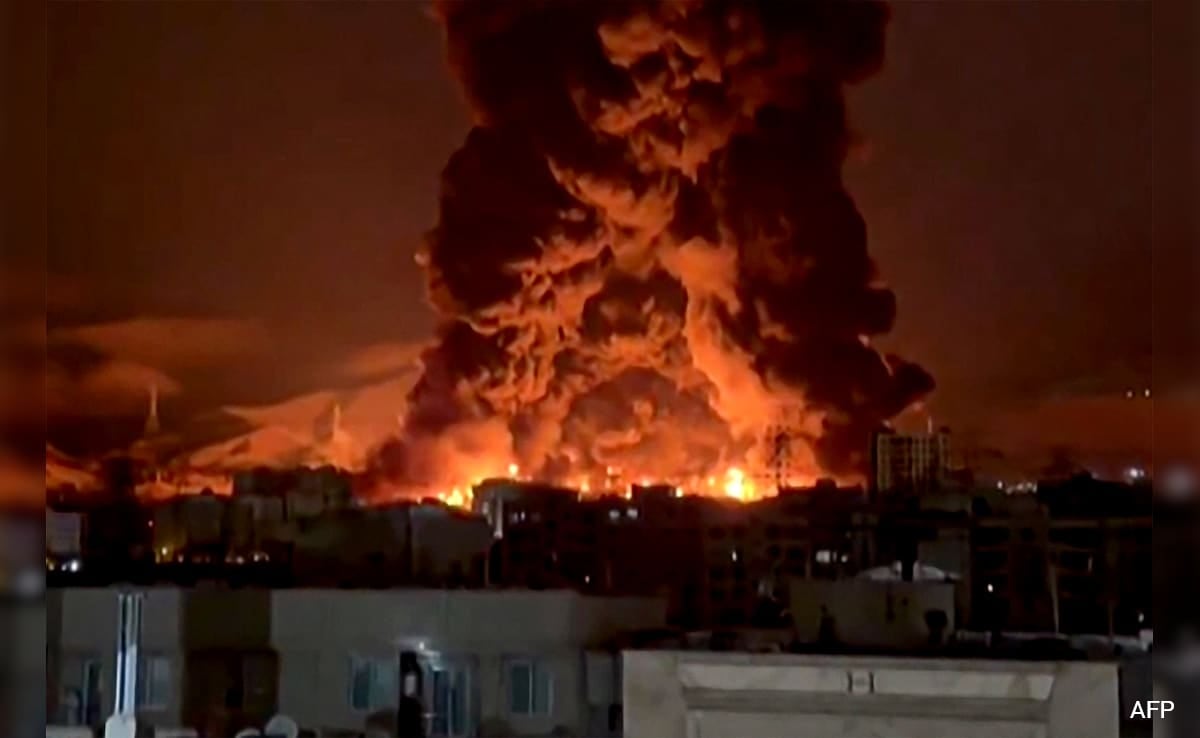
The International Monetary Fund has signaled a warning that echoes through the halls of every central bank: regional conflict in the Middle East is no longer a localized humanitarian tragedy but a systemic threat to the global recovery. While the headline figures suggest a "soft landing" for the United States and Europe, this stability rests on a knife's edge. A sustained escalation in the Levant and the Red Sea threatens to reignite inflation just as interest rates were set to fall, potentially forcing a choice between economic stagnation and a renewed cost-of-living crisis.
The Crude Reality of Energy Contagion
Energy markets are the primary transmission mechanism for geopolitical shocks. For decades, the global economy has functioned on the assumption of fluid trade through the Strait of Hormuz and the Suez Canal. When conflict flares, the immediate reaction is a "war premium" on oil prices. But the current situation is more complex than a simple price spike at the pump.
We are seeing a fundamental shift in how risk is priced. Global supply chains, already weary from the disruptions of the early 2020s, are being forced into costly workarounds. When tankers avoid the Red Sea to bypass missile fire, they add thousands of miles and weeks of travel time around the Cape of Good Hope. This isn't just about the price of a barrel of Brent; it is about the compounding costs of insurance, labor, and fuel for the ships that carry everything from grain to semiconductors.
These costs do not vanish. They are baked into the final price of consumer goods. If the Middle East remains a theater of active combat, the "last mile" of the fight against inflation becomes an impossible climb. Central banks, which have spent two years aggressively raising rates to cool the economy, may find their tools useless against supply-side shocks that they cannot control.
The Hidden Cost of Maritime Rerouting
Shipping is the silent engine of the world. It is also the most vulnerable. The diversion of traffic away from the Suez Canal has effectively reduced the global shipping capacity by roughly 10% to 15% on key routes. This is a phantom tax on global trade.
Consider the logistics. A vessel traveling from Singapore to Rotterdam via the Suez Canal takes approximately 26 days. Re-routing around Africa extends that journey to 36 days. That ten-day delay requires more ships to maintain the same frequency of delivery. When the supply of available ships drops, freight rates skyrocket. We saw this during the pandemic, and we are seeing the early symptoms of it again.
The IMF’s concern isn't just that prices go up, but that they stay up. High freight costs are "sticky." Even if a ceasefire were signed tomorrow, the logistical backlog and the recalibration of insurance premiums would take months to normalize. For developing nations that rely on food and fertilizer imports through these corridors, the impact is not a matter of a few cents on a balance sheet—it is a matter of national stability.
Why This Time Is Different
In previous decades, the United States acted as a swing producer or a security guarantor that could dampen the effects of Middle Eastern volatility. That dynamic has fractured. The rise of a multi-polar energy market means that disruptions in the Persian Gulf now ripple more violently toward emerging markets in Asia and manufacturing hubs in Europe.
The Debt Trap Escalation
Many of the countries closest to the conflict are already drowning in sovereign debt. Egypt, Jordan, and Lebanon are facing a collapse in tourism revenue—a vital source of foreign exchange. When investors see a region in turmoil, they pull capital out of "emerging markets" and flee to the safety of the US Dollar.
This flight to quality strengthens the dollar, making it even more expensive for these debt-laden nations to pay back loans denominated in greenbacks. It is a vicious cycle. Economic misery in the Middle East creates a vacuum that is often filled by further radicalization, which in turn fuels more conflict. The IMF is effectively warning that we are watching a geopolitical feedback loop that could swallow the fiscal progress made since 2021.
The Interest Rate Deadlock
The Federal Reserve and the European Central Bank are currently in a delicate dance. They want to lower rates to prevent a recession, but they cannot do so if energy prices are volatile. A major strike on oil infrastructure or a closure of the Strait of Hormuz would send oil toward $150 a barrel.
In that scenario, central banks would be forced to keep interest rates high to suppress the resulting inflation, even as the economy enters a contraction. This is the definition of stagflation. It is the one scenario that keeps every treasury secretary awake at night.
The Fragility of the Soft Landing
Economists have been cheering the "soft landing"—the idea that we could beat inflation without a massive spike in unemployment. That narrative assumes a peaceful, or at least predictable, world.
War is never predictable.
The current conflict is testing the resilience of the "Just-in-Time" manufacturing model. If a manufacturer in Germany cannot get components from Asia because they are stuck on a boat circling the African continent, production stops. When production stops, supply drops. When supply drops, prices rise.
This isn't a theory; we are seeing it in the automotive and electronics sectors. Companies are being forced to hold more inventory, which ties up capital and reduces efficiency. This shift from "Just-in-Time" to "Just-in-Case" is a structural change that permanently raises the floor for global inflation.
The Geopolitical Realignment of Trade
We are witnessing the end of the era of unencumbered globalization. The Middle East crisis is accelerating a trend toward "friend-shoring" or "near-shoring." Countries are no longer looking for the cheapest supplier; they are looking for the safest one.
This sounds prudent, but it is expensive. Building a factory in Mexico or Eastern Europe is often more costly than building one in Southeast Asia. Moving energy dependencies away from volatile regions requires massive investment in renewables or nuclear power—investments that take decades, not months, to pay off.
In the interim, the global economy is caught in a transition phase where it has lost the old efficiencies but hasn't yet built the new ones. This makes the system uniquely sensitive to the kind of shocks coming out of the Middle East right now.
The Bottom Line for Investors and Households
For the average person, this geopolitical tension manifests as a "stealth tax." You see it in the utility bill that doesn't go down as expected, or the grocery bill that continues to creep upward despite "falling" inflation numbers.
For the investor, it means that the era of low-volatility gains is over. Markets are now hyper-sensitive to every diplomatic cable and every drone strike. The risk is not just a market correction; it is a fundamental re-pricing of how the world does business.
The IMF’s warning should be taken as a directive to prepare for a period of prolonged friction. The global economy is no longer a well-oiled machine; it is a series of interconnected, vibrating parts, and the Middle East is currently the source of a massive, destabilizing tremor.
Governments must find a way to decouple their economic survival from the immediate outcomes of regional wars. Until that happens, the world’s prosperity remains a hostage to the next missile launch.
Stop looking for a return to the "normal" of 2019. It is gone. The new reality is one where geography matters as much as geometry, and where a single blocked waterway can rewrite the fiscal policy of a superpower.