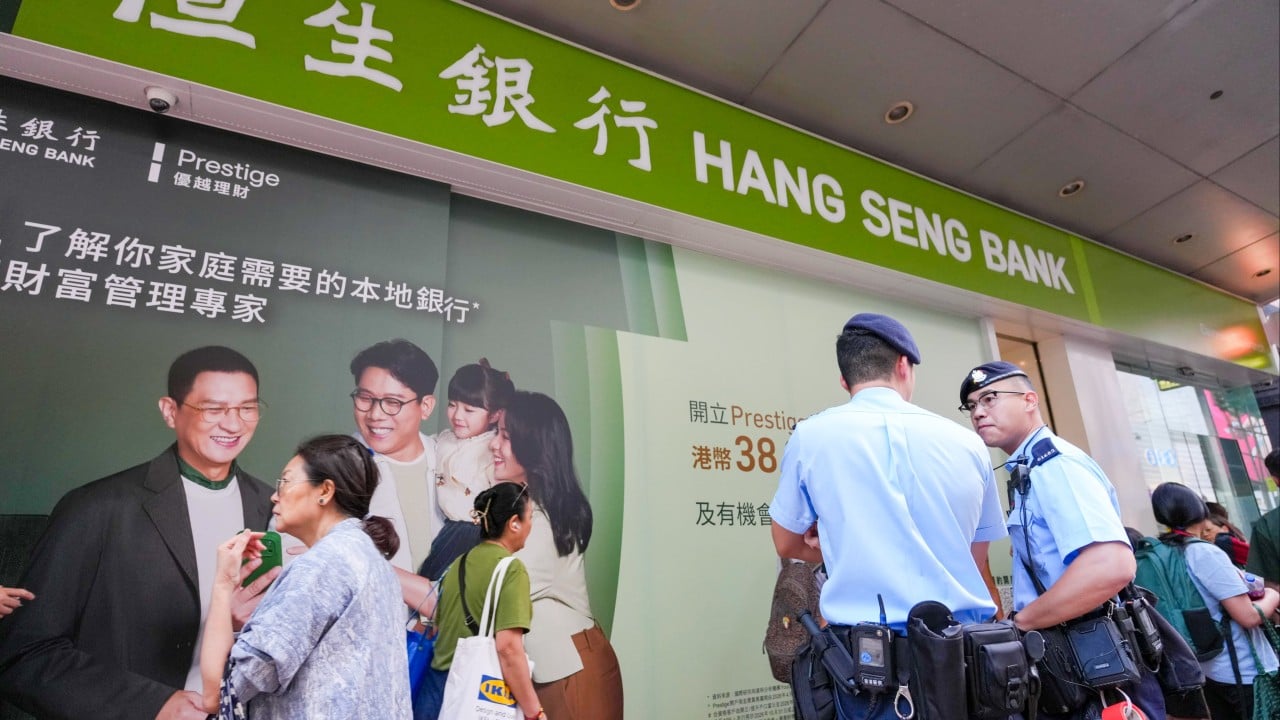
The air in Causeway Bay usually tastes of exhaust fumes, expensive perfume, and the sweet, roasted scent of egg waffles. It is a sensory overload, a place where the thrum of millions of footsteps creates a literal vibration in the pavement. On a standard afternoon, the intersection near Yee Wo Street is a river of humanity. Office workers in crisp linens brush past tourists clutching shopping bags from SOGO, all of them moving with that frantic, rhythmic Hong Kong hustle.
Nobody expects the silence. Expanding on this topic, you can find more in: The Erasure of the Voting Rights Act and the New Architecture of American Power.
But the silence came. It started as a ripple near the entrance of a bank, a sudden expansion of personal space that shouldn't exist in one of the most densely populated spots on Earth. Then came the shout. Not a scream—a command.
In that moment, the mundane reality of a Tuesday afternoon fractured. Analysts at USA Today have also weighed in on this matter.
The Weight of the Plastic Grip
Imagine, for a second, the internal monologue of a man standing at a teller window with a weapon in his hand. We often view these events through the graininess of a CCTV feed, detached and clinical. We see a "suspect." We see "police intervention." But the reality is a visceral, sweaty palm gripping a handle.
The man who walked into that Causeway Bay branch wasn't a cinematic mastermind. He wasn't part of a coordinated syndicate. He was a singular point of desperation in a city that can sometimes feel like a giant, uncaring machine. He brandished what appeared to be a pistol.
Fear is a chemical reaction. For the bank staff, the world narrowed down to the black circle of a barrel. For the customers, the mundane task of updating a passbook or depositing a check suddenly became a life-defining event. Time didn't just slow down; it curdled.
The suspect demanded money. It is the oldest story in the book, yet it felt jarringly out of place in a neighborhood defined by high-end retail and digital transactions. In a world of cryptocurrency and contactless payments, there is something tragically archaic about a man trying to physically carry away paper notes under the threat of violence. It was a collision of the 19th-century outlaw archetype and the 21st-century surveillance state.
The Invisible Net
What the man with the gun likely didn't account for was the sheer speed of the invisible net. Hong Kong is not just a city of people; it is a city of eyes.
The response was not a slow build. It was a snap.
While the suspect was still focused on the plexiglass barrier between him and the life-changing cash he craved, the machinery of the state was already grinding him down. Silence outside the bank was replaced by the low, urgent throb of sirens. But more effective than the sirens were the plainclothes officers—the individuals who blend into the Causeway Bay crowd so perfectly that they are effectively ghosts.
They don't wear capes. They wear sneakers and carry backpacks.
When the police intercepted him, it wasn't a high-octane shootout from a John Woo film. It was a clinical, rapid-response suppression. The "pistol," it was later revealed, was an imitation. A toy. A piece of plastic designed to mimic the weight of a soul-taker.
Consider the psychology of the imitation. It is a bluff against the universe. It suggests a person who wants the power of a predator without necessarily possessing the hardware. Yet, in the eyes of the law and the hearts of the victims, the terror is identical. A fake gun creates real trauma.
The Cost of a Moment
The suspect was tackled, cuffed, and neutralized before he could even exit the shadow of the bank’s awning. The entire episode lasted less than a few minutes.
But the "facts" of the police report—the time of arrest, the recovery of the imitation firearm, the lack of injuries—fail to capture the lingering vibration in the air. For an hour afterward, the street didn't return to normal. People stood paralyzed. They looked at the bank entrance as if it were a portal to another dimension.
This is the hidden cost of urban violence. It breaks the social contract of the sidewalk. We walk through Causeway Bay under the assumption that we are safe in our anonymity, protected by the sheer volume of the crowd. When that safety is punctured, even by a man with a plastic toy, the illusion of the "orderly city" flickers.
The suspect now faces the crushing weight of the legal system. He is no longer a man with a grievance or a debt; he is a case number. He will be analyzed by psychiatrists and interrogated by detectives. They will look for the "why." Was it gambling debt? A family crisis? A mental health spiral?
The city, meanwhile, has a short memory.
By the time the sun began to set behind the skyscrapers of Wan Chai, the police tape was gone. The crowds returned, flowing over the spot where a man had just risked his entire future for a bag of currency that was never his to take. The neon signs flickered to life, casting red and blue glows onto the pavement, mirroring the lights of the patrol cars that had long since departed.
We like to think we are protagonists in our own grand dramas. But in the heart of the city, we are often just background characters in someone else’s worst day. We are the witnesses, the passers-by, the people who almost got caught in the crossfire of a desperate man's final roll of the dice.
The bank doors are back on their hinges. The tellers are behind their glass. The money is still in the vault. And the man who tried to take it is sitting in a room with no windows, wondering how forty seconds of madness managed to erase the rest of his life.



