A young woman sits in a small apartment in Saint Petersburg, her face illuminated only by the blue light of a smartphone. Her thumb hovers over an icon. She is waiting for a message that may never arrive, or worse, one that has been intercepted by a silent observer she will never meet. This isn't a scene from a Cold War thriller. It is Tuesday night in modern Russia.
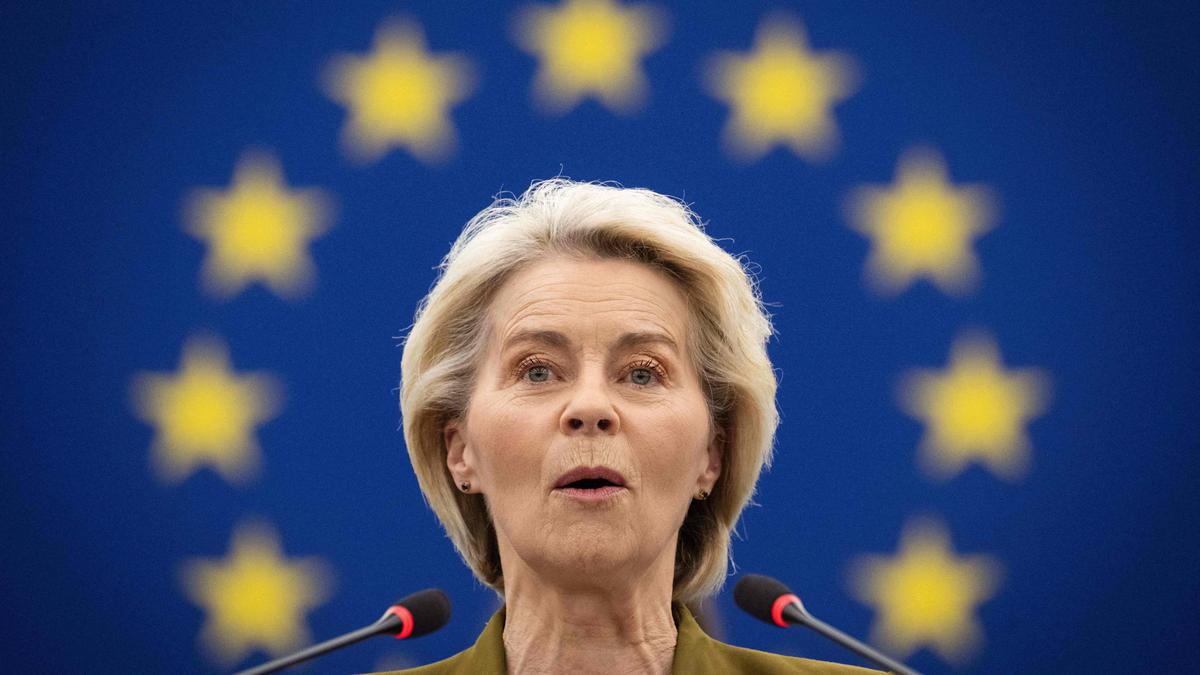
The air around her feels heavy, not with smog, but with a growing, digital silence. Across the border in Brussels, European Commission President Ursula von der Leyen watches the same phenomenon through a different lens. She calls it a digital Iron Curtain. It is a striking phrase, one that evokes images of concrete walls and barbed wire, but today’s barriers aren’t made of stone. They are made of deep-packet inspection, throttled bandwidth, and the systematic erasure of the open internet.
The Kremlin is not just winning a war of tanks and artillery. It is winning a war of perception by making the outside world vanish.
The Architecture of the Void
For decades, the internet was the Great Connector. We believed—perhaps naively—that bits and bytes were immune to the whims of dictators. We thought information was like water, always finding a way through the smallest crack. But the Russian government has spent years building a sophisticated plumbing system designed to shut off the valves at a moment’s notice.
They call it the Sovereign Internet Law. On paper, it sounds like a boring piece of technical legislation meant to protect the nation’s infrastructure from foreign cyberattacks. In practice, it is a kill switch.
Imagine trying to navigate a city where every street sign is changed overnight. That is what happens when the state seizes control of Domain Name Systems (DNS). Suddenly, a search for an independent news outlet leads to a dead end. A video platform that once hosted a million different perspectives now only shows a spinning circle of doom. The goal isn't just to block content; it's to exhaust the user. If a page takes three minutes to load, most people give up. They turn back to the state-approved platforms where the videos are crisp, the loading times are instant, and the narrative is carefully curated.
This is the "throttling" of reality. By slowing down the truth, the state makes the lie more convenient.
The Disappearing Mirror
Think about your digital footprint. It is a mirror of your soul. Your search history knows your fears. Your private messages know your secrets. Your location data knows who you love and where you spend your time.
When the Kremlin forces international tech giants to move their servers onto Russian soil, they aren't just looking for tax revenue. They are seizing the mirror. They want the keys to the data centers so they can look into the lives of their citizens without a warrant, without an explanation, and without any way for the victim to fight back.
The pressure is relentless. Companies like Google and Apple, once the champions of the open web, find themselves in an impossible vice. They are told to remove apps that help citizens organize or vote. If they refuse, their local employees face the very real threat of prison. This is the human cost of the digital Iron Curtain. It turns engineers into gatekeepers and corporations into reluctant extensions of the state’s security apparatus.
The Ghost in the Machine
Consider the hypothetical case of Aleksei, a university student in Yekaterinburg. Aleksei grew up with the world at his fingertips. He learned English through YouTube, followed NASA’s Mars rover on Twitter, and debated history with strangers on Reddit. To him, the internet wasn't a "tool." It was the atmosphere he breathed.
Slowly, the oxygen is being sucked out of the room.
First, the social media platforms he used to stay in touch with friends abroad were labeled "extremist." Then, the VPNs he used to bypass the blocks started to fail, one by one, as the government’s censors got better at identifying the encrypted traffic. He finds himself trapped in a digital bubble where the only voices he can hear are those that praise the "special military operation" and decry the "decadence" of the West.
He starts to feel a strange, creeping isolation. He knows there is a world outside, but he can no longer see it. He feels like a ghost in his own country. This is the true intent of the digital Iron Curtain: to break the psychological link between the Russian people and the global community. If you can't see how others live, you stop questioning why you live the way you do.
The Silicon Shield
The European Union’s alarm isn't just about protecting Russian citizens; it's about the terrifying precedent this sets for the rest of the world. We are witnessing the splintering of the internet—the birth of the "splinternet."
If Russia succeeds in building a fully functional, isolated digital ecosystem, other authoritarian regimes will follow the blueprint. We will move from a global village to a series of digital fiefdoms, each with its own truth, its own history, and its own reality.
The Kremlin’s strategy involves more than just blocking. It involves flooding. For every piece of independent journalism that is suppressed, a thousand bot-generated conspiracy theories are unleashed. They don't need you to believe the lie. They just need you to stop believing in the truth. When the signal-to-noise ratio becomes too high, people stop listening altogether. They retreat into apathy.
Apathy is the ultimate victory for a censor.
The Price of Connection
There is a desperate irony in the fact that the very technology designed to liberate us is now being used to cage us. The algorithms that recommend your favorite music are the same ones used to identify "suspicious" behavior. The facial recognition that unlocks your phone is the same tech used to track protesters in Red Square.
The digital Iron Curtain is not a wall you can climb over. It is a fog that settles over a population, making it impossible to see where you are going or who is standing next to you. It turns neighbors into strangers and citizens into subjects.
As von der Leyen spoke in the hallowed halls of European power, she wasn't just talking about policy or trade. She was talking about the survival of the human spirit in a digital age. She was acknowledging that the battle for democracy is no longer fought just on the streets, but in the lines of code that dictate what we are allowed to know.
Back in that Saint Petersburg apartment, the young woman finally gives up. She closes her phone and stares out the window at the dark street below. The lights are on in the neighboring buildings, but she wonders how many people behind those windows are also sitting in the dark, waiting for a signal that will never come.
The curtain has fallen, and the theater is silent. The only thing left is the low hum of a server in a basement somewhere, deciding what she is allowed to dream.