On a clear day from the mountainous coast of Fujian province, you can look out across the gray-green waters of the Taiwan Strait and almost feel the weight of the opposite shore. It is fifty-nine miles. That is the distance of a morning commute for millions of Americans. It is the length of Long Island Sound.
Now, turn around and look the other way. Travel past the shipping lanes of the Pacific, past the deep trenches and the Hawaiian archipelago, all the way to the marble columns of Washington, D.C. That distance is nine thousand five hundred miles.
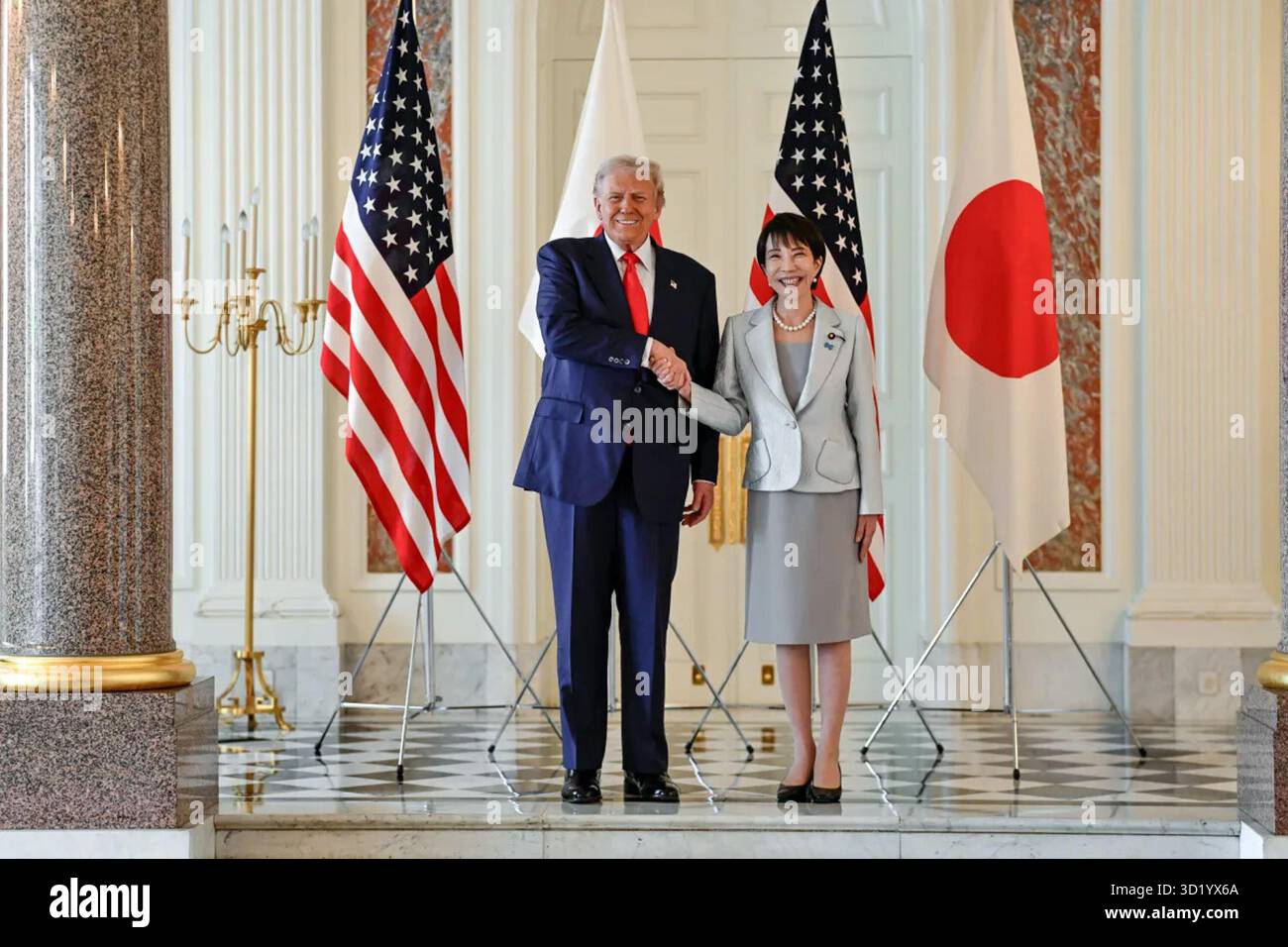
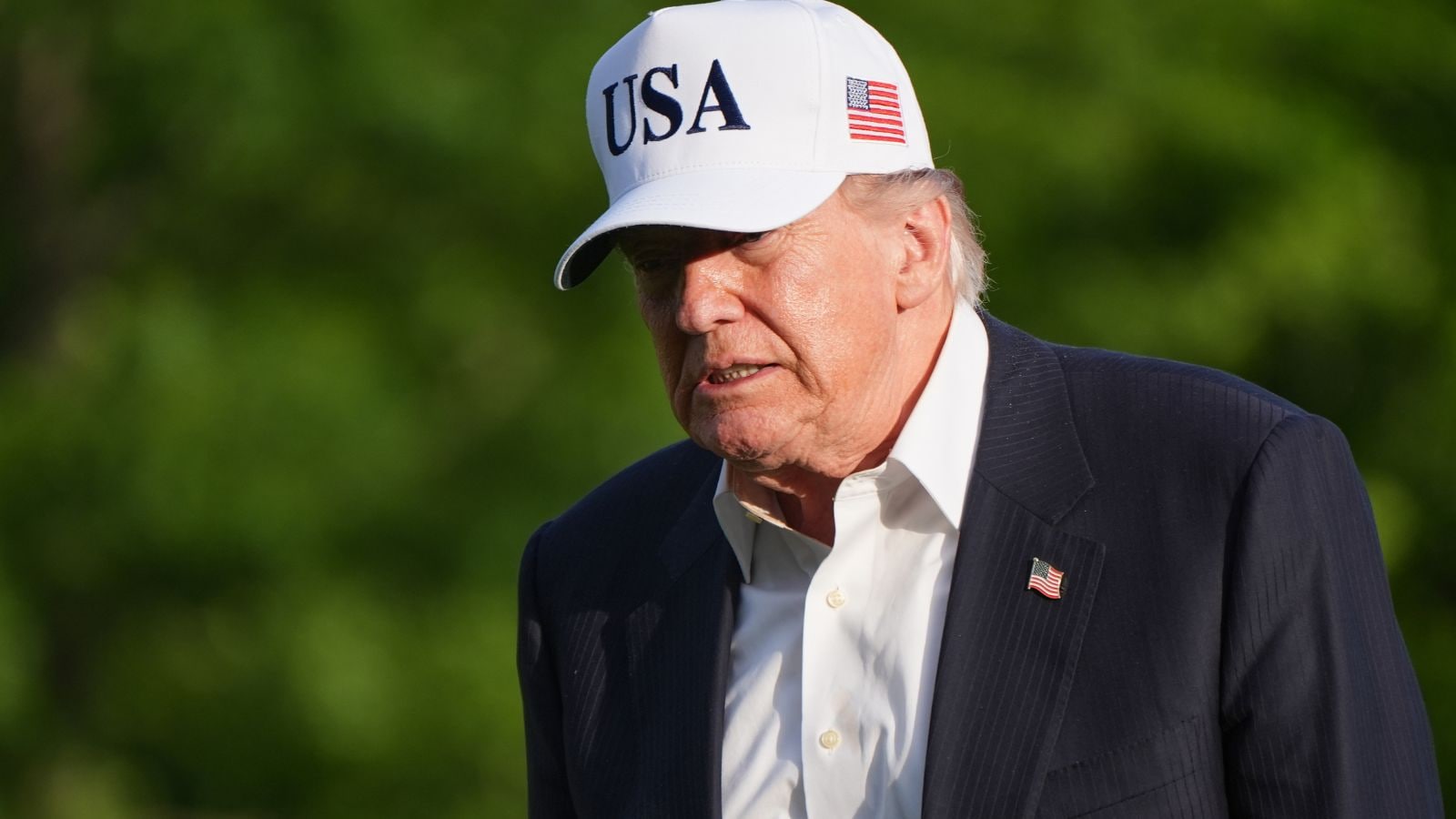
This vast geographic asymmetry is no longer just a challenge for naval logisticians. It has become the central argument in a high-stakes calculation about the value of American alliances, an calculation openly championed by Donald Trump. To understand why the traditional consensus on American foreign policy is fracturing, we have to look past the dense briefing papers of the Pentagon and stand on the factory floors, the coastal radar stations, and the quiet semiconductor cleanrooms where the abstract idea of deterrence dissolves into cold reality.
The debate is not merely about lines on a map. It is about a fundamental shift in how a superpower measures its obligations when the costs of global policing hit home.
The Microscopic Shield
Consider a hypothetical engineer named Lin, working in a dust-free, ultra-pure cleanroom in Hsinchu, Taiwan. She wears a white Gore-Tex suit, breathing filtered air, manipulating machines that etch patterns onto silicon wafers at the scale of nanometers. The chips Lin helps produce are smaller than a glitter speck, yet they power everything from the smartphone in your pocket to the guidance systems of America's advanced fighter jets.
Taiwan produces over ninety percent of the world’s most advanced semiconductors. This technological dominance is often called the Silicon Shield. The theory was simple: Taiwan is too valuable to the global economy for the West to ever let it fall. If the factories in Hsinchu stop spinning, global supply chains grind to an immediate halt. Car plants in Michigan go dark. Hospital equipment in Texas cannot be repaired. Data centers in Virginia fall silent.
But shields work both ways.
When American policymakers look at Lin’s cleanroom, they do not just see an asset; they see a vulnerability. For decades, Washington operated on a policy of strategic ambiguity. The United States supplied Taiwan with defensive weapons but left open the question of whether American troops would actually bleed to defend the island. It was a delicate dance designed to keep Beijing from invading and Taipei from declaring outright independence.
Trump’s blunt critique cuts straight through this ambiguity. His argument is rooted in a transactional view of global politics: if America is providing security for a vital economic hub, what is America getting in return? From this perspective, Taiwan’s semiconductor dominance looks less like a shield and more like a monopoly that has hollowed out American manufacturing. Why, the argument goes, should taxpayers fund the defense of an island that took America’s tech manufacturing base and now expects a free security umbrella?
The Tyranny of Distance
To appreciate the sheer scale of the military problem, you have to look at the logistics of the Pacific. Imagine trying to protect a house from a fire when your fire station is located hours away, while a neighbor who openly Covets the property lives just across the alleyway.
China has spent three decades building a military specifically designed to exploit those fifty-nine miles. It is a strategy known in military circles as anti-access/area-denial. Beijing has lined its coast with thousands of precise, land-based missiles. They do not need to match the total global power of the United States Navy. They only need to dominate their own backyard.
For an American aircraft carrier to intervene in a conflict over Taiwan, it must sail deep into the crosshairs of those coastal missile batteries. A single modern anti-ship missile striking an American carrier could result in thousands of casualties in a matter of minutes.
This is the grim arithmetic that drives the skepticism. When Trump points out the geographical disparity, he is highlighting a reality that military planners whisper about in closed-door sessions: defending Taiwan requires the United States to operate at the extreme end of its logistical tether against an adversary fighting on its own doorstep.
The question then shifts from capability to will. Is the American public prepared to accept the loss of major naval vessels and thousands of service members for a democratic island of twenty-four million people located on the rim of Asia?
The Transactional Superpower
For generations, American foreign policy was guided by the belief that defending democracy abroad directly preserved stability at home. This internationalist consensus held that alliances like NATO and partnerships in Asia were not charity; they were investments in a global order that prevented a third world war.
That consensus is dying.
A growing segment of the American electorate looks at decades of foreign interventions and sees trillions of dollars spent while domestic infrastructure crumbled, small towns lost their factories, and working-class families bore the burden of distant conflicts. The slogan of America First is a powerful emotional response to this exhaustion.
In this light, Taiwan is viewed through the same lens as European NATO members who failed to meet their defense spending targets. The critique is simple: if an island faces an existential threat fifty-nine miles from its shore, it should be spending every available resource on its own defense. It should be transforming itself into an uninviting, heavily armed porcupine. Instead, Taiwan has historically spent around two to three percent of its GDP on defense, a figure that critics argue is woefully inadequate for a nation facing a superpower neighbor.
Taiwan has recently moved to increase its defense budget and extend compulsory military service, recognizing that the political winds in Washington have shifted. The realization is sinking in that American protection is no longer an article of faith. It is a contract. And contracts can be renegotiated.
The Invisible Stakes
If the United States steps back from its traditional role in the Western Pacific, the consequences will ripple far beyond the Taiwan Strait.
Consider the message this retreat sends to other American allies. Tokyo and Seoul are watching Washington with intense scrutiny. If Japan and South Korea conclude that the American nuclear umbrella is no longer reliable, their logical next step is self-preservation. Both nations possess the technological capability to develop their own nuclear weapons in a matter of months. A US withdrawal could trigger a rapid, uncontrolled nuclear arms race in East Asia, making the region far more volatile than it is today.
Furthermore, the global economy relies on the absolute freedom of navigation in the South China Sea and the Taiwan Strait. These are the maritime highways of the modern world. If Beijing gains total control over these waters, it gains a veto power over global commerce. It could decide which ships pass, which resources are distributed, and which nations are punished.
This is the paradox at the heart of the debate. The cost of defending Taiwan is undeniably immense, risky, and distant. But the cost of abandoning it is not zero. It is a deferred payment that could arrive in the form of a shattered global trading system, a nuclearized Asia, and a world where raw military might determines international borders.
The View from the Shore
On the beaches of Kinmen, a small group of Taiwanese islands located just miles from the Chinese mainland, old anti-landing spikes still pierce the sand, rusted relics of a mid-century war. Nearby, tourists snap photos of the towering skyscrapers of Xiamen rising just across the water. The juxtaposition is surreal: a bustling, modern metropolis staring down a historic frontline.
The people living there do not have the luxury of viewing this as an abstract geopolitical puzzle. They know that their freedom, their economy, and their lives depend entirely on the perception of American resolve. They listen to the rhetoric coming out of Washington campaigns not as political theater, but as a weather report predicting an approaching storm.
The fifty-nine miles will never change. The nine thousand five hundred miles will never shrink. The fundamental question facing America is whether it still believes that its own security is inextricably bound to the freedom of a distant shore, or if the tyranny of distance has finally broken the back of the American century.
As the sun sets over the strait, casting long shadows across the water, the silence from the American heartland speaks louder than any official deployment. The world is waiting to see if a superpower, weary of its global burdens, decides that the price of holding the line is simply too high to pay.